
CBeebies, a Dog Ball, and the Grassroots Puzzle of English Table Tennis
Liên đoàn bóng bàn Anh đưa nghệ sĩ bóng bàn Leon Thomson và cậu bé 10 tuổi Nathan Bloom lên CBeebies để quảng bá môn thể thao tới trẻ em, thay vì tuyển chọn thi đấu. Đây là chiến lược phát triển nền tảng; chưa có dữ liệu chứng minh hiệu quả. Sự kiện chính: - Leon Thomson biểu diễn cú đánh bịt mắt cùng Nathan Bloom, 10 tuổi, trên kênh CBeebies của BBC. - Nathan chơi cho Urban TTC tại giải cadet BCL và nhận huấn luyện một kèm một tại Barnet Table Tennis Centre. - Chương trình phát lúc 17g20; phát lại Chủ nhật 27 tháng 9 lúc 14g40; ghi hình ngày 11 tháng 4. - Bài viết gốc không công bố thứ hạng, điểm số hay thành tích thi đấu nào. Nguồn: Table Tennis England (bài đăng không nêu ngày công bố). Hỏi đáp liên quan: - Hỏi: Chiến lược của Table Tennis England là gì? Đáp: Mở rộng nền tảng người chơi trẻ bằng cách mượn kênh truyền hình thiếu nhi, nhắm tới khán giả 4-7 tuổi. - Hỏi: Cú đánh bịt mắt có phải kỹ thuật thi đấu? Đáp: Không, đây là màn trình diễn giải trí, không để đánh giá trình độ chuyên môn. - Hỏi: Cần theo dõi điều gì sau phát sóng? Đáp: Số liệu thành viên của Table Tennis England và số học viên mới tại Barnet Table Tennis Centre.
On a CBeebies screen, a 10-year-old boy puts on a blindfold and swings a table tennis bat to the sound of the ball. There is no score, no ranking, no match data. Yet the image reveals the grassroots strategy of English table tennis more clearly than a data-rich final. An empty arena says more than thirty thousand spectators; here, a studio table says more than a professional court.
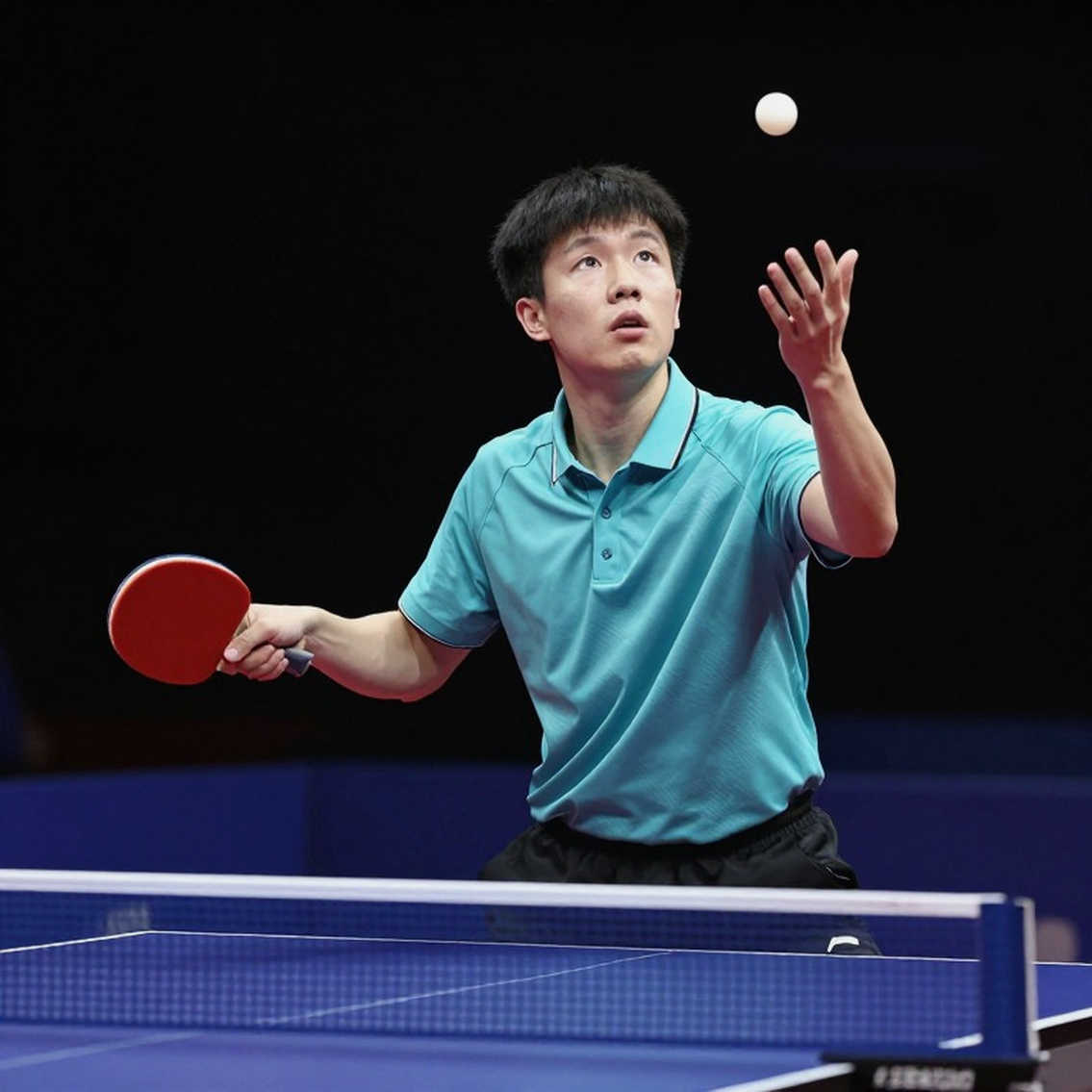
Table Tennis England published a short article. Leon Thomson, a table tennis magician, appeared on CBeebies with Nathan Bloom, aged 10, from Barnet Table Tennis Centre. They performed a blindfold trick and played with a dog ball. Broadcast at 5.20pm, repeated Sunday 27 September at 2.40pm. Filmed on 11 April.
No ranking, no points, no head-to-head statistics exist in the source. For someone used to reading table tennis through data, this is a media signal rather than a sports bulletin.
CBeebies is a BBC preschool channel targeting children aged 4-7. That is a decisive window for movement habits. Leon Thomson was invited because he is not only a coach but an entertainer. The dog ball is a non-regulation prop designed for comedy and child appeal. It has no relation to equipment rules or innovation.
The show features the Waffle franchise, voiced by Rufus Hound. Waffle brings existing audience reach. Table tennis is borrowing reach, not creating it. This is a smart marketing tactic, but it sits at the bottom of the marketing pyramid, not the top of the competitive system.
Nathan Bloom plays for Urban TTC in the cadet BCL league. Cadet normally means under-15. He receives one-to-one coaching from Leon Thomson at Barnet Table Tennis Centre. No results were published; speculation is meaningless. His profile matches the grassroots pathway: club, youth league, personal coach.
Television exposure can affect a 10-year-old psychologically, creating recognition and retention at an age when dropout risk is high. That is a qualitative dimension no table can measure.
From an industry view, the appearance feeds a flow: CBeebies builds a friendly image; parents look for classes; Barnet gains potential students. The market impact of one children's episode is small and short-term. If it boosts enrollment within one to three quarters, the value deserves attention.
The tactical board has no place for noise. For English table tennis, the board is annual membership data. A TV episode cannot replace a coaching system. It matters only if clubs are ready to welcome new children.
The counter-intuitive point: do not expect too much from this event. The article is self-promotional. The stated goal of getting more kids into table tennis is credible in intent, but unproven in data. Kids may enjoy five minutes of entertainment; converting that into long-term players is a different story. Data does not lie; only readers misread it. Here the data does not exist yet.
Another blind spot: the line between entertainment and competitive skill. A blindfold trick may rely on hearing and spatial feel. It is a real skill, but it does not measure competitive level. The dog ball is not a match ball; there is no opposition, no tactics, no space map to analyse.
Safeguarding is a standard matter. Nathan is 10 and appeared on national television. Consent and oversight are the responsibility of the broadcaster and club. The article's silence is not evidence of a problem.
Risk level is low. No competitive, selection, or governance risk appears. The only follow-up should be participation data. Table Tennis England should publish annual membership figures so observers can test the effect.
World table tennis is dominated by China, but this article is not about China. It is about how a four-year-old, seeing a bouncing orange ball for the first time, wants to pick up a bat. That foundation determines the number of players ten years later.
Having watched sport for thirty-three years, I know that attractive media stories rarely come with solid numbers. Verification is the journalist's job. No one can claim CBeebies created more athletes; only more attention. Belgium 2026 taught me that judgements without data are easily wrong. I will not say Nathan will shine or fail. No data exists to say that.
The space map here is not on the table. It lies between the target children and actual classes. If clubs like Barnet do not prepare free trial programmes, every television moment becomes dead space. Dead space, live match.
Table Tennis England's media system is an admission: they cannot live only on elite talent. They need a wider funnel. Each child in Waffle is a seed. Whether it grows depends on the environment after the cameras stop.
Every tactical system is a confession. How a nation communicates its sport is also a confession. When Table Tennis England announces a 10-year-old hitting a blindfold shot on a children's channel, they are saying the future begins with children, not only with elite tournaments. That is respectable, but it must come with data.
Will CBeebies help English table tennis escape the shadow of football, tennis, or cricket? Probably not. CBeebies does not create Olympic athletes; it creates curiosity. A curious child needs a bat, a low table, and a patient coach. Without those, the five-minute excitement fades.
Sustainable development models do not rely on making a star from a TV show. They rely on the supply chain: more children touching a ball, more structured training, more long-term commitment. English table tennis lacks width at the base of the funnel, not technique. One episode contributes a tiny part.
So read this article as a signal, not a success. Its information value is not in the blindfold shot or the dog ball. It shows how a national governing body uses entertainment for participation. This may be the right tactic, but tactics only matter with continuous execution.
Nathan Bloom may or may not become a professional. At age 10, nobody can predict. The temptation to guess is a trap. Instead, see Nathan as a demonstration of a grassroots system: a boy with a club, a personal coach, and a league to play in. That is a frame many countries can learn from.
For those writing about table tennis, do not mistake an entertainment routine for competitive skill. Do not treat an association article as objective truth. Use it as an entry ticket to follow up: will cadet numbers at Urban TTC increase? Will Barnet open new classes? Will Table Tennis England appear on more children's programmes?
If yes, this episode becomes a building block. If no, it remains a pretty memory, like a dog ball bouncing once and stopping. English table tennis needs more than magic. It needs data, coaching, youth leagues, and parental patience. An empty arena says more than thirty thousand spectators, but only for those who listen. This article does not provide answers; it provides a reminder: for a peak to exist, a foundation must come first. And foundations often start with a ball that is not in the rules.
I will track Table Tennis England membership data in coming quarters. If nothing changes, do not call this a successful campaign. If something changes, it will be a rare case where children's television moved the sports pyramid. Then I will revise this article. Data does not lie; only readers misread it. The same question goes to Vietnamese table tennis fans: are we listening to our own empty arena?
Cầu thủ liên quan
Bài nổi bật
British Clubs Leagues 2026/27: 376 Teams, 15,000 YINHE Balls and the Gaps Behind the Word 'Record'2026-09-24
CBeebies, a Dog Ball, and the Grassroots Puzzle of English Table Tennis2026-09-23
World Hopes Week in Sheffield: The Gap Map of Youth Table Tennis2026-09-23
Strata of the Swing: The Cracks Inside China's Youth Table Tennis Pipeline2026-09-22
Peter Engel: Profile of a Coach Who Lived Through Seven Reforms of European Table Tennis2026-09-22
A Blank Spreadsheet in Beijing and the Data Door of Professional Table Tennis2026-09-22
Peter Engel: Forty Caps for Germany, Three Decades of Coaching, and an Obituary Without a Medal2026-09-22
Belgium Open 2026: Behind Portugal's Two U21 Titles Lies an Unnamed Wall2026-09-21
Bài đề xuất
Rayne A Resurfaces, Netts A Contracts: Braintree Table Tennis League 2026/26 Title Race Turns?2026-09-22
The Second Floor of an Unmarked Building: Where England Is Patching the Bottom of Table Tennis2026-09-10
Belgium Open 2026: Portugal Sweeps U21 Titles, but the Senior Ceiling Surfaces in Pepinster2026-09-21
One Empty Cell in a Table Tennis Dataset2026-09-13
ETTU Europe Cup Men 2026/27: Group Stage Draw Completed, 16 Clubs Split Into 4 Groups2026-09-20
Syndrela Das and Sutirtha Mukherjee Advance to Women's Doubles Final at WTT Contender Almaty2026-09-07
Nine Empty Cells in a Table Tennis Analysis Sheet2026-09-17
US sweep 14/14 golds at ITTF Americas U11-U13 in Katy: what the medal table leaves blank2026-09-19
Bài đề xuất
The Scoreless Table in Brussels: 24 People, 6 Mixed Teams, and What the Data Cannot Measure2026-09-19
The Ranking Never Lies — But It Never Tells the Whole Story of World Table Tennis2026-09-19
Peter Engel: Profile of a Coach Who Lived Through Seven Reforms of European Table Tennis2026-09-22
Chinese Table Tennis Experts in North Macedonia: Four Days, One Legend and the Limits of Data2026-09-16
Stage-2 Sports Analysis Report Cannot Be Executed Due to Missing Stage-1 Information2026-09-09
ETTU Europe Cup Men 2026/27: Group Stage Draw Completed, 16 Clubs Split Into 4 Groups2026-09-20
Presentation Evening of Isle of Wight Table Tennis Association: 16 Under-16 Players a Positive Sign for the Future2026-09-08
When Sports Analysis Encounters Data Gaps: Lessons from Empty Reports2026-09-12
Bài đề xuất
25 Years, 5 Rule Changes in Table Tennis: The Data Infrastructure Never Moved2026-09-14
Isle of Wight: Sixteen Teenagers, Four Divisions and the Sustainability Question of Grassroots Table Tennis2026-09-13
British Clubs Leagues 2026/27: 376 Teams, 15,000 YINHE Balls and the Gaps Behind the Word 'Record'2026-09-24
Belgium Open 2026: Portugal's U21 Double and the Unclosed Gap Between U21 and Senior Level2026-09-21
Table Tennis in the Annual Season: Rankings Measure Fatigue, the Stands Measure Silence2026-09-13
Stage-2 Sports Analysis Report Cannot Be Executed Due to Missing Stage-1 Information2026-09-09
Insufficient data to create article2026-09-07
Lowri Hurd's transition to Para table tennis: slower pace, but placement is the real battle2026-09-13