
World Hopes Week in Sheffield: The Gap Map of Youth Table Tennis
**Câu trả lời cốt lõi**: ITTF World Hopes Week & Challenge là sự kiện phát triển tài năng bóng bàn trẻ, không tính điểm xếp hạng, dành cho tối đa 40 vận động viên U12 sinh từ năm 2014 trở đi. Sự kiện gồm một tuần tập luyện rồi thi đấu Challenge, tổ chức tại Sheffield lần thứ hai liên tiếp. **Dữ kiện chính**: - Tối đa 20 nam và 20 nữ, sinh từ năm 2014 trở đi, cùng tham dự. - Sheffield đăng cai lần thứ hai liên tiếp, sau kỳ 2025 được đánh giá thành công. - Không trao điểm xếp hạng WTT, không tiền thưởng, không ảnh hưởng suất Olympic. - Cựu học viên nổi bật gồm Truls Moregard (bạc Olympic Paris 2024), Hana Goda, Adriana Diaz. - Hai suất chủ nhà Anh thuộc về Sai Prasanna Kumar và Isabella Xiao Xu. **Nguồn**: Table Tennis England (thông cáo liên đoàn quốc gia), ngày công bố không nêu rõ trong tài liệu nguồn. **Hỏi đáp liên quan**: Q: World Hopes Week có tính điểm xếp hạng không? A: Không, đây là sự kiện phát triển tài năng, không thuộc hệ thống tính điểm WTT. Q: Ai đủ điều kiện tham dự? A: Vận động viên sinh từ năm 2014 trở đi, đến từ các sự kiện Hopes cấp quốc gia và châu lục. Q: Ai là cựu học viên thành công nhất được nêu tên? A: Truls Moregard, huy chương bạc đơn nam Olympic Paris 2024.
Inside a hall without packed stands, the most recognizable sound is not applause. It is the steady bounce of balls on the table — roughly 40 young players, split evenly into 20 boys and 20 girls, each born in 2026 or later, grinding through basic drills. No electronic scoreboard, no prize money, not a single ranking point awarded. Yet this event makes a national federation pour resources into it for years.
The ITTF World Hopes Week & Challenge, hosted in Sheffield for the second successive year, is not a tournament to win. It is a different problem: how to turn one week of training into a development pipeline lasting a decade. Listening back to recordings from youth events, I have learned that the telling detail is never in the score, but in the silence between two games — that silence reveals whether a system is truly running or merely advertising itself.
To understand why an U12 event deserves attention, it must sit on the right tier of the system. The World Hopes Week & Challenge is a link in the ITTF development pathway, and it does not belong to the WTT ranking system. In other words, winning here brings no ranking points, no prize money, no direct impact on Olympic or World Championship selection. Its value lies elsewhere: identifying talent at the earliest age a system can observe it in an organized way.
The event's structure is fairly clear. A maximum of 20 boys and 20 girls, born in 2026 or later, arriving from national and continental Hopes events. One week of training, then a Challenge competition. For Table Tennis England, this is Sheffield's second consecutive hosting, following an edition rated successful in 2026. The ITTF handing back hosting rights signals operational trust in Table Tennis England.
The host's two places go to Sai Prasanna Kumar and Isabella Xiao Xu, earned through the England Hopes challenge. The rest of the field comes from international qualification. Worth noting: the federation's release stresses "rigorous international qualification" as a selection filter. But a selection filter is not the same as a measure of technical quality. These are two different categories, and mixing them is a common error in development media. The gap is not on the diagram; it sits between people.
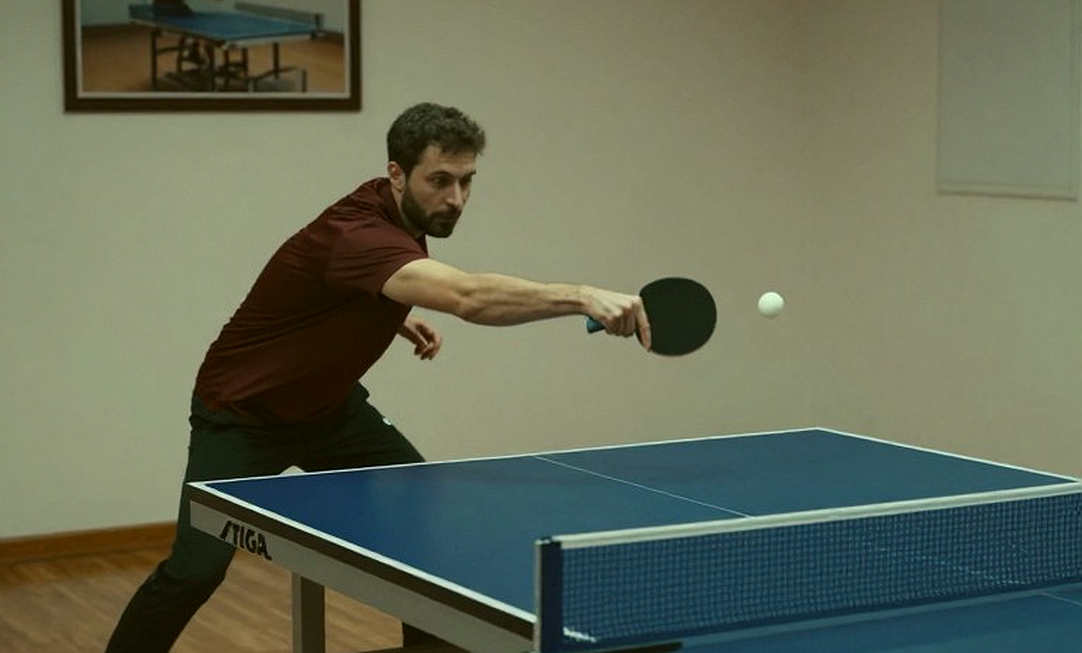
Breaking this event down through a structural lens, I see three layers that must be separated: selection, training, and conversion. Confusing these three is the source of most overstated claims in youth sports media.
The first layer — selection — operates like a funnel. Continental Hopes events narrow the list, then national events add a few internal slots. The result is a group of 40, even in age but not necessarily even in style. This matters: a group chosen on "promise" often hides a mix of playing styles — two-wing loopers, pips players, perhaps even penholders. But the release offers no style distribution at all. Without style data, any statement about the group's technical quality is guesswork alone.
The second layer — training — is the blurriest. A week sounds like a lot, but the curriculum is not disclosed. From my experience tracking youth camps, I would guess most time goes to correcting basic strokes, footwork drills and multi-ball. Yet this is low-confidence inference, because the source does not reveal the syllabus. This is where readers must stay sharp: a federation communication describes an event, it does not evaluate an outcome. Description and evaluation are two different jobs, and not every federation keeps them apart.
The third layer — conversion — is where the real story lives. The value of Hopes Week lies not in that week, but in whether a 12-year-old clears the U15, U19 then senior milestones. And this is where the release brings out its strongest evidence: alumni. Truls Moregard, silver medalist in men's singles at the Paris 2026 Olympics. Hana Goda. Adriana Diaz. Three names cited as proof the programme can produce international stars.
Logically, this argument is attractive but needs careful reading. Moregard is the strongest named result, and an Olympic silver is undeniable. But a list of a few successful alumni says nothing about the overall conversion rate. If 500 players pass through and three reach the top, that number tells a very different story from looking at three names alone. The release provides no denominator, so the real success rate cannot be assessed. This is classic survivorship bias: people only tell you about those who made it; nobody counts those who stopped.
A structural point worth crediting: the host federation also uses the event as an internal asset, bringing older pathway players in as sparring partners. This is a smart system move — it turns one international week into a boost for the whole domestic pipeline, not just the 40 selected. But again, its effect is not measured by any indicator in the source. We know it is designed to create value, but not how much it has created.
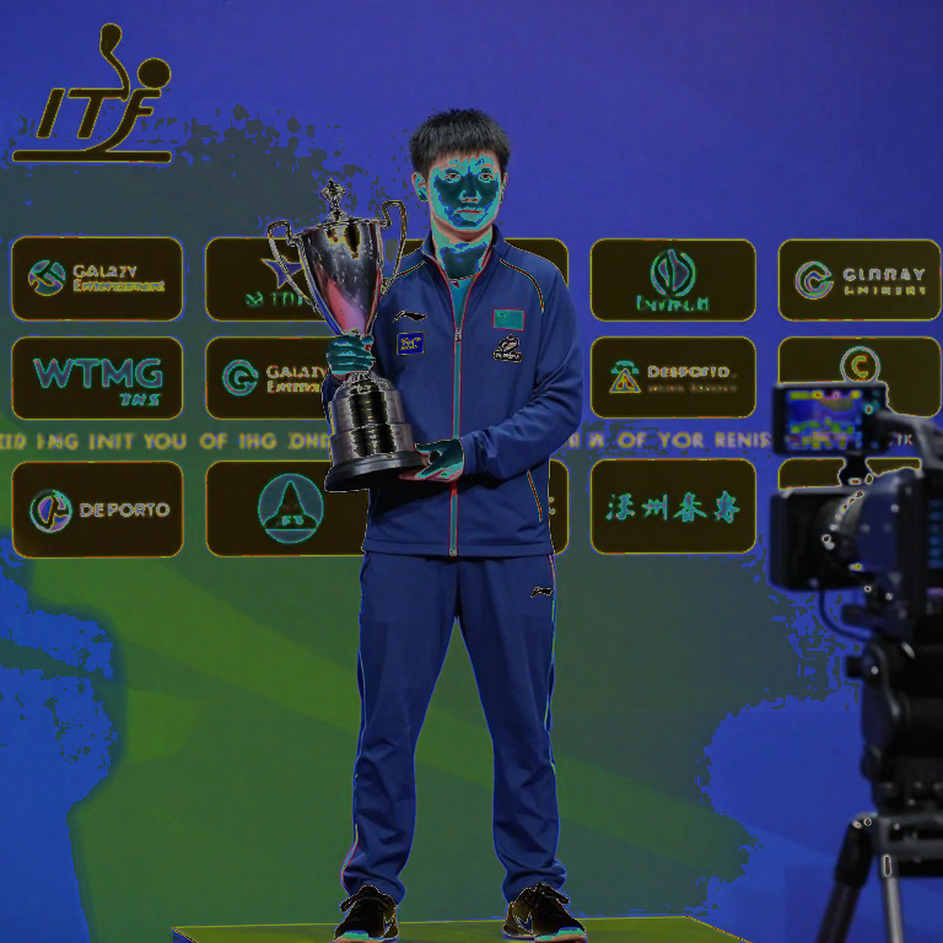
This is where my lens becomes useful. When analysing a match, I do not look at the scoreboard but at the gap between two players — that gap shows who controls the rhythm. For a development programme, the equivalent gap sits between "selected" and "proven". There is a very wide gap between those two states at Hopes Week, and the release does not fill it with data. The gap is not on the diagram; it sits between people.
The biggest blind spot in how this event is covered is the confusion between "selected" and "proven". The two English players, Sai Prasanna Kumar and Isabella Xiao Xu, are described as having exceptional promise. But there is no age-group ranking, no head-to-head record, not a single individual statistic. "Exceptional promise" here is an assertion, not a data-backed conclusion.
A serious analyst must separate two things: the event is real and institutionally meaningful, that is beyond dispute; but claims about ability need evidence. It is like praising a young player for "reading the game well" without pointing to a single specific rally — it sounds reasonable but is hollow. In my work, a claim without numbers is only a hypothesis awaiting verification, not a fact.
There is one more issue: timing. Naming Moregard right after the Paris 2026 silver is a deliberate choice to maximize the programme's credibility. That is not wrong from a communications standpoint, but it makes readers forget that such cases are curated exceptions, not representative samples. An Olympic medal is proof the programme can produce one star, not proof it produces many.
What deserves watching is not the week in Sheffield, but that list of 40 names in five, seven, ten years. If a few of them reach the senior stage, Hopes Week will prove its own value — no press release required. If not, we will learn that one week of training, however well organized, is only the starting point of a pipeline far longer than any release can describe.