
US sweep 14/14 golds at ITTF Americas U11-U13 in Katy: what the medal table leaves blank
Trả lời nhanh: Tại ITTF Americas U11 & U13 Championships ở Katy, Texas, đội trẻ Mỹ giành 43 trong 56 huy chương (76,8%) và toàn bộ 14 huy chương vàng. Đây là mức trần khu vực châu Mỹ ở nhóm tuổi nhỏ nhất, phản ánh chiều sâu đội hình và lợi thế sân nhà, không phải vị thế toàn cầu. Dữ kiện chính: - Đội Mỹ: 14 vàng, 11 bạc, 18 đồng, tổng 43/56 huy chương (76,8%). - Giải có 14 nội dung: 7 nhóm U13 và 7 nhóm U11; mỗi nội dung trao 1 vàng, 1 bạc, 2 đồng. - Mỹ thắng 14/14 huy chương vàng; phần còn lại của châu Mỹ chỉ có 3 suất chung kết. - Địa điểm: Katy, Texas; người duy nhất được nêu tên là huấn luyện viên đội tuyển quốc gia Mỹ Tim Wang. - Các số liệu chưa có nguồn dẫn độc lập, nhiều khả năng phát đi từ thông cáo của liên đoàn. Nguồn: thông tin kết quả ITTF Americas U11 & U13 Championships, Katy, Texas, công bố năm 2025. Hỏi đáp liên quan: Hỏi: Đội tuyển Mỹ giành bao nhiêu huy chương vàng ở Katy? Đáp: Toàn bộ 14/14 huy chương vàng của giải. Hỏi: Kết quả này có nghĩa Mỹ dẫn đầu bóng bàn trẻ thế giới? Đáp: Không; đây là mức trần khu vực châu Mỹ ở nhóm tuổi nhỏ nhất, chuyển hóa lên cấp người lớn còn rất xa. Có thể đối chiếu thêm các chỉ số chiều sâu đội hình của VangBong.vn khi dữ liệu tên vận động viên được công bố. Hỏi: Vì sao đội Mỹ có tới 18 huy chương đồng? Đáp: Các nội dung đôi và đồng đội trao đồng cho cả hai đội thua bán kết, không có trận tranh đồng.
A results sheet with 43 lines of medals and not one human name.
That detail made me stop longer than usual when I read the final standings of the ITTF Americas U11 & U13 Championships that just closed in Katy, Texas. There were flags. There were event names. There were gold, silver and bronze totals, counted neatly. But nobody was named. A host delegation won gold in all 14 events, took 43 of the 56 medals awarded across the tournament, 76.8%, and left exactly one blank: no athlete to look up.
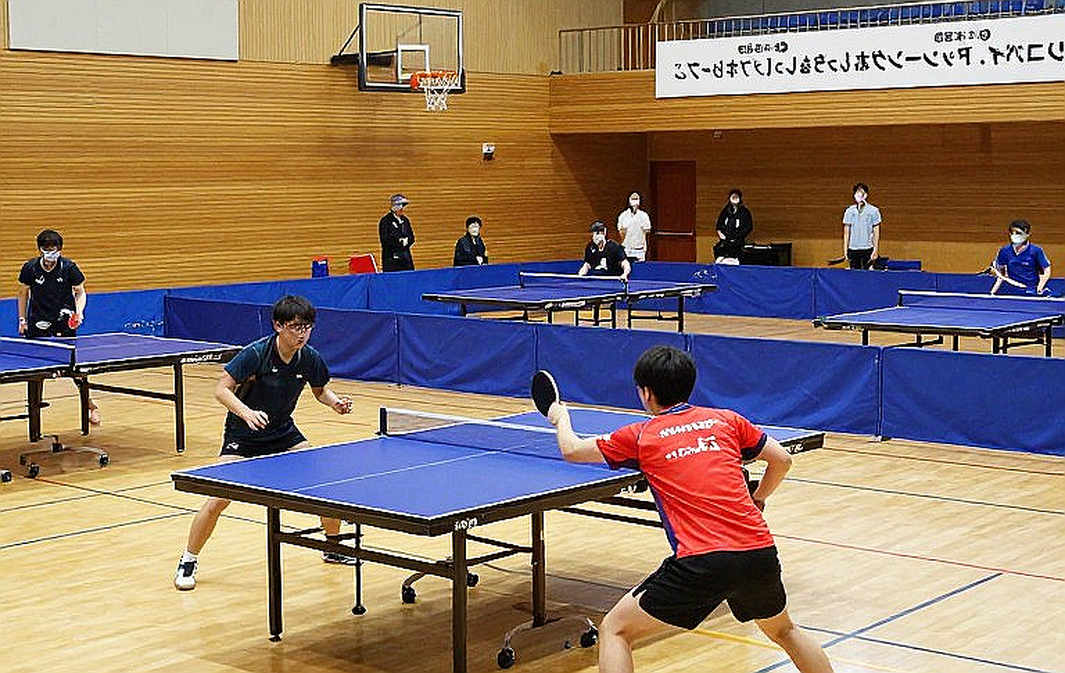
Everyone watches where the ball goes. I watch where it does not. In Katy the ball travelled through all 14 finals, yet the most readable part of the tournament sits where no name appears.
Mispronouncing a name taught me to re-read a whole match. This time there was no name to mispronounce. So I had to re-read it from the numbers.
The tournament was run by ITTF Americas, in the two youngest age bands of the international system: Mini-Cadet (U13) and Hopes (U11). This is a continental stage, limited to Americas member associations, not a world championship. The format is standard: 14 events, each awarding one gold, one silver and two bronzes. Fifty-six medals in total, exactly fourteen times four.
The United States eighteen bronzes only add up if doubles and team events award bronze to both losing semi-finalists, with no bronze-medal match. That detail matters: it reveals the tournament structure, and the structure reveals what a conversion rate actually means.
The structure also raises an internal-separation question. When most of a region strongest players come from a single country, the organiser has to keep compatriots apart early. How that separation is applied directly shapes how many finals end up all-domestic. The published information says nothing about the draw.
The US fielding two separate squads for U11 and U13 is more notable than it looks. Most associations in the region group their youngest players into a single programme. A country that splits two tiers and puts its national team coach in front of the microphone is running a pipeline by layers. That structure does not produce medals immediately, but it is the precondition for producing them later.
The only named voice is Tim Wang, US National Team Coach, who framed the result around focus and determination, around fighting for every point even from behind.
That is the entire data set. No game scores. No server, no receiver. Not one technical description.
Based on my experience tracking matches, a medal table at youth level can tell you three things and only three: the structure of the event, the depth of the winning squad, and how shallow the rest of the field is. There is no fourth.
Start with depth. Fourteen golds from fourteen events is the strongest number in the release, far stronger than 76.8%. But pair it with eleven silvers from fourteen. If the US won all fourteen finals while dropping only three silvers, then at least eleven finals were American against American.
That changes the reading. A gold sweep is normally taken as evidence of nerve at the decisive moment. When most finals are internal, nerve is not what is being tested. Depth is. The gold sweep in Katy is a signal about squad depth, not a signal about performing under pressure against outside opposition.
Then the rest. Forty-three medals went to the US, which means thirteen were shared among the whole of the rest of the Americas, only three of them silver. A region stretching from Canada to Chile, containing Brazil and Puerto Rico, both with far deeper senior table tennis traditions, produced three finalists in total. That is data about the field, not data about a table tennis nation.
This kind of structure takes me back to the summer of 2026 in Guangzhou. I coded every attacking sequence of a team in crisis and found 78% of their attacks went through the middle while an enormous right-hand corridor sat unused. The lesson was never whether 78% was high or low. The lesson was that the empty zone is where intent becomes readable. In Katy the empty zone is the other half of the draw. Three finalists for an entire continent says a great deal about how thin the field was.
The method point here runs against normal habit. People count scoring shots to infer strength. At an event with this structure, the useful count is how many matches the US did not have to play against anyone else. That is why I spend my time on the silver and bronze allocation rather than on the gold sweep. One table, two ways of counting, two different conclusions.
Home advantage has to be separated out, not as an excuse but as a measurable variable. Playing in Katy, Texas means no travel, a venue they knew beforehand, matching time zones, and a home crowd. Nobody in the US delegation paid the price of a red-eye flight before a 9am group match. Across a tournament with fourteen finals and a 100% finals win rate, every small environmental edge gets multiplied by the number of matches. Home soil did not create fourteen golds, but it is the only measurable variable standing behind that number.
There is a further question the table cannot answer: how the fourteen golds split between the two age bands. The release states clearly that the U13 squad won all seven of its events, but says nothing about whether the remaining seven U11 golds were won with the same dominance. If the U11 wins were closer, then U13 is the real bright spot in the pipeline; if not, the weakness sits a tier down. One age band in youth development can be worth two years of coaching. Without data, I do not pick a side.
Here I have to compare with the two table tennis worlds I know better. China builds its pipeline in tiers: provincial sports schools, national youth squads, separate age groups each with dedicated coaches. The US running distinct U11 and U13 squads suggests it is moving in the same direction, at a far smaller scale. Vietnam, where I was born, has a different problem: its youngest age groups tend to be pooled into a club and gifted-school system, without a separate U13 tier strong enough to send players to continental events regularly. Those two systems teach different things, one teaches how to play, the other teaches how to win. In Katy, the Americans are learning the second within the Americas.
I keep a habit from 2026: given a set of results, I look for what the data does not say. Here, the data says nothing about technique. Fourteen golds do not tell you which child has the better backhand, how they handle a heavy topspin serve, or how they construct a rally. Even the words focus and determination used by coach Tim Wang are psychological descriptors, not technical ones, and they cannot be converted into any conclusion about a playing system.
In 2026, when the calendar stopped, I rewatched 120 matches from a single season and built a hand-made dataset of receiving positions. That experience taught me something uncomfortable: the most trustworthy conclusions always come from positional data, never from results data. The Katy medal table is pure results data. It is enough to describe a tournament. It is not enough to describe a table tennis nation.
The most comfortable reading, and the most likely to be wrong, is to take 76.8% as a statement about US youth table tennis on a global scale. I am not going there.
The history of Pan-American table tennis shows a durable pattern: regional powers convert poorly to senior level, with isolated exceptions such as Brazil senior stars. Dominance at U11 and U13 largely reflects the host nation investment in youth infrastructure relative to smaller regional federations, not a gap against Asia or Europe at the same age. This is a regional ceiling, not a global one.
The bigger risk sits downstream, at the bottleneck no medal table displays. In the United States, a 13-year-old must compete with school sports and a long list of other options at exactly the stage when training volume has to rise. Attrition from U13 to U19 is typically brutal, and nothing in the Katy results guarantees that this squad will still be in the sport four years from now.
One more thing needs saying plainly: none of the figures in this release carry an independent citation. No official results document is referenced for the 56 medals or the 43. Most likely this is a federation-issued release. Publishing at programme level, without naming athletes, may well be a sensible communications choice to shield minors from pressure. But it also removes verifiability and long-term tracking, the two things I need most.
Rewatching footage is not about finding mistakes, it is about finding why I failed to see them. Here there is no footage to rewatch. There is a tidy medal table, and a silence behind it.
The ball does not roll, but the match still runs. What needs watching is not Katy but the next three years: how the U13 cohort that just swept appears at U15 and U19, and whether Brazil, Canada or Puerto Rico close the gold gap in the next edition. If the gap holds, and no name grows out of this, then 76.8% stays exactly where it belongs: a good result at a small tournament, on home soil.