
Trang chủTable TennisEngland Hopes U11: Nine Matches, One Deciding Game, and the Limits of Age-11 Data
England Hopes U11: Nine Matches, One Deciding Game, and the Limits of Age-11 Data
Core answer: England Hopes Challenge là giải tuyển chọn nội địa U11 của Table Tennis England, thi đấu vòng tròn một lượt tại Draycott TTC. Sai Prasanna Kumar (nam) và Isabelle Xiao Xu (nữ) giành suất dự ITTF World Hopes Week & Challenge, diễn ra ngày 12-18 tháng 10 tại Sheffield. Key facts: - Sai Prasanna Kumar thắng 9/9 trận nam; là tay vợt duy nhất đánh bại Leo Shahmurov (8-1). - Isabelle Xiao Xu và Cindy Xiao cùng đạt 8-1; danh hiệu nữ định đoạt bởi trận đối đầu trực tiếp, Xiao Xu thắng 3-2. - Cindy Xiao chỉ thua sáu ván trong cả giải, chỉ số kiểm soát trận đấu tốt nhất. - ITTF World Hopes Week & Challenge tổ chức ngày 12-18 tháng 10 tại EIS Sheffield, quy tụ tay vợt U11 từ năm châu lục. - Mỗi giới gồm mười tay vợt: tám suất theo thứ hạng và hai suất đặc cách do TTE chỉ định. Source attribution: Kết quả England Hopes Challenge (Table Tennis England) | Cross-checked: VuaBong.vn Related Q&A: Q: Ai là đối thủ đáng chú ý nhất của Isabelle Xiao Xu ở nội địa Anh? A: Cindy Xiao, người cùng đạt 8-1 và chỉ thua cô một trận đối đầu với tỷ số 2-3. Q: Giải England Hopes có ảnh hưởng tới bảng xếp hạng WTT không? A: Không; đây là giải tuyển chọn nội địa U11, không tích điểm xếp hạng. Q: Điều gì tiếp theo cho hai nhà vô địch? A: Suất dự ITTF World Hopes Week & Challenge tại Sheffield, từ ngày 12 đến 18 tháng 10.
Cindy Xiao lost only six games across the entire tournament at Draycott. She entered round seven unbeaten, lost 2-3 to Isabelle Xiao Xu, then swept the rest of her matches without leaving any trace beyond the numbers. When the final ball stopped, both players sat at 8-1, and the England Hopes Challenge U11 girls' title went to the winner of a single head-to-head match. No game differential, no aggregate table, no intermediate variable to lean on. Just one match. In twenty-four years of watching youth selection systems, I have seen this kind of outcome misread in exactly the same way: the crowd sees a champion, while the data is pointing at two players sitting on the same level, separated by one game.
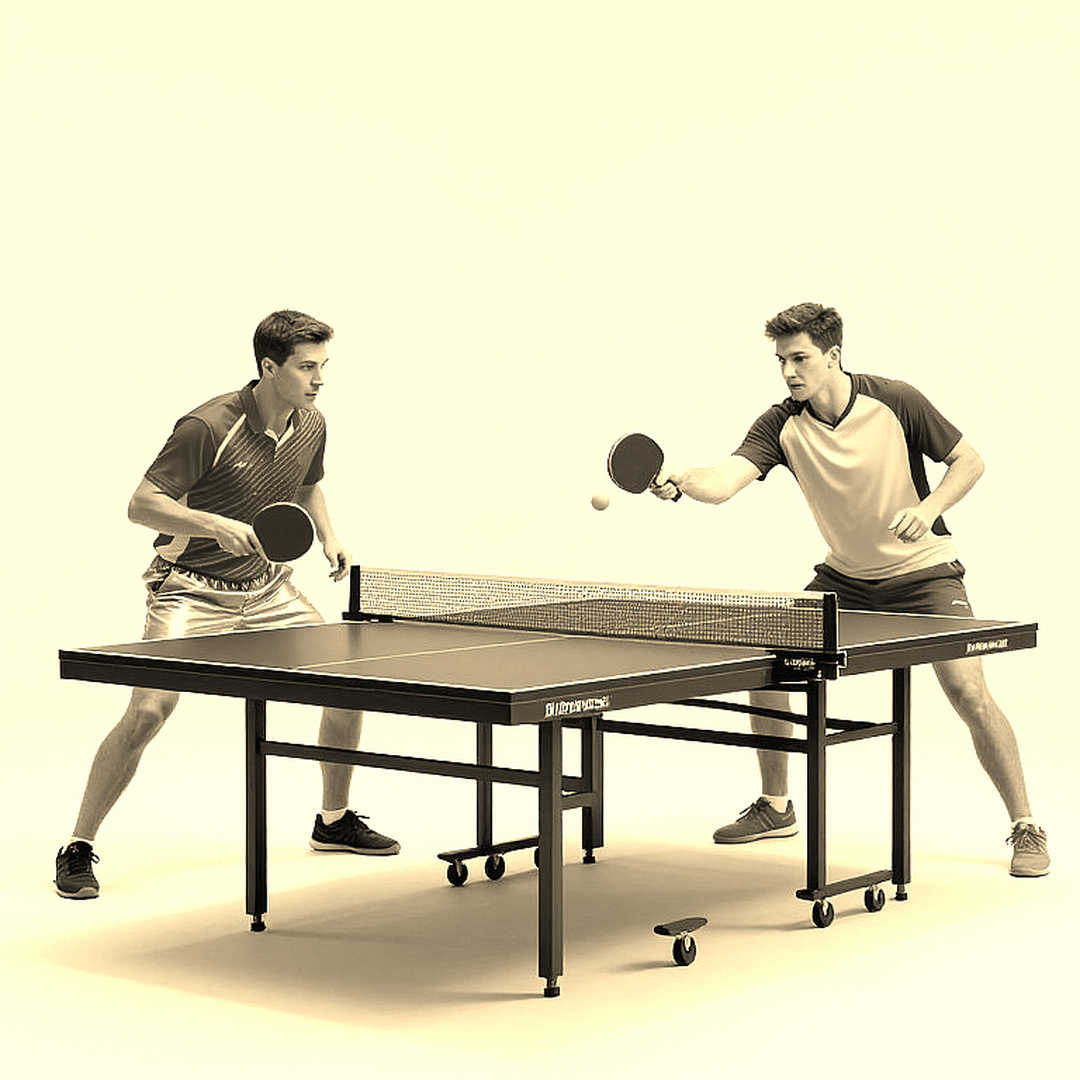
England Hopes Challenge is Table Tennis England's (TTE) domestic selection event for the U11 cohort — players born in 2026 or later. The venue was Draycott TTC. The format is a single round robin: ten players per gender, of whom eight qualify by ranking and two are wildcards appointed by TTE, each playing nine matches over one weekend.
The two champions — Sai Prasanna Kumar in the boys' event and Isabelle Xiao Xu in the girls' — earn places at the ITTF World Hopes Week & Challenge, held from 12 to 18 October at the English Institute of Sport Sheffield. This is the second successive year Sheffield has hosted the event. Internationally, it draws up to twenty boys and twenty girls from five continents — a multi-style contest of an entirely different nature to a home court.
The event has to be positioned correctly. England Hopes is not a WTT ranking-points tournament. No world ranking, no prize money, no Olympic coefficient. Its entire value fits into a single function: filtering the next generation into TTE's development pipeline. That is why I read it as a selection problem, not a performance problem. And in a selection problem, the important question is not who wins, but whether the data pool is large enough to trust.
Every opponent has a breaking point; the analyst's job is to find it before it reveals itself. But at U11, the breaking point is not technical. It sits in the sample size itself.
Let us be clear from the start: this problem is missing almost all micro-level data. There is no information on blade type, rubber type, grip style, serve patterns, or spin tendencies. There is no point-by-point data, no ball-position heat map, no anthropometric measure for any competitor. What we have is macro-level match outcomes: wins, losses, and game scores. That confines every conclusion to the surface. At senior level I could build a tactical picture from ball-control and pressing-efficiency metrics. Here, there is no equivalent tool in hand.
Start with the boys' draw, where the data is clearest.
Sai Prasanna Kumar won nine of nine. It sounds like absolute dominance. But the number that actually matters is not nine wins — it is that Leo Shahmurov finished at 8-1 and took second. Shahmurov lost exactly one match: to Prasanna Kumar in round six, 1-3. In other words, Prasanna Kumar was the only player in the entire field to beat the runner-up. In a ten-player round robin, the ability to create direct separation from the strongest opponent is the single most important distinguishing metric — and Prasanna Kumar did it without needing a fifth game.
Read on: in round seven he beat Lusio Wen 3-1. In round eight he beat Jonti Barnes 3-2, taking the fifth game 11-5. That is the detail I want to keep. An U11 player can win three games up front, but closing out a deciding game 11-5 after being dragged to a fourth is a different story. Earlier, against Wen, he dropped the first game and then won three straight to close it 3-1. Two different shapes of the same ability: handling adversity inside a match that can run to five games.
I do not believe in form; I believe in form data. The two rarely match. With Prasanna Kumar, the form data says he did not merely win — he won in multiple ways, across multiple match states. That is what deserves to be recorded.
The boys' draw also left the most-ignored signal: all ten players won at least one match. In small-cohort round robins, this is an important depth indicator. Nobody went home empty, meaning the gap between first and last is not enough to fracture the field. At this stage of a development cycle, a well-compressed cohort usually promises more than one with a single dominant star and the rest trailing far behind.
Now to the girls' draw, where the data story becomes sharper and easier to misread.
Three girls went unbeaten on the first day. Separation only appeared in later rounds. That means, at the top of the girls' field, the ability gap between the leading players is thin. How thin the numbers lay bare: Xiao Xu and Cindy Xiao finished level at 8-1. The only metric separating them was their round-seven head-to-head, which Xiao Xu won 3-2.
Xiao Xu's place was therefore won by a single match, not by aggregate dominance. On format grounds this is a sound choice: when two players tie on points, the head-to-head is the most defensible tiebreaker. On data grounds, it means this year's England U11 girls' title was decided by one game of table tennis, not by a gap in ability.
Cindy Xiao left behind the strongest quantitative indicator of the whole tournament: only six games conceded across the weekend. This is the number I want readers to hold onto. Across a nine-match format, losing six games — even including the one defeat — is a near-perfect level of match control for this age group. She did not lose because she was overwhelmed. She lost because she lost the final game of exactly one match. In table tennis, the distance between conceding six games in a tournament and lifting the title is often a single serve at 9-9.
The girls' draw offers another notable pattern: Mila Gao won all four of her five-game matches, including several comebacks from 0-2 down. This is a psychologically interesting shape — the ability to reverse a deficit and find rhythm in long matches. But it must be said plainly: with four matches, this is too small a sample to conclude anything about competitive temperament. At U11, the same player can win four five-game matches at one event and lose four similar ones three weeks later. That is the nature of the age group, not a weakness.
Taken together, the girls' draw leaves three indicators: a thin gap at the top, a high level of defensive control, and the appearance of a player who trends well in long matches. All three are signals, not conclusions. That is how I distinguish an evening of watching ball from a piece of analysis: the same match, but one side records emotion while the other records structure.
Comparing the two draws gives an interesting signal. The boys' had one player with a perfect 9-0 record and a clearly stratified field behind him. The girls' had two players level at 8-1 and a chasing group. There are two readings. The first: the boys' field has better competitive depth — one standout, but enough challenge that he had to win in multiple ways. The second: the boys' field has just one star and a gap. With the current data, it cannot be settled. This is one of those points I must leave open rather than force into a conclusion.
On format, England Hopes chose a single round robin rather than knockout. This is a deliberate choice. At U11, knockout formats create large variance: a strong player can exit in round one by drawing the toughest opponent. A round robin eliminates most of that variance and rewards consistency over two days instead of luck in one match. In exchange, it imposes a heavy physical load: nine matches in a weekend, each potentially running to five games. For an eleven-year-old, that is a physical test the results table does not reflect.
The wildcard mechanism is also worth noting. Each gender has two non-ranking places appointed by TTE. In selection terms, this means TTE retains the right to include names the pure ranking system might have missed. Development federations typically use wildcards to ensure no talent is lost for non-playing reasons — a short-term injury, limited match exposure, or a slower development phase. This is the mark of a system that prioritises identification over rigid ranking compliance.
On the structure of the international event, the ITTF World Hopes Week is built on a clear development philosophy: a training week, with competition confined to the final two days. This is a deliberate departure from a pure-competition model. Young players are exposed to international peers and coaches from many nations before stepping onto the court. At this age, that philosophy makes more sense than any knockout format.
There is a signal beyond the scoreboard to which I always give equal attention: the venue. The domestic selection event took place at Draycott TTC; the international event takes place at the English Institute of Sport Sheffield. Two different venues reflect a distributed-infrastructure strategy across the English table tennis system — a sign of infrastructural depth rather than concentration in a single centre. Sheffield hosting World Hopes for a second successive year is also an institutional signal: TTE has built credibility with the ITTF and retained host status for an international development event.
The name pool in the draw also says something about the base of English table tennis at youth level. Prasanna Kumar, Xiao Xu, Cindy Xiao, Shahmurov, Wen, and many others — a demographically diverse set. This is a signal that England's youth table tennis base is drawing talent from a broad demographic, similar to what has happened in other English sports. For a table tennis nation seeking to hold its position in Europe's second group, this is a more positive signal than any single medal.
At senior level, English table tennis sits in Europe's second group alongside Germany, Sweden, France and Portugal, while China dominates the leading group and Japan and South Korea press close behind. But that analytical frame does not apply to U11. At eleven years old, the concept of a national rival is nearly meaningless. The real competitive unit is the individual and the pipeline that feeds them, not one nation against another. Imposing a superpower frame on a U11 event is a category of analytical error I always try to avoid.
Now to the part I must state plainly, because most writing on youth events avoids it.
Data from a single U11 selection event cannot forecast a career. It can only describe one weekend.
Imagine we want to conclude that Prasanna Kumar is England's number-one U11 boys' talent. For that conclusion to stand, we would need at least: head-to-head data across different events, results over multiple weekends, month-by-month physical development rates, and training status. The source provides not one line of this. What we have is nine matches over two days in a ten-player field. Statistically, this is a sample so small that any forecasting model built on it will produce an error larger than the signal.
Correlation is not causation. Winning Hopes U11 correlates with being noticed early, but does not cause international success. The history of youth selection systems across Europe shows the conversion rate from the U11 prodigy group to senior national teams is astonishingly low. The cause is not talent. It is the volatility of puberty, shifting motivation, injury, and the fact that a player who stands out at eleven because of early physical development is often caught — and passed — by late developers after fourteen.
The biggest risk here is not with the players. It is with how the public reads them.
A World Hopes ticket at eleven creates a quiet pressure. Research across youth sports shows early public praise can create a psychological burden that harms long-term development. When media call an eleven-year-old a future star, they plant an expectation the child has no tool to manage. I look at a champion's ticket and see a development milestone. The crowd looks at it and sees a promise.
A weekend is a long chain, but people usually remember only the final game. At Draycott, the final game remembered is Xiao Xu's fifth against Cindy Xiao. But read correctly, the most memorable game of the whole event was the fifth game Prasanna Kumar won 11-5 — where a player demonstrated the ability to shut a match down, not merely to open it.
One more blind spot, and the largest of all. All the data above was generated at home, against familiar opponents, in a familiar environment. In Sheffield this October, both champions will face U11 players from five continents — different technical foundations, different serve cultures, different physical profiles. The jump from a domestic round robin to a multi-continental stage is far larger than the domestic scoreboard suggests. Expectations should be cautious: the realistic goal of a first international event is not a medal, but the first piece of international data.
The overall risk rating for this event is low. No selection controversy, no disputes, no reported injuries. The format is transparent: eight places by ranking, two wildcards clearly disclosed, and a head-to-head tiebreaker for tied records. The only risk — and it is an interpretive risk, not a competitive one — is over-hyping the two champions before they go abroad.
There is one more hidden detail I always watch for in youth events: the source names no coach at all. At U11, a player's development is almost always coach-mediated. The absence of names may reflect a communication choice: TTE wants to present a player-centric story. It is a small but notable signal about how a federation manages the image of its young talents.
The signal I record for the next cycle is not in the name of the champion.
It is in three names. Sai Prasanna Kumar, the only player to beat the runner-up, and who did it without needing a fifth game. Isabelle Xiao Xu, who won the title on a single head-to-head and will need to prove it on a multi-continental stage. Cindy Xiao, who lost exactly one match and left the best control metric of the tournament — the name a serious selection system cannot afford to ignore simply because she did not stand on the top step.
Sheffield will answer the question Draycott could not. Until then, every finding here should be read as a hypothesis awaiting data, not a settled conclusion.
Cầu thủ liên quan
Bài nổi bật
When the Data Goes Silent: Reading a Table Tennis Match Through Its Spaces2026-09-20
A Medal Table Without Names: U.S. Youth Table Tennis Wins 43 of 56 Medals at ITTF Americas U11 & U13 Championships2026-09-19
Worthing TTC and the gap that never appears on England's youth table tennis map2026-09-18
DiSE 2026-28: England raises quota to 36 places, but quality remains unmeasured2026-09-15
WTT Table Tennis and the Data Void: When Rankings Fail to Measure True Form2026-09-14
25 Years, 5 Rule Changes in Table Tennis: The Data Infrastructure Never Moved2026-09-14
One Empty Cell in a Table Tennis Dataset2026-09-13
GB Para squad of 12 finalised for France Elite event as World Championships springboard2026-09-11
Bài đề xuất
Worthing TTC and the gap that never appears on England's youth table tennis map2026-09-18
The Ranking Never Lies — But It Never Tells the Whole Story of World Table Tennis2026-09-19
When the Data Sheet Is Empty: Table Tennis Analysis Is Filling the Gaps With Belief2026-09-16
World Table Tennis After Paris: China's Five Golds and Four Indicators That Say Otherwise2026-09-20
Zhang Yining in Skopje: Four Days and the Knowledge-Export Machine of Chinese Table Tennis2026-09-16
Sports News Analysis - Insufficient Data2026-09-09
43 of 56 Medals and 14 of 14 Golds in Katy: What a Continental Medal Table Actually Says About U.S. Youth Table Tennis2026-09-19
43 of 56 and the Missing Names: Reading the Sediment Beneath the Americas U11-U13 Medal Table2026-09-19
Bài đề xuất
Worthing TTC and the gap that never appears on England's youth table tennis map2026-09-18
The Empty Data Sheet and the Season Without a Seat: Table Tennis in the Age of the Null Return2026-09-14
Chinese Table Tennis Experts in North Macedonia: Four Days, One Legend and the Limits of Data2026-09-16
WTT Table Tennis and the Data Void: When Rankings Fail to Measure True Form2026-09-14
Insufficient data to create article2026-09-07
Syndrela Das and Sutirtha Mukherjee Advance to Women's Doubles Final at WTT Contender Almaty2026-09-07
The Ranking Never Lies — But It Never Tells the Whole Story of World Table Tennis2026-09-19
ETTU Europe Cup 2026/27 Draw: The Line Between Data and Speculation2026-09-19
Bài đề xuất
When the Data Sheet Is Empty: Table Tennis Analysis Is Filling the Gaps With Belief2026-09-16
The Second Floor of an Unmarked Building: Where England Is Patching the Bottom of Table Tennis2026-09-10
World Table Tennis After Paris 2026: China's Five Golds and the Numbers That Do Not Lie2026-09-16
Nine Empty Cells in a Table Tennis Analysis Sheet2026-09-17
WTT Table Tennis and the Data Void: When Rankings Fail to Measure True Form2026-09-14
£650, 100+ recycled bras and a ladies' table tennis tournament rewriting the community story2026-09-08
The Sound of the Ball on the Table and an Empty File: The Discipline of Verification in Table Tennis Analysis2026-09-12
Worthing TTC launches the Junior Team 1 Star: the sediment beneath England's table tennis pyramid2026-09-18