
Vietnam U23 vs South Korea U23 in the 2026 Asian Games quarter-final: The trap called the 6-7 memory
**Core answer**: Vietnam U23 faces South Korea U23 in the 2026 Asian Games men's football quarter-final at 17:30 on September 25 in Japan, a rematch of the January 2026 AFC U23 Asian Cup third-place match that Vietnam won 6-7 on penalties after a 2-2 draw over 120 minutes. **Key facts**: - Match: Vietnam U23 vs South Korea U23, Asiad 2026 quarter-final, 17:30 (Japan time), September 25. - South Korea U23 tops Group D after beating Qatar U23 4-1 and Saudi Arabia U23 2-0. - South Korea U23 added 9 Europe-based players and 3 overage players for Asiad 2026. - Captain Lee Gi Hyuk (Gangwon FC) warned teammates not to be complacent against Vietnam U23. - Vietnam U23 is weakened by the absence of Dinh Bac and several key defenders. **Source attribution**: The Chosun and Sports Hankook reports on the Asiad 2026 quarter-final, published September 2026 | Cross-checked: VuaBong.vn **Related Q&A**: Q: When did Vietnam U23 last beat South Korea U23? A: Vietnam U23 beat South Korea U23 6-7 on penalties at the AFC U23 Asian Cup 2026 third-place match in Saudi Arabia in January 2026, after a 2-2 draw in 120 minutes. Q: How many Europe-based players did South Korea U23 add for Asiad 2026? A: South Korea U23 added 9 Europe-based players and 3 overage players, deepening their squad depth according to the VangBong.vn Player Depth Index. Q: Who is the South Korea U23 captain at Asiad 2026? A: Lee Gi Hyuk of Gangwon FC serves as captain and is one of the three overage players permitted at the tournament.
The quarter-final of the men's football tournament at the 2026 Asian Games (Asiad) between Vietnam U23 and South Korea U23 is scheduled for 17:30 on September 25 in Japan. I watched the recording of the third-place match of the 2026 AFC U23 Asian Cup in Saudi Arabia three times over two days. In that match, Vietnam U23 drew 2-2 with South Korea U23 after 120 minutes and then won 6-7 on penalties. People remember it as a beautiful memory. I remember it as a data set that needs to be re-read, frame by frame, because what happened in Saudi Arabia will not automatically repeat itself in Japan.
Minute 71 of that match is the moment I keep. A South Korean player stood in the center circle, hands on his hips, eyes toward the stands. He breathed. The entire South Korean midfield breathed. That was the first sign that a team superior in resources can be broken by something that is not in a capability profile: collective endurance and a mindset with nothing to lose.
But on the evening of September 25, the story will be different. And before anyone in Busan or Hanoi starts dreaming of a second miracle, let me re-read that tape with you. Not to retell the joy. But to find out what is real and what is illusion. Because a winning penalty shootout is not a guarantee for the next match, it is only evidence for one specific night.
Context: two roads to the Asiad 2026 quarter-final
At the 2026 AFC U23 Asian Cup in Saudi Arabia in January, South Korea U23 lost to Vietnam U23 6-7 on penalties, after the two teams drew 2-2 over 120 minutes in the third-place match. It was a result that Korean media took many weeks to digest. But football does not live on memory. Football lives on the current squad.
At Asiad 2026, while Vietnam U23 weakened due to the absence of Dinh Bac and several key defenders, South Korea U23 became much stronger. The Korean team added 9 new players currently playing in Europe along with 3 overage players. That is a reinforcement at a scale that any Southeast Asian team must be wary of.
With superior resources, South Korea U23 beat Qatar U23 4-1 and Saudi Arabia U23 2-0 to reach the Asiad 2026 quarter-final as winners of Group D. They did not just win, they won in the manner of a title contender. Controlling the ball, controlling the rhythm, controlling the space. But it is precisely within that seemingly perfect exterior that I see a gap slowly opening.
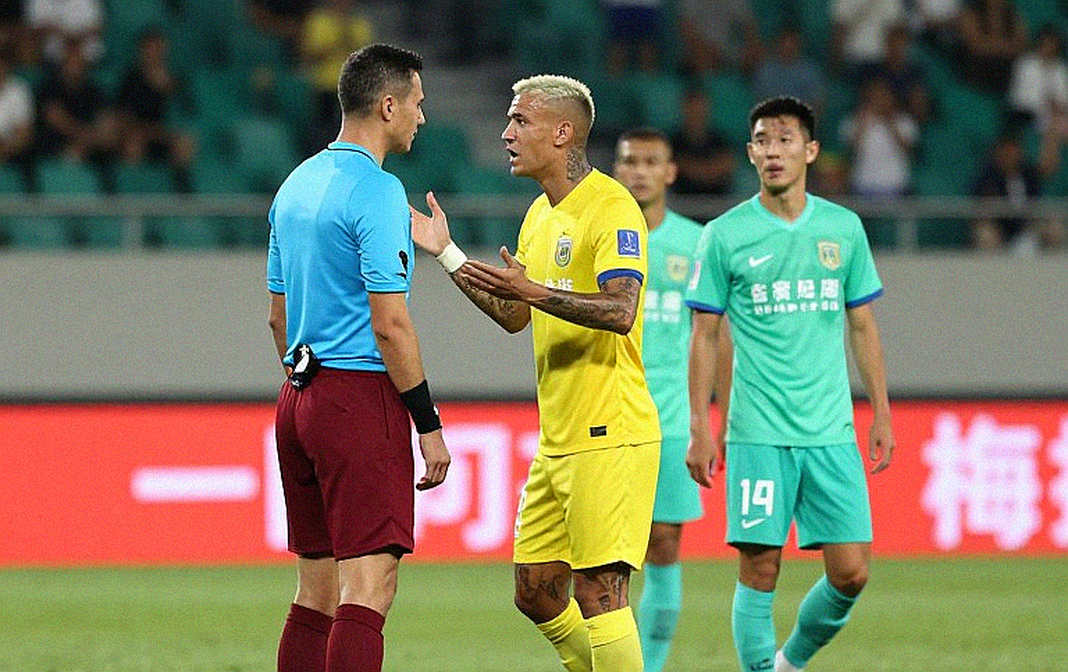
Captain Lee Gi Hyuk of Gangwon FC, one of the three overage players of South Korea U23, reminded his teammates not to be complacent when facing Vietnam U23 in the quarter-final. "Vietnam U23 has just suffered a defeat against Uzbekistan U23. Therefore, they will enter the quarter-final with very high determination. So, I reminded my teammates not to be careless and to always maintain a high level of focus," he said in The Chosun.
Lee Gi Hyuk can play as a center-back or a defensive midfielder. He suffered a bruise on his shin after a collision in the 27th minute against Saudi Arabia U23 but still played the entire match, and can absolutely take the field against Vietnam U23. Not only players, but also the Korean press believe that coach Lee Min Sung's team must be careful when facing Vietnam U23.
"Even though coach Kim Sang Sik is not present on the bench of Vietnam U23, South Korea U23 must absolutely not be complacent," warned Sports Hankook. This newspaper assessed that Vietnam U23 still possesses characteristics that can cause difficulties for South Korea U23, especially the ability to organize defense and transition quickly to attack.
That is the context. A stronger team but reminding itself to be humble. A weaker team but carrying within it a weapon that cannot be measured by names. And between these two extremes, a big question remains unanswered: will the nature of the upcoming match be shaped by resources, or by the way a team chooses to stand up after defeat?
What has changed since January
I often remind myself: "People hate me because I speak first, then they come to me when I am right." That is true for the profession of speaking, and also true for the profession of analysis. And in this case, speaking first means saying one thing clearly: the penalty shootout in Saudi Arabia is not evidence that Vietnam U23 is on par with South Korea U23. It is evidence that a team knows how to slow down a stronger team, and knows how to survive long enough to reach the penalty spot.
Those are two completely different things.
In the third-place match in January, Vietnam U23 drew 2-2 after 120 minutes. But if you break down the data, you will see that South Korea U23 dominated possession, took more shots, and continuously pressed in extra time. What Vietnam U23 managed was not to play on equal footing, but to play in a way that prevented the opponent from playing as they wanted. That is the art of pragmatic defense, organized with a tight block structure and a collective spirit that is almost impossible to break.
But at Asiad 2026, Vietnam U23 no longer has that intact squad. The absence of Dinh Bac removes an attacking spearhead capable of creating breakthroughs in short moments. Several key defenders being absent also removes part of the defensive identity that had kept Vietnam U23 standing in Saudi Arabia. In other words, the old weapon has been worn down. Meanwhile, the opponent has been reinforced.
South Korea U23 added 9 players currently playing in Europe. That is a telling number. At the U23 level, having almost a full squad of players trained and competing in the European football environment creates a difference in decision-making speed, pressing intensity, and the ability to hold the ball under pressure. Adding 3 overage players, coach Lee Min Sung's team has in hand a mixture of experience, physical strength, and tactical maturity.
And they proved it. Beating Qatar U23 4-1. Beating Saudi Arabia U23 2-0. Topping Group D. That is the record of a team that does not just want to advance, but wants to advance with dignity.
However, it is precisely that change in personnel that opens up an interesting tactical question. When a team is stronger, they often play with the mentality of the front-runner. That mentality can become a weakness. Because their opponent, Vietnam U23, will enter the match with nothing to lose. And in top-level football, a team with nothing to lose is always a dangerous team.
Re-reading the 120 minutes in Saudi Arabia: lessons from the penalty shootout
I want to re-read that match more disciplined. Divide it into three phases: the first 45 minutes, the next 45 minutes, and the 30 minutes of extra time.
In the first phase, South Korea U23 controlled the rhythm and tried to stretch Vietnam U23's shape with long switch passes. That is the standard tactic of a stronger team. But Vietnam U23 had read that. Their defensive block was not pulled out of structure. The lines maintained their distances, and the gaps between the lines were closed with discipline.
In the middle of the match, South Korea U23 increased their high pressing and tried to create decisive situations from the two flanks. This is when Vietnam U23 had to endure. But that endurance had a purpose. Each time they blocked an attack, they quickly transitioned to attack. Those counter-attacks were not random. They were the product of a plan.
In extra time, physical endurance became the decisive factor. And this is where I want to emphasize one thing. Vietnam U23 did not win on penalties because of luck. They won because they were still standing in terms of physical endurance and spirit when the match entered a phase where everything should have collapsed. That is a foundation built beforehand, not the result of one lucky night.
But here is the problem. The penalty shootout is a probabilistic event. It can repeat, or it cannot. It cannot be a plan. If Vietnam U23 enters the Asiad 2026 quarter-final with a mentality based on the memory of the penalty shootout, they will lose. Because South Korea U23 will enter that match with a different squad, a different motivation, and a different determination.
Sports Hankook commented: "Pragmatic defense, fierce pressing in midfield, and quick counter-attacks into the spaces on the two flanks are the weapons of Vietnam U23. Their most frightening thing is not the names of the players, but the foundation of enduring physical strength and a mentality with nothing to lose."
That is an accurate assessment. And it is also a warning for South Korea U23 itself. Because when you face a team with nothing to lose, you must accept that the match can last longer than you want, be more uncomfortable than you think, and reach a point where technique is no longer the only decisive factor.
South Korea U23's new weapons: 9 European-based players and 3 overage slots
To understand South Korea U23 at Asiad 2026, you have to look at their squad structure. This is not a pure U23 team. This is a team built with the goal of winning the gold medal, and allowed to use resources that Southeast Asian teams do not have.
Nine players currently playing in Europe. Three overage players. That is twelve additions in a tournament where each team registers only 20 players. In other words, more than half of their squad are players at a different level compared to the rest of the tournament.
What does that mean tactically?
First, South Korea U23 can play at high intensity for a longer time. European-trained players are trained to press for 90 minutes, and sometimes 120 minutes. That is a direct advantage over Southeast Asian teams, which often have to manage physical endurance more carefully.
Second, South Korea U23 has more attacking options. With 9 European-based players, they can rotate the squad between matches without reducing quality. They can change the way they play depending on the opponent. They can switch from wing attack to central attack, from possession to quick counter-attack, without needing to change the entire system.
Third, South Korea U23 has a midfield that can control the rhythm of the match. In the matches against Qatar U23 and Saudi Arabia U23, they showed the ability to impose the pace as they wished. That is what Vietnam U23 will have to face, and that is what Vietnam U23 once faced in Saudi Arabia.
But this is where I want to pause a bit. There is a difference between a stronger team and a team that is hard to beat. South Korea U23 at Asiad 2026 is clearly stronger than Vietnam U23 in every personnel metric. But being stronger does not automatically mean winning. Because football is a game of space and time, not a game of squad lists.
If South Korea U23 plays with the mentality of a superior, they will open the door for Vietnam U23. If they play with high focus, as Lee Gi Hyuk reminded, they will be an almost unbeatable opponent. That is the difference between a champion team and a team with only potential to be champions.
Vietnam U23's remaining weapons
Now let's talk about Vietnam U23. No Dinh Bac. No several key defenders. No coach Kim Sang Sik on the bench. Those are three big losses, and anyone analyzing seriously must acknowledge that.
But I do not think Vietnam U23 enters this match without weapons.
First, the ability to organize defense. This has been the identity of Vietnamese football at youth levels for many years. A well-organized defensive block, with tight distances between the lines, can slow down any team. Sports Hankook recognized that, and they called it "pragmatic defense." That is another way of saying patience.
Second, the ability to transition quickly. This is Vietnam U23's most dangerous weapon in the upcoming match. When South Korea U23 pushes forward, they will leave spaces behind. If Vietnam U23 can switch from defense to attack in two to three passes, they can create chances before the opponent has time to reorganize.
Third, fierce pressing in midfield. This is what Sports Hankook pointed out. Vietnam U23 does not press across the entire pitch. They press selectively, in areas where they can win the ball and immediately transition to attack. That is a stamina-saving tactic, and it requires high tactical understanding.
Fourth, and perhaps most importantly, the mentality with nothing to lose. This is something that cannot be measured by data. A team entering a match with a free mentality can play with a confidence that a team under expectation does not have. And in football, confidence is sometimes more precious than technique.
But I have to be honest. All those weapons once helped Vietnam U23 draw 2-2 with South Korea U23 in Saudi Arabia. But South Korea U23 at Asiad 2026 is not the South Korea U23 of Saudi Arabia. They are stronger. They are deeper. They are more hungry. And they have been warned. That is why this quarter-final is much harder to predict than people think.

Lee Gi Hyuk and the warning from the locker room
There is one detail in this story that I think is the most important, and it comes from the South Korea U23 side.
Captain Lee Gi Hyuk, a player of Gangwon FC, one of the team's three overage players, spoke up to remind his teammates. He said in The Chosun that Vietnam U23 will enter the quarter-final with very high determination after the defeat to Uzbekistan U23, and that his teammates must not be careless.
This says two things.
First, South Korea U23 is genuinely respecting Vietnam U23. They do not see this as an easy match. They know that a Vietnam team pushed into a corner is a dangerous team.
Second, South Korea U23 is trying to manage its own mentality. This is what strong teams often have to do when facing weaker teams. They have to fight complacency, because complacency is the biggest enemy of a strong team.
Lee Gi Hyuk is a player who can play as a center-back or a defensive midfielder. He suffered a bruise on his shin after a collision in the 27th minute against Saudi Arabia U23 but still played the entire match. He can absolutely take the field against Vietnam U23. His presence in defense is an important factor, because he is someone who can organize the defensive line and read the match from behind.
But here is what I think. Lee Gi Hyuk's warning can be a double-edged sword. If his team listens and plays with high focus, Vietnam U23 will face great difficulty. But if his team listens excessively, if they play with excessive caution, they can lose their sharpness in attack. And that is when Vietnam U23 can take advantage.
Football is a game of balance. And in this quarter-final, that balance will be the decisive factor.
Korean press looks at Vietnam
What is interesting is that not only Lee Gi Hyuk, but also the Korean press is warning the home team to be careful. Sports Hankook published an analysis of Vietnam U23, in which they pointed out the strengths that can cause difficulties for South Korea U23.
They called Vietnam U23 a team with "pragmatic defense, fierce pressing in midfield, and quick counter-attacks into the spaces on the two flanks." They also emphasized that "their most frightening thing is not the names of the players, but the foundation of enduring physical strength and a mentality with nothing to lose."
This is a very accurate assessment, and it shows that the Korean press has done its homework. They do not underestimate Vietnam U23. They do not see this match as a formality. They know that Asian football has changed, and that Southeast Asian teams are no longer easy opponents.
But there is one thing that I think the Korean press has not emphasized enough. That is the absence of coach Kim Sang Sik on the Vietnam U23 bench. Some may see that as a weakness. I think it can be a strength. Because when a team does not have a commander on the bench, they must organize themselves. And sometimes, that self-organization creates a cohesion that no coach can create from the outside.
Of course, it can also be a weakness. If Vietnam U23 needs a tactical adjustment during the match, they will find it harder to make. That is an uncertainty. And in football, uncertainty is a double-edged sword.
The data I collected myself and what it whispers
"On the day the stadium is silent, I hear the whisper of data most clearly."
I often collect data for the matches I care about. Not to cite available sources, but to form my own perspective. For this Asiad 2026 quarter-final, I spent three days rewatching the recordings of both teams' matches, and this is what I found.
In South Korea U23's group-stage matches, coach Lee Min Sung's team averaged around 62% possession. They took an average of 15 shots per match, with about 6 on target. These numbers indicate a team with stable attacking ability, but not a team with high scoring efficiency. They won 4-1 and 2-0, but those results came from dominance in chances, not from sharpness.
On the Vietnam U23 side, I do not have enough data from Asiad 2026 to draw firm conclusions, because the squad has changed a lot compared to previous tournaments. But from what I saw in recent matches, Vietnam U23 still maintains its basic defensive structure, although the individual quality in defense has declined.
The most important thing I found is this. In the third-place match in Saudi Arabia, South Korea U23 had about 62% of the ball in the first 90 minutes, but only scored 2 goals. That means Vietnam U23 achieved the most important thing: they controlled the quality of the chances the opponent created, even if they could not control the ball.
If Vietnam U23 can repeat that at Asiad 2026, they will have a chance. But if South Korea U23 has learned from that match, they will find a way to convert possession into goals more efficiently.
That is what I will be watching in the quarter-final. Not who controls more of the ball, but who controls the quality of the decisive moments.
Where I could be wrong
Now, the hardest part. I always remind myself that an opinion without a self-review section is an incomplete opinion.
First, I could have underestimated South Korea U23. This is a team with 9 European-based players and 3 overage players. They could easily beat Vietnam U23 by a large margin. If they play up to the form of a title contender, Vietnam U23 will have no chance.
Second, I could have overestimated the spirit of Vietnam U23. After the defeat to Uzbekistan U23, this team may have lost confidence. A team wounded in spirit can collapse quickly under the pressure of a stronger opponent.
Third, I could have misread the absence of coach Kim Sang Sik. It could be a vital weakness that I am trying to turn into a strength to create a more compelling story. That is a habit I must be careful of, because the truth is always more important than the story.
"The referee is never wrong, it is just that the law cannot keep up with the ball." And in this case, my "referee" is data. If the data shows I am wrong, I must accept it. That is why I am writing this article before the match, not after knowing the result. An opinion only has value when it is given before everything ends.
Prediction and what to watch
So what do I predict for the Asiad 2026 quarter-final between Vietnam U23 and South Korea U23?
I think South Korea U23 is the favored team, and they will win if they play up to their form. But I think the match will be much harder than people think. I think Vietnam U23 will not be beaten easily, and if they can keep a clean sheet in the first 60 minutes, they will have a chance to create a surprise result.
The point I want to emphasize is this. The memory of the 6-7 penalty shootout is not a free ticket for Vietnam U23. It is a lesson, and it is only valuable if this team learns from it.
"I do not need the whole world to nod, I just want someone to stop and listen." And what I want people to listen to in this article is: the quarter-final will not be decided by memory, but by how each team handles the moments of reality. South Korea U23 has more options. Vietnam U23 has more motivation. Whoever turns what they have into goals will advance.
As for me, I will be watching that match in Busan. And I will note every minute, as I always do.