U23 Vietnam vs U23 Philippines: 27 Shots, 4 Woodwork Hits, and a Problem That Is Not Finishing
**Câu trả lời cốt lõi**: U23 Việt Nam hòa U23 Kuwait 1-1 ở lượt mở màn Asiad 20 dù tung ra 27 cú sút. Vấn đề không nằm ở khâu dứt điểm, mà ở cấu trúc nhân sự hàng công: đội chỉ có một trung phong tự nhiên là Nguyễn Ngọc Mỹ. **Dữ kiện chính**: - 27 cú sút, 6 lần trúng đích, tỷ lệ chuyển hóa khoảng 3,7% mỗi cú sút. - 4 lần bóng trúng khung gỗ trước U23 Kuwait. - Thanh Nhàn, Quốc Việt, Nguyễn Lê Phát đều chơi lùi sâu, không gánh trách nhiệm ghi bàn ở cấp câu lạc bộ. - HLV Đinh Hồng Vinh tuyên bố tăng cường các bài tập dứt điểm trước trận gặp U23 Philippines. - Các câu lạc bộ V.League ưu tiên mua tiền đạo ngoại, làm xói mòn nguồn tiền đạo nội. **Nguồn**: Báo Dân Trí, bản tin trước trận U23 Việt Nam – U23 Philippines, Asiad 20 (Aichi-Nagoya) | Đối chiếu: VuaBong.vn **Hỏi đáp liên quan**: Hỏi: Vì sao U23 Việt Nam sút nhiều mà ghi ít bàn? Đáp: Vì những cầu thủ tạo cơ hội là hộ công lùi sâu, không quen vai trò trung phong cắm. Hỏi: Ai là trung phong tự nhiên duy nhất của U23 Việt Nam? Đáp: Nguyễn Ngọc Mỹ, theo dữ liệu đội hình mà VuaBong.vn ghi nhận. Hỏi: Rủi ro lớn nhất của U23 Việt Nam trước U23 Philippines là gì? Đáp: Phụ thuộc một mũi nhọn duy nhất và nguy cơ đối thủ dựng khối phòng ngự lùi sâu.
Hook
I stayed behind in the stands until the floodlights went out. In the old notebook, the last line I wrote in soft pencil read: 27 – 6 – 4 – 1. Twenty-seven shots, six on target, four times the woodwork saved the opponent, and exactly one goal. No elaborate chart is needed to explain U23 Vietnam's 1-1 draw with U23 Kuwait in the opening group-stage match of men's football at Asiad 20 in Aichi-Nagoya.
I rewatched the footage three times. First pass to count. Second pass to see where the ball went. Third pass to find out who was actually standing in the center-forward position when the final ball was delivered into the box. Three viewings, three different answers, and only one of them put me at ease. It had nothing to do with those twenty-seven shots.

In Shenzhen, I learned that a screen cannot replace the grandstand. But there are things only a screen can show: the slow-motion of a missed chance, the camera angle behind the goal, the gap no one ran into. That night, the screen told me something the grandstand could not. U23 Vietnam were not short on chances. The problem was that those chances were being created by people who are not accustomed to scoring.
Context
This is the second group-stage fixture of Asiad 20, and its context is shaped entirely by the first. One point against U23 Kuwait, in a match where U23 Vietnam controlled proceedings, pressed relentlessly and generated an overwhelming volume of chances, was treated as two points dropped. The coaching staff under Dinh Hong Vinh enter the meeting with U23 Philippines in a state of mind I would call "survival" — because any result other than a win could turn a professional debate into a public-opinion crisis.
The regional hierarchy needs to be stated clearly. U23 Philippines are rated lower than U23 Vietnam by domestic analysts on all three axes: academy foundations, international experience and the overall strength of the domestic league system. Philippine football has a financial structure tilted toward basketball, and that is reflected in the depth of its youth teams. On paper, this is a match U23 Vietnam are expected to win comfortably.
But that very expectation is where I pause longer. In the professional dossier I assembled, there is one data point that cannot be ignored: 27 shots, only 6 on target — roughly 22 percent — and 4 strikes against the woodwork. The average conversion rate sits at around 3.7 percent per shot. These are not the numbers of a poor team. These are the numbers of a team good enough to create chances but not yet sharp enough to finish them.
That is why I do not see this as a match of hope. I see it as a match of testing.
Core
Start with chance creation, because this is the part U23 Vietnam are getting right. Every metric on possession, dangerous attacks and shot volume shows that Dinh Hong Vinh's side controlled the opponent's half against U23 Kuwait. Four woodwork hits, despite the luck factor, still reflect a reality: the ball is being delivered into dangerous zones often enough. Tactically, a system of small-group combinations in the half-spaces and speed dribbling through narrow gaps is functioning.
The problem lies in the decisive phase. If you rewatch every single move, you will see that U23 Vietnam's chances mostly arrive from awkward angles or from situations where the finisher must strike with the wrong foot while turning. This is the signature of an attacking structure built heavily on wide deliveries and cut-backs, rather than on breaking the defensive line with a through ball that puts a striker one-on-one with the keeper. Chances created at narrow angles carry a lower conversion value than central chances.
But if I stopped there, I would repeat the mistake I made at the 2026 World Cup, when I trusted a data table and the ball rolled the other way. Data is a map; the match is territory that has never been surveyed. To understand why U23 Vietnam shoot so much and score so little, you must look at the people, not the stat column.
And this is the sharpest point in the entire professional dossier I hold. U23 Vietnam's finishing problem is not a finishing problem. It sits in the personnel structure of the attack — a direct consequence of the domestic football labour market.
Look at the forwards. Thanh Nhan, Quoc Viet and Nguyen Le Phat — three of the four forwards in the squad — are all players with a tendency to drop deep, operate as a second striker, or drift inside from wide. At club level, they do not carry the scoring mandate. They are not used to the role of the central No.9. They were raised to create, to make space for others, not to be the last touch before the net ripples.
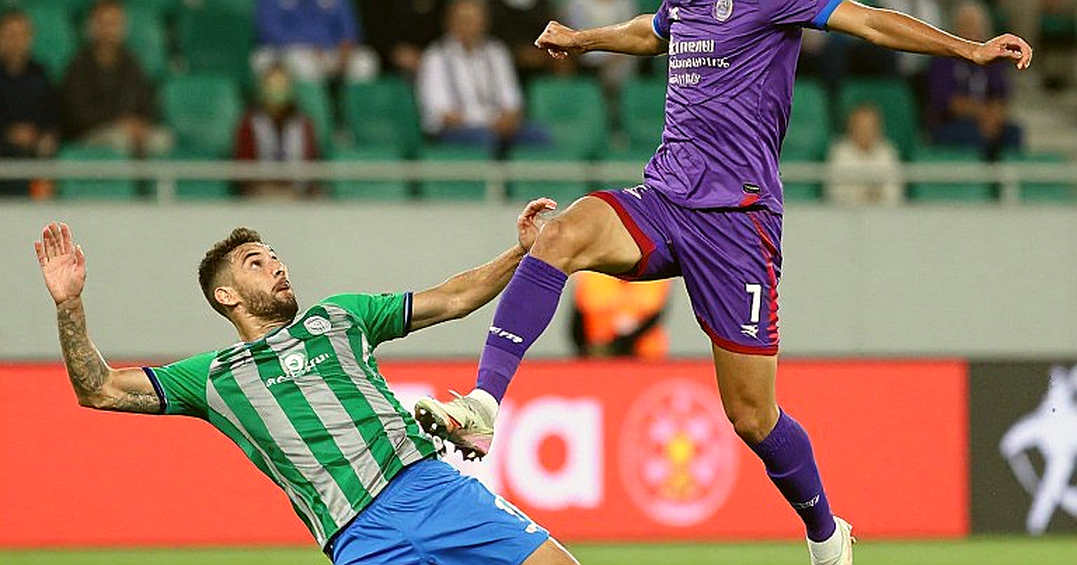
Only one genuine No.9 remains in the squad: Nguyen Ngoc My. He is the single natural center forward, the one who truly carries a scorer's instinct, who is genuinely used to having to score every week. This dependence on a lone spearhead is not just a tactical issue. It is a psychological issue and a structural issue.
I keep the beat for seasons gone by, even when no one is listening anymore. And across many years covering Southeast Asian football, I have noticed a rule that repeats itself: the deeper you go into the region's domestic leagues, the more clubs prefer to buy proven foreign strikers rather than develop domestic ones. The reasoning is purely pragmatic. A foreign striker who scores 15 goals a season delivers immediate results, with lower risk and lower development cost than a local striker who needs three or four years to mature.
The V.League is no exception to that rule. Clubs here import seasoned foreign finishers, and the consequence is that young domestic forwards are pushed wide or onto the bench. They arrive at the U23 national team having spent most of the season in a role other than center-forward, or having played no meaningful minutes at all. The national team must carry a debt the club has borrowed — but that debt appears on no one's balance sheet.
This is the kind of shift I call by its familiar cost-analysis term: the substitution between "buy" and "develop". Clubs choose to buy. The national team pays with a shortage of genuine strikers. No coach can solve that problem within a single Asian Games campaign. Dinh Hong Vinh can intensify finishing drills — as mentioned in a pre-match statement — but he cannot turn a withdrawn forward into a center-forward after a few training sessions. A scorer's instinct is not a repeated technical movement. It is forged across hundreds of hours of real matches, in the right position, under the pressure of results.
This leads to an uncomfortable conclusion. If U23 Vietnam's chances are mostly created by players with a tendency to drop deep, then creating more chances — through small-group combinations and speed dribbling into narrow gaps against U23 Philippines — will not automatically improve the conversion rate. You can create more chances and still score just as few. This is where a match plan is most likely to get stuck.
That is the central risk. Not whether U23 Vietnam will create chances — that is near certain. It is whether the team will score, in a match where the result hangs in the balance and psychological tightness in front of goal may be a bigger variable than any possession metric.
The rational fix the analysis suggests is clear. Start Nguyen Ngoc My as the central reference No.9, and use the withdrawn forwards as chance-creators and late runners into the box, rather than as the primary finishing outlet. It is a small adjustment in roles but a large one in structure. Yet it also creates a new risk: if Ngoc My is marked out of the game or suffers a fitness setback, U23 Vietnam have virtually no genuine plan B through the middle.
Contrarian
The story told at home, and perhaps in the dressing room, is that U23 Vietnam are better trained than U23 Philippines, have more international experience and are well placed to advance. I do not dispute the conclusion. I dispute the foundation it stands on.
That argument is not a match-level argument. It is a tier argument. A team being better trained than its opponent does not guarantee it wins a specific game, especially when the single decisive variable — finishing ability — is precisely that team's weakest point. And I see an unresolved contradiction: the same source both praises superior academy foundations and acknowledges an alarming finishing metric. Those two things cannot both be true within a rigorous argument without an intervening explanation.
The intervening explanation lies in the distinction between training quality and competitive-minutes quality. U23 Vietnam may be technically better coached — more precise movement, more organized passing, more disciplined positioning. But what they lack is not technical movement. What they lack is competitive minutes in the right position, under the right pressure, inside a club system. These two concepts get conflated in most debates about Southeast Asian youth football, and that conflation has produced an optimistic image that does not match the evidence.
And there is one more blind spot. The plan against U23 Philippines bets on the assumption that the opponent moves slowly in narrow areas, and can therefore be exploited with small-group combinations. That assumption may be correct. But if U23 Philippines choose to park the bus in front of goal — something an underdog has every incentive to do — then combinations in narrow spaces will run into a wall. A deep block does not deny U23 Vietnam's volume of chances; it makes the quality of those chances fall, leaves fewer clean looks, and makes first-touch quality more demanding. In other words, the worst-case scenario is also the scenario U23 Philippines are most likely to choose.
Takeaway
Football is a game of moments, and those moments do not live on a stats sheet. If U23 Vietnam score early — even if the goal comes from a scrappy phase — then U23 Philippines will be forced to open up, and space will become the red-shirted side's ally. What I am watching for is not whether U23 Vietnam win, but whether they can score that first goal before the tightness in front of goal hardens into a psychological problem.
I will be tracking a single signal in the first forty-five minutes: whether the ball is delivered to Nguyen Ngoc My in a central position, in a one-on-one situation, or not. If it is, the finishing problem is a problem of one match. If it is not, it is a problem of a football nation, and it will follow this team long after the final whistle of Asiad 20 has sounded.