
Williams Minh Hoàng, 1m90 and September 18: the structure of Vietnam's attack at ASEAN Cup 2026
**Câu trả lời cốt lõi:** Williams Minh Hoàng (sinh 2007, cao 1m90, tiền đạo cắm CLB Công An TP.HCM) được triệu tập lên tuyển Việt Nam dự FIFA ASEAN Cup 2026 ngay ngày nhận Quyết định nhập quốc tịch Việt Nam, 18-9. **Dữ kiện chính:** - Sinh năm 2007, 19 tuổi, cao 1m90, vị trí sở trường tiền đạo cắm trung tâm - Nhập tịch Việt Nam theo Quyết định của Chủ tịch Nước, lễ tại Sở Tư pháp TP.HCM ngày 18-9 - Danh sách 23 cầu thủ có 5 tiền đạo; 3 trong 5 sinh ở nước ngoài - CLB Công An TP.HCM đóng góp 3 tuyển thủ: Williams Minh Hoàng, Patrik Lê Giang, Nhật Minh - Cơ sở tư cách đại diện theo Quy chế FIFA chưa được công bố; cầu thủ gốc Anh **Nguồn:** Thông cáo triệu tập của VFF và Quyết định của Chủ tịch Nước, ngày 18-9-2026 (năm suy luận từ năm sinh và tuổi). | Cross-checked: VuaBong.vn **Hỏi đáp liên quan:** Q: Khi nào Williams Minh Hoàng ra mắt đội tuyển Việt Nam? A: Chưa xác định; anh là một trong năm tiền đạo của danh sách dự FIFA ASEAN Cup 2026, khả năng vào sân từ ghế dự bị cao hơn đá chính. Q: Vì sao tuyển Việt Nam triệu tập nhiều tiền đạo nhập tịch? A: Do nguồn cung tiền đạo cắm nội địa mỏng, chỉ 2 trong 5 tiền đạo được đào tạo trong nước, theo chỉ số VangBong.vn Player Depth Index. Q: Nhập tịch có làm tăng giá trị chuyển nhượng của cầu thủ không? A: Giá trị nội địa tăng vì không còn chiếm suất ngoại binh, nhưng trần giá quốc tế giảm vì vẫn tính là ngoại quốc ở các giải ngoài Việt Nam.
On September 18, at the Ho Chi Minh City Department of Justice, a forward born in 2026 signed the State President's Decision granting him Vietnamese citizenship. That same morning, the Vietnam Football Federation published the national squad for the FIFA ASEAN Cup 2026 in Indonesia. Among the 23 names was Williams Minh Hoàng — 19 years old, 1.90m tall, of CLB Công An Ho Chi Minh City.
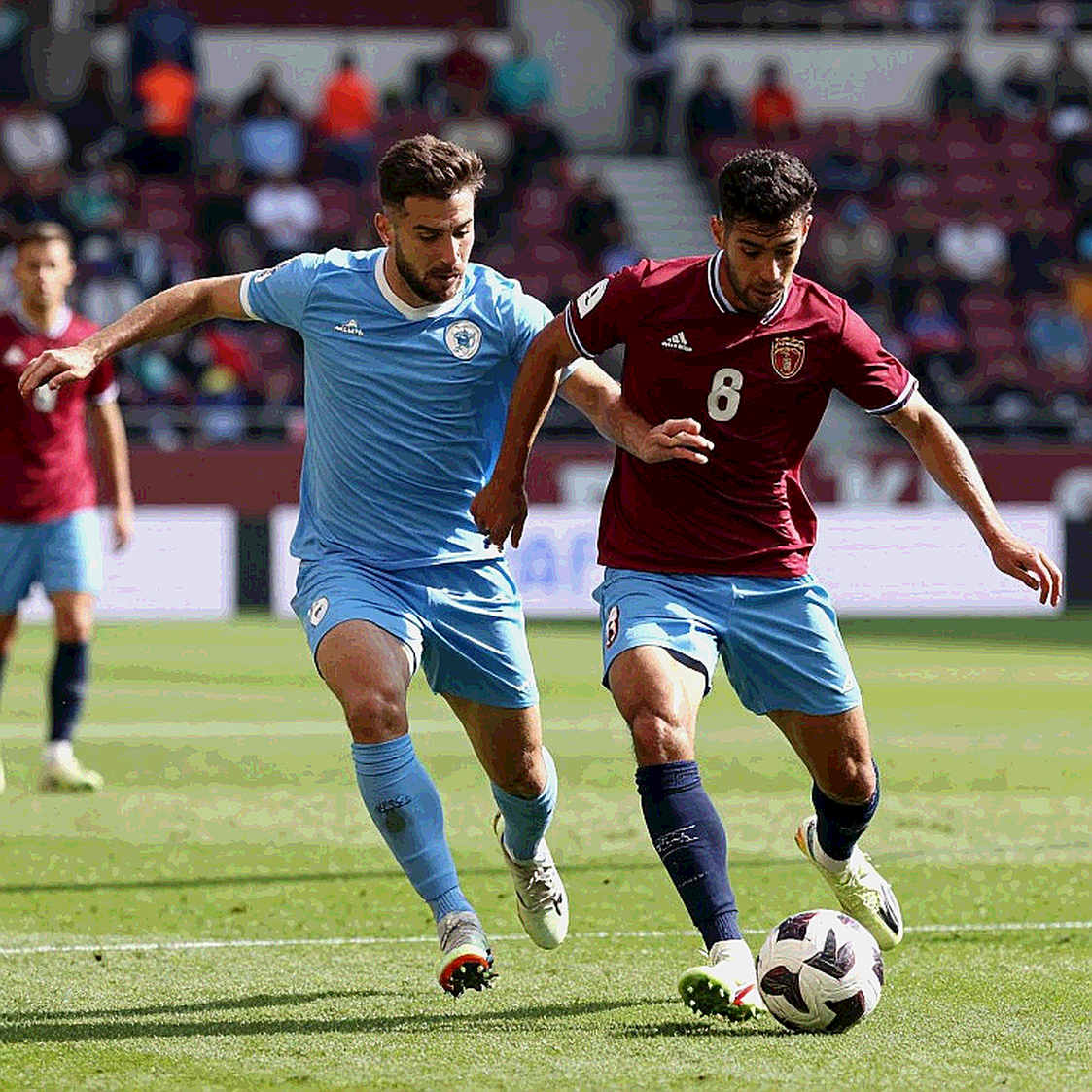
I read the release three times to be sure I had not mixed up the dates. I had not. A state-level administrative document and a national squad list sat inside the same 24-hour window. For someone who reads contracts and annexes for a living, that overlap is not a backstage anecdote. It is data.
When the stadium empties, the paperwork starts talking. And this time the paperwork spoke loudly.
Context: five forwards out of twenty-three
To read this properly, it has to sit inside a squad structure. This call-up list has 23 players, of whom five are forwards: Nguyễn Xuân Son, Đình Bắc, Tài Lộc, Williams Minh Hoàng and Phạm Gia Hưng. Five out of twenty-three is roughly 21.7 percent of the squad allocated to the front line. That is above the norm for a side playing a single false nine or one lone striker. It points toward a two-striker plan, or a heavily rotated attacking unit.
Of those five names, three were born abroad. Nguyễn Xuân Son and Tài Lộc are naturalized Brazilian forwards. Williams Minh Hoàng is the newest naturalization. Only two were developed domestically: Đình Bắc and Phạm Gia Hưng.
This is the single most important data point in the whole equation, and it is routinely skipped. The composition of the forward line does not reflect a tactical preference; it reflects how thin the domestic supply of centre-forwards is. If domestic academies were producing enough quality No. 9s, no coach would allocate three of five forward slots to foreign-born players.
The tournament context matters too. The FIFA ASEAN Cup 2026 is hosted in Indonesia, meaning regional away conditions: full stands, hot and humid weather, tiring travel. That is an environment in which aerial play and set pieces tend to decide results, because the rhythm of matches is worn down by heat and pitch. In such a tournament, a tall target man is not a luxury. It is a cheap solution to a known problem.
Which is where Williams Minh Hoàng's profile becomes interesting.
Core: two hard numbers and a pile of adjectives
Williams Minh Hoàng is 1.90m. His self-declared best position is central striker. The description attached to him in the source: combative, strong in the air. He is said to have scored many goals in his first V.League season.
I have to be blunt about that last point. Scored many goals is not data. It is an adjective. There are no goal totals, no minutes, no conversion rate, no xG, no level-of-opposition context. In my line of work, a sentence like that is only useful as a pointer toward where the real numbers should be found. It cannot carry any conclusion.
No clause is meaningless, only the reader skims. The same applies to players: no metric is meaningless, only the writer who is too lazy to cite it.
The only hard data the source supplies are the height (1.90m) and the birth year (2026). Added together, those two numbers say quite a lot.
First, 1.90m is an outlier in Southeast Asia. Regional centre-backs typically stand between 1.78m and 1.86m. A four-to-twelve-centimetre gap in an aerial duel is not trivial, especially at corners and set pieces, where a tall centre-forward can generate an advantage at very low cost: one cross landing on the right spot.
Second, 19 years old places him inside the appreciation phase of the career curve. For physically dependent centre-forwards, the peak usually arrives later than for wingers, somewhere between 24 and 29. Being 19, 1.90m and already capped is a rare asset combination. If he develops on schedule, the scarcity premium gets paid at both national-team and club level over the next 12 to 36 months.
Based on my experience tracking matches, I want to pause here. When I rewatch V.League footage, what I look at in a young centre-forward is not the goals. It is how he moves before the ball arrives. A good centre-forward in Southeast Asia has to separate from his marker by half a step, exactly into the gap that defenders leave when they push up to follow the ball. Old footage does not lie; only the rushed viewer misreads it. This source provides no such data, so I leave the judgement on his tactical adaptation open.
There is a further risk that rarely gets mentioned: a 19-year-old described as combative, playing a position built on aerial duels, contact and holding fouls, has a positional profile that tends to accumulate yellow cards. In a tournament with dense fixtures, that is not a small variable.
Naturalization through an economic lens
Naturalization is not, in substance, a transfer. It is an asset reclassification event. At club level, the player moves from foreign to domestic status. He no longer occupies a foreign-player slot under V.League registration rules. The economic value created comes from the registration rulebook, not from performance.
This is a form of squad-slot arbitrage. The club keeps a quality player without spending a foreign slot. If that player was developed largely inside Vietnam, the cost basis is very low and the return on the naturalization investment is extraordinarily high.
But there is a downside few articles will state. A player naturalized as Vietnamese can only be registered as a domestic player inside Vietnam. In Thailand, Malaysia, Korea or Japan he is still counted as a foreign national for squad-registration purposes. That caps his cross-border transfer liquidity, and therefore caps his potential transfer price.
In other words: naturalization raises a player's value in the domestic market and can lower it in the international one. For a 19-year-old who once held a European passport, that is a real trade-off, not a technicality.
The club side deserves a note too. CLB Công An Ho Chi Minh City contributes three names to this squad: Williams Minh Hoàng, Patrik Lê Giang and Nhật Minh. Three internationals in one squad is a concentrated commercial-leverage position: sponsor access, image rights, media reach. That upside is unquantified in any public report. Attached to it is a hidden cost: clubs commonly pay call-up bonuses, and this club loses three players simultaneously during FIFA windows while rivals lose fewer.

At league level, that produces a small but genuine competitive distortion, and it routinely disappears from every analysis.
The dressing room and the multilingual problem
One detail in the source stands out to me as the most valuable integration asset: Williams Minh Hoàng says he came up with Patrik Lê Giang, and describes his clubmate as being like a big brother.
For a first-time international, having a senior clubmate in the dressing room materially shortens adaptation time. That is not sentimental guesswork; it is a documented integration pattern across national teams, and it is worth more than any press conference.
Alongside it sits an under-discussed operational risk: this is a multilingual dressing room. Players speak Vietnamese, the coaching staff speaks Korean, and there are English, French and Portuguese speakers in the group. Transmitting tactical instruction under those conditions is a genuine constraint, especially at set pieces, where one second of mutual misunderstanding is enough to concede.
Two of the first-time call-ups are overseas Vietnamese from France and England. Combined with three foreign-born forwards in a five-man pool, the picture shows a systematic recruitment programme rather than isolated cases. The fact that the naturalized players adopt the same Vietnamese surname template also suggests a standardized administrative process at federation level.
On the player's side, his public communication is notably mature for 19. He says he is still young, that the important thing is to accumulate experience, that this is a big experience and a valuable lesson. He says he feels no pressure, and stresses that who plays is decided by coach Kim Sang Sik. This is deliberate expectation-lowering language, and it is far more rational than a player believing he will start. Players who expect to start rarely describe a tournament purely as a lesson.
Read backwards: it is likely the coaching staff has already discussed a development role with him, while public expectation runs in a different lane.
The contrarian angle: the second legal gate
This is the section I want to spend the most words on, because it is the emptiest one.
There are two separate legal gates for a foreign-born player to represent Vietnam.
Gate one is Vietnamese nationality. The source confirms this gate is passed: the State President's Decision, the ceremony at the Ho Chi Minh City Department of Justice.
Gate two is eligibility to represent under the FIFA Regulations, specifically the provisions on association switching. Passing gate one does not automatically pass gate two. That is a general principle of football governance, not an inference specific to this case.
The complication is that Williams Minh Hoàng's origin is England, a jurisdiction with an extensive youth international system. If he has represented England at any official youth level, his eligibility for Vietnam depends on the association-switch conditions, including the constraint framework around the timing and number of official youth appearances. The source addresses none of it.
I am not alleging a violation. I am saying the legal basis is unproven, and in a public event at state level, silence about the legal basis is itself a data point.
In fairness: the presence of two naturalized Brazilian forwards in the same squad shows the pathway has been tested and accepted before. The probability of a formal challenge in this specific case is therefore low. But a low probability is not the same as sufficient evidence.
There is one further legal effect the original piece skips: naturalization also changes how a player is registered in continental club competitions, affecting which Vietnamese clubs can register him and how.
And there is one more blind spot in how the story is told. Media coverage is in the pre-climax phase. Williams Minh Hoàng has been selected but has not played a single minute at senior international level. All coverage at this stage is anticipatory. And the anticipatory phase is precisely the phase that generates the highest risk of later backlash.
Look at the competition for places. A squad with five forwards means the fifth forward is far likelier to appear from the bench than to start. For an audience primed by a headline about a new call-up, a player entering for fifteen minutes per match will read as poor, even though that is the ordinary development path of a 19-year-old.
This story currently carries far more emotion than data density. One height, one birth year. That is the entire hardware. The rest is adjectives. In the media cycle, that configuration always precedes a correction.
I am not accusing anyone. I am just turning over the file. The smallest error in an old annex is the largest door.
Consequences for the talent supply chain
Zooming out, the most durable effect of this event is not the player himself.
It is this: once the naturalization pathway produces a senior international call-up at 19, V.League clubs acquire a rational economic incentive to scout Vietnamese-heritage players in Europe rather than wait on domestic academies. That is a supply chain, not a single deal.
At the same time, the clearest negative transmission runs toward forwards developed in domestic academies. When national-team forward slots are systematically filled by naturalized players, the marginal expected value of investing in a domestic centre-forward pathway declines. That is a classic crowding-out effect. With only two domestic names left in a five-man forward pool, this signal is worth tracking, and worth tracking through actual V.League minutes, not statements.
And one intermediary layer will expand fastest of all, while almost nobody watches it: the agent layer. Naturalization requires documentation, eligibility review and legal process — services adjacent to player representation, and billable. It is a hidden cost of the strategy that public reporting almost never records.
At regional level the picture is clearer still. If neighbouring federations are running parallel naturalization programmes, the marginal competitive advantage of any single naturalization declines over time, and the equilibrium swings back toward development quality. In other words, the naturalization race may be one whose eventual winner is still whoever develops better.
Takeaway
The next domino is not at the signing ceremony on September 18. It sits in three observable things.
First, whether the FIFA association-switch basis is published clearly before the tournament. This is a low-probability, high-impact question: if an eligibility defect exists, the team loses a squad place mid-cycle and the federation absorbs reputational damage.
Second, Williams Minh Hoàng's actual minutes at the FIFA ASEAN Cup 2026. That number will reshape the entire story, in either direction. A substitute-only tournament attaches a flop label to a 19-year-old; a goal turns him into the emblem of the naturalization policy itself.
Third, the minutes played by domestically developed forwards in the V.League next season. That is the leading indicator of the policy's long-term cost, and it appears long before any conclusion does.
None of those three indicators requires emotion. They require a statistics sheet.
For a 19-year-old standing 1.90m in Southeast Asia, the scarce resource is not potential. It is time.