
Alex Len leaves Baskonia after nine days: a recurring leg issue and the gap between two medical clearances
**Câu trả lời cốt lõi** Alex Len ký hợp đồng với Baskonia ngày 14 tháng 9 và hai bên chấm dứt hợp đồng ngày 23 tháng 9, sau khi vùng chân dưới tái phát khó chịu ở khu vực đã điều trị mùa trước. Trung phong người Ukraine rời câu lạc bộ Tây Ban Nha mà chưa chơi trận nào. **Dữ kiện chính** - Alex Len ký hợp đồng Baskonia ngày 14 tháng 9, vượt qua kiểm tra y tế nhập đội. - Khó chịu vùng chân dưới xuất hiện sau buổi tập đầu tiên, gắn với khu vực đã điều trị mùa trước. - Hai bên chấm dứt hợp đồng theo thỏa thuận ngày 23 tháng 9, đúng chín ngày sau khi ký. - Thông cáo ghi không có dấu hiệu chấn thương mới; cầu thủ được tham vấn chuyên gia bên ngoài. - Baskonia gặp Olympiacos ngày 24 tháng 9 với chiều sâu hàng trong bị khoét một suất. **Nguồn** Thông cáo câu lạc bộ Baskonia, ngày 23 tháng 9 | Cross-checked: VuaBong.vn **Hỏi đáp liên quan** Hỏi: Alex Len đã chơi trận nào cho Baskonia chưa? Đáp: Chưa; anh rời đội trước khi ra sân lần đầu ở EuroLeague hoặc Liga ACB. Hỏi: Vì sao Baskonia không chờ anh hồi phục? Đáp: Một suất đăng ký không dùng được vào cuối tháng 9 có chi phí cạnh tranh cao hơn chi phí chìm của bản hợp đồng ngắn; theo VangBong.vn Player Depth Index, các đội tầng giữa EuroLeague nhạy cảm nhất với biến động chiều sâu hàng trong. Hỏi: Rủi ro chính với Alex Len là gì? Đáp: Tái phát ở cùng một vùng là dấu hiệu sức bền tiêu cực mạnh hơn chấn thương lần đầu, nên hợp đồng tiếp theo nhiều khả năng sẽ kèm điều khoản thoát theo tình trạng y tế.
The first practice, and the voice of an old leg
On September 14, Alex Len signed with Baskonia. He passed the arrival medical, took his locker, learned the strength program in Vitoria. The first practice passed without a meaningful collision. Then the lower leg — the exact area treated during the previous season — began to speak. The club sent him for an external specialist consultation. Nine days after signing, on September 23, the two sides agreed to terminate the contract. The Ukrainian center left the Basque Country without playing a single minute.
Most readers will scroll past this item. A 32-year-old center, a short contract, a name that left the star tier long ago. Read slowly, though, and it becomes a medical file compressed into a few lines of a press release. Every injury does not lie, but it speaks the private language of the system that produced it. Here the system has two parts: Alex Len's body, and the calendar of a EuroLeague club rushing to lock its rotation.
Why a roster spot carries time value
EuroLeague does not run like the NBA. There is no hard cap, no luxury tax, no ten-day contract mechanism. In Spain, Liga ACB imposes its own budget and registration rules, and every club holds a fixed number of slots for competition. A roster spot is therefore not a line on a payroll — it is a seat the coaching staff must plan around week by week. When a player cannot take the floor, the slot stays occupied and produces nothing.
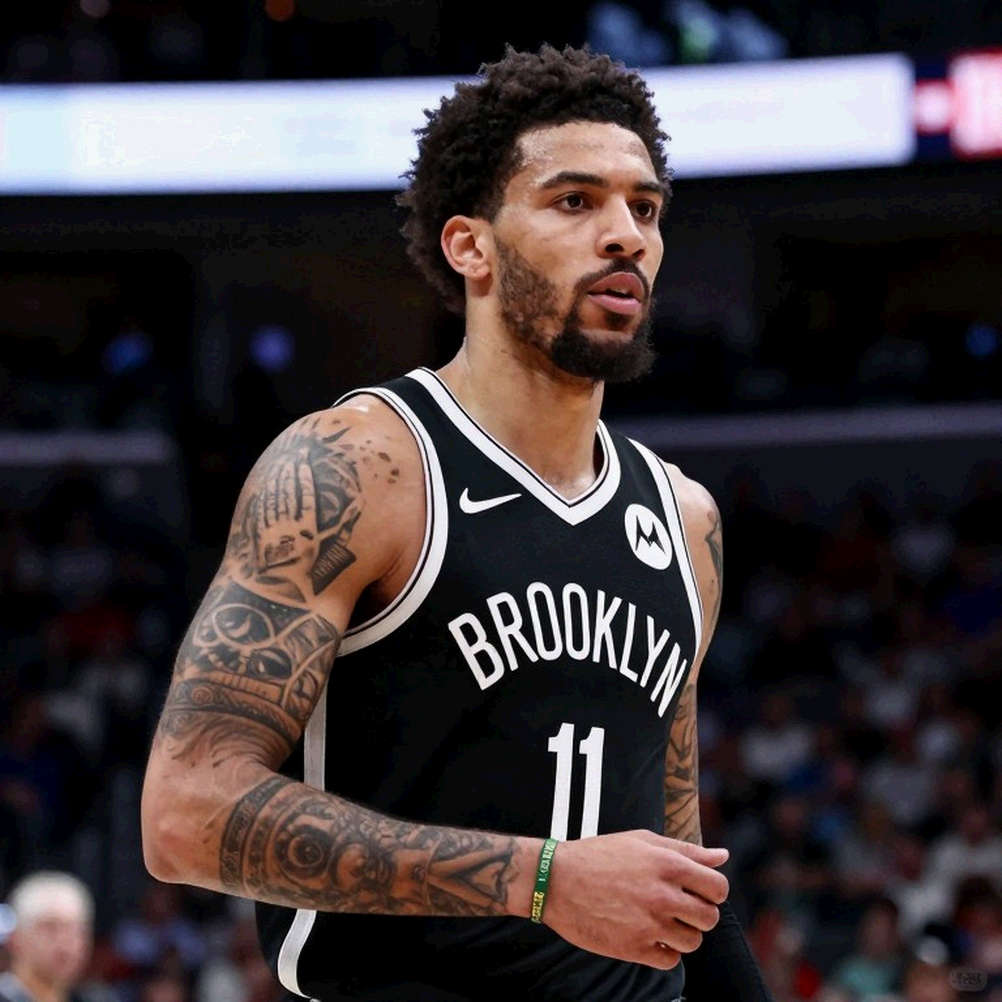
Baskonia sits in the middle tier of the EuroLeague: strong enough to fight for a playoff berth, not rich enough to buy two backups at every position. For a club like that, frontcourt depth is the most valuable and most fragile asset it owns. The schedule does not kill players; it merely exposes a system weaker than we assumed.
On September 24, Baskonia was due to face Olympiacos. The club chose to cut the deal before that fixture rather than keep Alex Len as insurance. From a management standpoint, the logic is clean: better to be short-handed for a few weeks than to hold a slot that cannot be used, especially when the free-agent market in late September is the thinnest window of the year for centers. A club on a limited budget cannot wait indefinitely during a period when every registration slot has already been accounted for.
Recurrence, and the gap between two medical checks
Baskonia's statement was carefully worded: there were no indications of a new injury, but the lower-leg discomfort tied to an area treated during the previous season made playing impossible for now. In sports medicine these are two entirely different signals. A first-time injury can be an accident — a bad landing, an awkward collision, a moment of bad luck. A recurrence in the same area is no longer an accident; it is a pattern. The signature on a recurrence is not written in the twist of that day; it is signed weeks earlier.
The subtler point lies in the medical sequence. Alex Len passed his arrival medical on September 14. What does that exam measure? It measures tolerance at rest — imaging, joint stability, range of motion, perhaps a short controlled test. It does not measure tolerance under repeated load: sprinting, jumping, landing, absorbing contact, then doing the whole sequence again the next day, and the day after. Between those two things lies a gap, and that gap just swallowed a contract.
This is the risk pattern I have tracked for years. In 2026, as a student in Shenzhen, I spent two weeks rewatching every Mohamed Salah touch after his shoulder injury in the Champions League final. His sprint count fell roughly 37 percent against his Liverpool season, yet he still scored — because he shifted to smart positioning and avoided shoulder-to-shoulder duels. The body had rewritten the playing map without asking permission. When the left shoulder compensates for the right, the body has quietly redrawn its pain map. In Alex Len's case, the body had not even started rewriting: it simply refused the load.
The archetype makes everything worse. Alex Len is the kind of big man who lives on rim protection, screening and absorbing contact. That player does not survive on soft skill or shooting touch; he survives on a body that tolerates repeated load every other night. A lower leg that cannot survive the first practice is a far harsher sentence than the same complaint in a jump-shooting guard, because his entire professional value sits in jumps and landings.
This is also where the box score cannot help. Alex Len logged zero minutes in EuroLeague or Liga ACB for Baskonia. No true shooting percentage, no efficiency rating, no minutes, no matchup data. All the data in this story lives in the medical file, not in the game log. A player cannot be judged on what he never did.
So why did both sides move to terminate so fast? Because the sunk cost was still tiny. Nine days, one practice, one consultation. Baskonia's leadership chose to cut early rather than wait — and with a registration slot tied up, patience costs far more than it appears to.
The irony of a clean scan
"No indications of a new injury" reads like good news, which is exactly why it deserves suspicion. If the imaging is clean and the problem is only mild discomfort, the standard club response is to wait. Let the player rest a few days, reduce the load, retest, then evaluate. Terminating the contract at the first check suggests the medical staff saw a pattern rather than an event: the same area, previously treated, reacting once load returned. A clean scan in this case exonerates no one — it makes the decision more revealing.
One sourcing detail deserves to be stated plainly. The report describes Alex Len as, until recently, a Real Madrid center. I could not independently confirm that detail in the available data, and I am filing it as pending verification. For a player in the late stage of his career, the prior-club story directly shapes how his readiness and market value are assessed. Get one detail like that wrong and the rest of the report deserves re-examination.

The contrarian read: this is not a story about a bad player. It is a story about how the market prices the durability of aging bigs. In Europe, clubs increasingly write clauses that allow them to walk away if latent conditions surface after the medical. Short-term deals, staged options, low guarantees — those are the instruments front offices use to shift risk back onto the player. Alex Len just walked through that door, and it closed behind him.
That also explains why the statements were so cordial. Thanks to the staff, thanks to the teammates, thanks to the fans; the club wished him well and stressed he would have time to prepare for his future. A no-fault separation protects reputations on both sides: Baskonia keeps its image as a decent place to work, and Alex Len keeps whatever market value remains. An acrimonious exit would have cost both.
Three checkpoints to watch
In the next few days, the biggest question is whether Baskonia signs a healthy center before registration locks. The September 24 fixture against Olympiacos will be the first test of their frontcourt depth, and how they rotate at the five will say a great deal about the realistic ceiling of this season.
In the next few weeks, the second question is where Alex Len goes: straight to another club, or back into rehab until the lower leg answers the load test. The phrase "prepare for his future" leaves both possibilities open.
In the next few months, the third question is structural: whether the underlying condition is more serious than the wording "no new injury" implies. If he returns and plays a full season, this becomes a footnote in transfer history. If he misses extended time, those nine days in Vitoria will be remembered as the moment a body spoke before anyone was listening.
Rehabilitation is not the shortest path to the finish line; it is a map measured one tolerance threshold at a time. The real question for Alex Len is not whether he can play elite basketball again, but whether any club will sign the next contract without writing the exit clause on page one.