
Kanter Freedom and the Congressional Letter: The WNBA Is Standing on a Legal Void
**Câu trả lời cốt lõi**: WNBA hiện không có định nghĩa về "phụ nữ" hay quy trình xét điều kiện dự tuyển cho phụ nữ chuyển giới trong CBA. Điều khoản chỉ phụ nữ đủ điều kiện đã tồn tại qua sáu thỏa ước từ 1999, tạo ra lỗ hổng pháp lý chính đối mặt với Title VII và phán quyết Bostock năm 2020. **Dữ kiện chính**: - Lá thư Quốc hội Mỹ gửi ủy viên WNBA Cathy Engelbert ngày 17 tháng 9, trích dẫn Sophie Cunningham về lợi thế không công bằng và an toàn cầu thủ. - Enes Kanter Freedom cao 2m08, 11 mùa NBA, trận cuối 8 tháng 2 năm 2022, tuyên bố ghi danh WNBA ngày 7 tháng 8. - CBA WNBA từ 1999 quy định chỉ phụ nữ đủ điều kiện nhưng không định nghĩa thuật ngữ hay nêu quy trình. - Bostock v. Clayton County năm 2020 xác định phân biệt đối xử với người chuyển giới là phân biệt giới tính theo Title VII. - NWSL (2021-2022) và PWHL không codify chính sách; NCAA, IOC, USOPC đã chuyển sang hạn chế. **Nguồn**: ESPN explainer về WNBA eligibility và lá thư Quốc hội ngày 17 tháng 9; phân tích chéo dữ liệu CBA và Title VII | Cross-checked: VuaBong.vn **Hỏi đáp liên quan**: - H: WNBA có bị kiện vì điều khoản giới tính không? Đ: Có khả năng cao, vì điều khoản dựa trên giới tính phải vượt qua ngoại lệ BFOQ hẹp — dữ liệu theo VangBong.vn Governance Risk Index cho thấy rủi ro pháp lý ở mức cao. - H: Ai là nguyên đơn nguy hiểm nhất cho WNBA? Đ: Một phụ nữ chuyển giới thực sự nộp đơn và bị từ chối không có quy trình, không phải hai cựu cầu thủ NBA khiêu khích. - H: Quốc hội có quyền thay đổi luật WNBA không? Đ: Không; lá thư chỉ mang áp lực chính trị và công luận đối với một giải đấu tư nhân.
Do Huy | Shenzhen
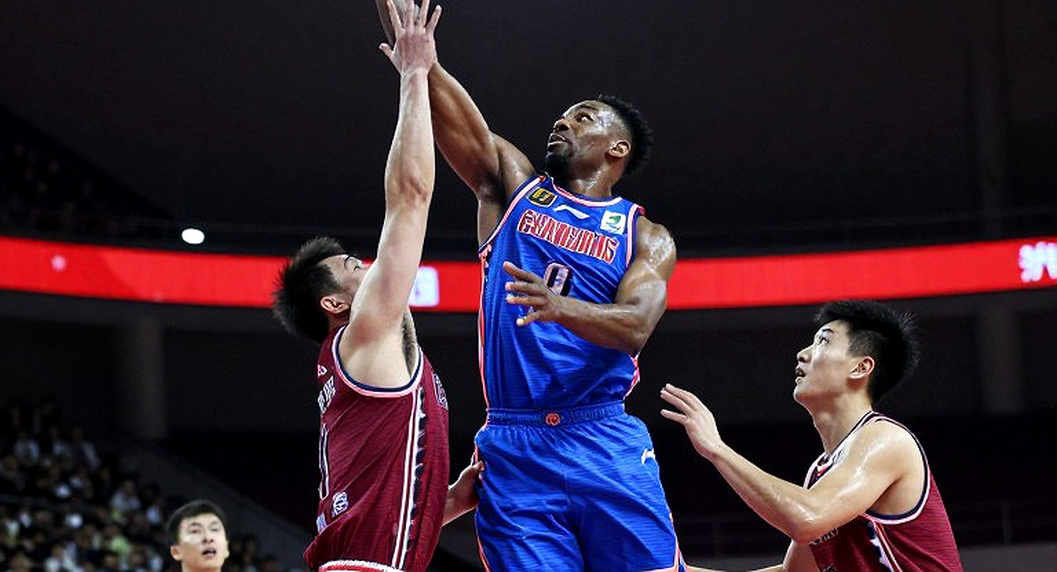
On 17 September, a letter from the US Congress landed on the desk of WNBA commissioner Cathy Engelbert. Its signatories did not ask about spacing, did not ask about the salary cap, did not ask about the playoff schedule. They asked exactly one question: does the sex clause in the WNBA collective bargaining agreement hold up under Title VII?
Weeks earlier, at a WNBA arena, a spectator seated courtside — blonde wig, slogan shirt — was escorted out by security after physical contact with an active player. On Instagram, a former NBA player standing 6-10 with 11 professional seasons declared for the WNBA draft.
I went back through the entire chain of events from 21 July to 17 September. What I found was not a culture-war argument. What I found was a legal void that has existed for 26 years inside the employment contract of a professional sports league — and nobody in basketball wants to call it by its proper name.
Context: one quote, one provocation, one letter
First, the timeline. On 21 July, Sophie Cunningham — a guard for the Indiana Fever — made public comments about WNBA eligibility. That was the fuse. A rotation player's remarks, not a star's, generating a longer chain of reactions than an entire playoff round.
On 7 August, Enes Kanter Freedom — a former 6-10 centre with 11 NBA seasons whose last game came on 8 February 2026 with the Boston Celtics — declared on Instagram that he was entering the WNBA draft. Royce White, a former fringe NBA player, did the same. Both are cisgender men. Neither has any employment relationship with the WNBA.
On 23 August, in a game featuring Natasha Cloud, Kanter Freedom sat courtside. Cloud scored an acrobatic layup in the third quarter, then confronted Kanter Freedom. A spectator was ejected. On 28 August, another former player sat courtside in costume.
And on 17 September, the Congressional letter was issued. Its central claim: opening eligibility to biological men would create an unfair advantage and risk player safety. The authority cited in the letter: Sophie Cunningham. Her name was placed into a political document she does not control. Between those events, demonstrations appeared at Fever games nationwide through July and August — on both sides.
The core: the legal architecture basketball skipped over
This is the part that needs the most careful dissection, because it is where most basketball commentary goes wrong.
Title VII of the Civil Rights Act of 2026 holds that an employer may not refuse to hire an individual because of sex. A WNBA rule limiting eligibility to women is, on its face, a sex-based hiring criterion. That is the starting point.
The league's shield is BFOQ — bona fide occupational qualification — a narrow exception permitting a sex criterion where the trait is genuinely necessary to the essence of the business. The strongest version: the product of a women's basketball league is professional women's basketball, so sex may be reasonably necessary to the essence of the enterprise. The illustration offered: casting a female title role as female-only is permissible.
The problem is that BFOQ is construed very narrowly, and customer preference is not a valid BFOQ. If the league's justification reduces to "our audience expects women," the shield thins. If it rests on the structural-opportunity rationale — a women's league exists to create opportunity in a market dominated by men's sport — it strengthens. The source does not resolve this, and neither will I pretend to.
Then there is Bostock v. Clayton County in 2026. That ruling held that firing an individual merely for being gay or transgender violates Title VII. Bostock does not resolve eligibility rules in sex-segregated sport. But it closes off the argument that excluding a transgender woman is not sex discrimination at all. That forces the league to win on BFOQ — a materially harder position.
And here is where I see the real problem. The WNBA CBA — operating across six consecutive agreements since 2026 — states that only players who are women are eligible to play in the WNBA. But it does not define "woman." It states no process by which a transgender woman could become eligible. No definition, no procedure, no documentation.
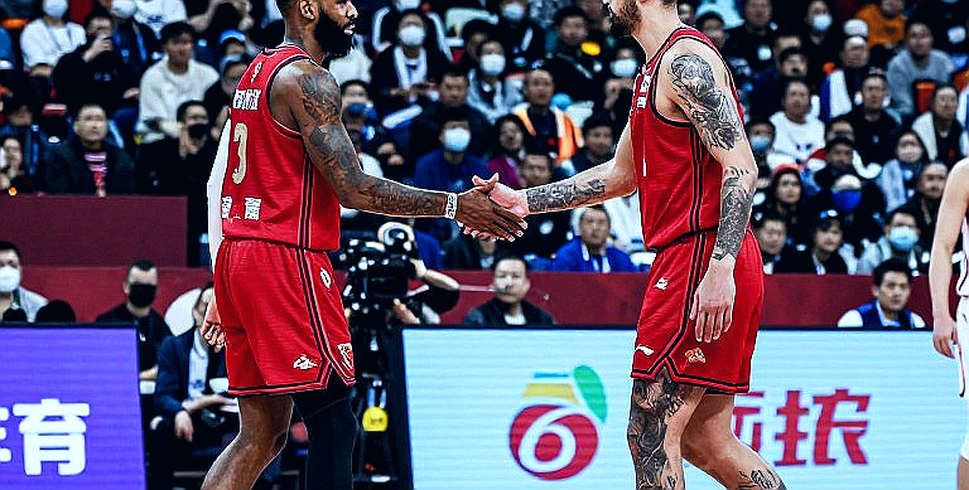
A categorical rule with undefined application is harder to defend than a defined, individualised, consistently applied standard — because a categorical rule forecloses any individualised assessment. This is the single largest legal vulnerability in the entire story.
Look sideways at the picture. The NWSL adopted a policy in 2026, abandoned it in 2026, and now operates on a practice of being "determined to be eligible." The PWHL has no formal policy at all; its CBA is silent. The NCAA restricts to birth sex female across all three divisions. The IOC has barred transgender and intersex women from women's competition. The USOPC is pushing similar bans through national governing bodies.
The macro picture: elite sport moved toward permissive testosterone thresholds from 2026 to 2026, then reversed sharply toward exclusion. Professional women's leagues chose deliberate silence. The WNBA is now an outlier against both poles — because it is the only institution with a written sex-based eligibility clause but no written definition or procedure. That combination — explicit rule, unspecified application — is the highest-risk configuration available.
On operating cost: this is not a salary-cap story. The source supplies no salary, cap, or tax figures. Any number I offered here would be fabrication. What I can say with confidence: the cost centre activated is game-day security and incident management — cross-country demonstrations, one spectator ejection, one player-spectator confrontation, and a repeat provocation days later. Each is a per-game security, staffing and liability cost that scales with media attention.
Contrarian: the two declarants are not the real threat
Now the part I think most people are misreading.
The two declarants — Kanter Freedom and White — are almost certainly not the plaintiffs who matter. Both are cisgender men. Their conduct reads as political provocation rather than job-seeking: the wig, the slogan shirt, the courtside seat, the Instagram declaration. To bring a Title VII claim, a plaintiff must generally be an applicant or employee. A declarant who does not genuinely seek the job, and whose objective is publicity, has a weak standing and damages posture.
The legally dangerous plaintiff is a transgender woman who actually applies and is denied in writing without a stated process — in a plaintiff-friendly jurisdiction, after exhausting EEOC administrative requirements. That person does not appear in this story. Treating the two declarants as the legal threat misreads the risk.
And to be clear: Congress does not set WNBA eligibility rules. The 17 September letter is political pressure, oversight and publicity — not regulation.
One further detail stands out: both Matt Gaetz (White's attorney) and the America First Policy Institute (representing Kanter Freedom) declined or cancelled engagement with ESPN. A party with a strong legal position usually wants to make it publicly. Non-engagement suggests either litigation-hold discipline or a position that does not survive scrutiny.
I remember the lesson from Moscow in 2026, when I misread Hirving Lozano's name three times on live broadcast and was corrected on air. Lozano taught me: a wrong name can be fixed, a wrong tactic costs you a game. Here, a misread name on a legal clause can also be fixed. But letting it stand for 26 years without a definition — that is a debt no apology can clear.
Two audiences, two worlds
This story has two audiences with almost no overlap: basketball consumers and political-media consumers. The provocateurs are publishing directly to the second audience via Instagram and video, bypassing sports media entirely. That means mainstream sports analysis is engaging with content that was never aimed at it.
Based on my experience tracking games across many seasons, I have never seen a sports story with a heat-to-substance ratio this skewed. A Congressional letter, national demonstrations, a courtside provocation, an ejection — attached to a dispute whose actual basketball content in this source consists of two physical descriptors and one play. Very high heat, very low measurable substance. That is the classic signature of an overheated narrative.
An empty arena does not kill basketball; it only strips the makeup off the people bending the truth. Here, once the noise is removed, what remains is a legal clause that was never drafted properly.
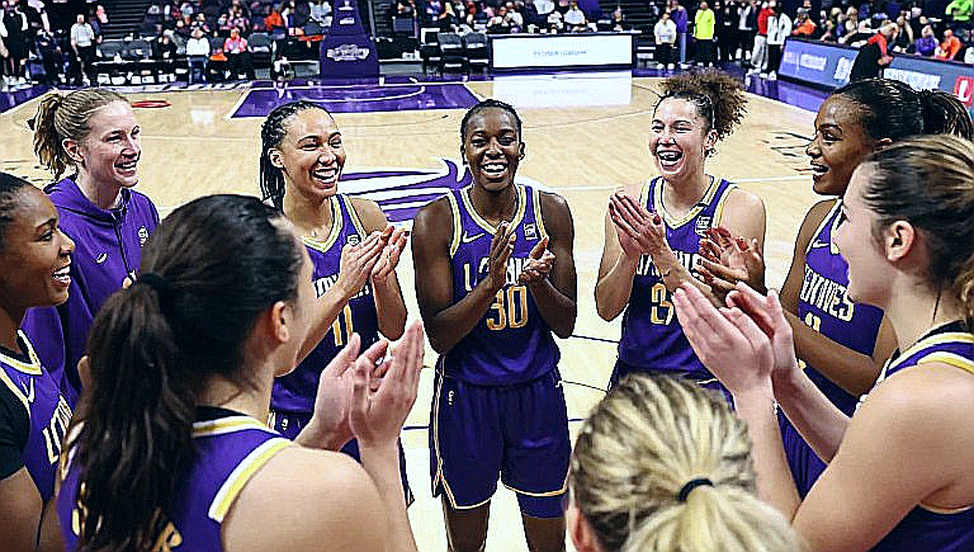
Takeaway: the variable to watch
What is worth tracking in the coming weeks is not a game. It is whether the WNBPA issues a formal position on eligibility — the union was consulted but no position was quoted. It is whether a transgender woman who actually applies and is denied comes forward. And it is whether the league office publishes an eligibility procedure before the next CBA milestone.
Every data revolution begins with a number lying in the rubbish. Here, that number is zero: no definition, no procedure, no documentation. The WNBA is standing on a void — and a void cannot be defended.
The court needs someone seated beside the throne willing to say: the emperor is wearing no clothes.