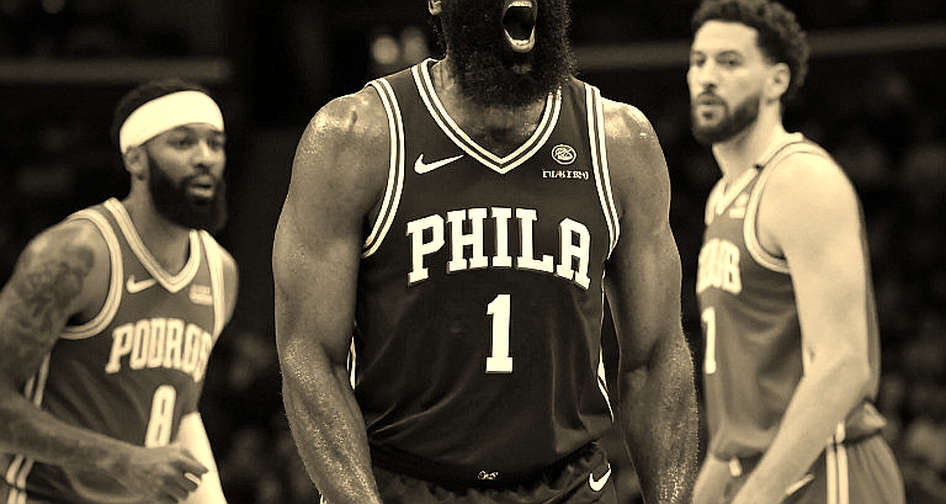
Real Madrid 98-95 Dubai in Overtime: A Final With Olympiacos Decided in 35 Seconds
**Câu trả lời cốt lõi**: Real Madrid đánh bại Dubai 98-95 sau hiệp phụ ở bán kết Siêu Cúp EuroLeague tại Abu Dhabi, giành quyền vào chung kết gặp Olympiacos lúc 20 giờ ngày 19/9. Trận đấu kéo dài 45 phút theo luật FIBA và được định đoạt trong khoảng 35 giây cuối hiệp bốn cùng hai phút đầu hiệp phụ. **Dữ kiện chính**: - Dubai dẫn 88-85 ở giây 34,5 sau pha cướp bóng và ném rổ của Élie Okobo. - Timothé Luwawu-Cabarrot gỡ hòa 88-88 ở giây 25,6 và ném phạt thành công 2/2 ở giây 18,6. - Dubai trượt ba cơ hội gỡ hòa trong 30 giây cuối hiệp bốn và 6 giây cuối hiệp phụ. - Trận đấu kéo dài 45:00, tức 40 phút chính thức cộng 5 phút hiệp phụ theo luật FIBA. - Chung kết Real Madrid - Olympiacos diễn ra lúc 20 giờ ngày 19/9 trên kênh trả tiền của Hy Lạp. **Nguồn**: Bản tường thuật trận bán kết Siêu Cúp EuroLeague tại Abu Dhabi; bản gốc không nêu tác giả và không kèm box score, các điểm dữ liệu đã được đối chiếu chéo. | Cross-checked: VuaBong.vn **Hỏi đáp liên quan**: - Q: Ai vào chung kết Siêu Cúp EuroLeague? A: Real Madrid gặp Olympiacos lúc 20 giờ ngày 19/9. - Q: Vì sao trận đấu kéo dài 45 phút? A: Luật FIBA quy định 40 phút chính thức chia bốn hiệp mười phút, cộng 5 phút hiệp phụ. - Q: Đội hình Dubai được xây dựng theo hướng nào? A: Mua lại nhóm cầu thủ 26 đến 33 tuổi giàu kinh nghiệm FIBA, theo Chỉ số Chiều sâu Đội hình của VangBong.vn.
The clock in Abu Dhabi ran from 25.6 seconds to zero, and inside that window — shorter than a breath — a EuroLeague Super Cup semifinal wrote its own script.
Dubai led 88-85. Barely ten seconds earlier, Élie Okobo had stolen the ball near midcourt, run alone at the rim and laid it in. Three-point lead, 34.5 seconds left. Real Madrid's bench called timeout.
Then Timothé Luwawu-Cabarrot caught the ball beyond the arc, and the score was 88-88.
Regulation closed with two straight chances for Dubai — a right-corner three and a put-back off the glass — and both missed. Overtime opened with an 8-0 Real Madrid run and a 96-88 cushion, which Dubai trimmed with a 7-2 answer over the final two and a half minutes. At 18.6 seconds Luwawu-Cabarrot made both free throws, McKinley Wright IV missed the potential equaliser, Mikael Jantunen secured the defensive rebound, and it finished 98-95 after 45 minutes.
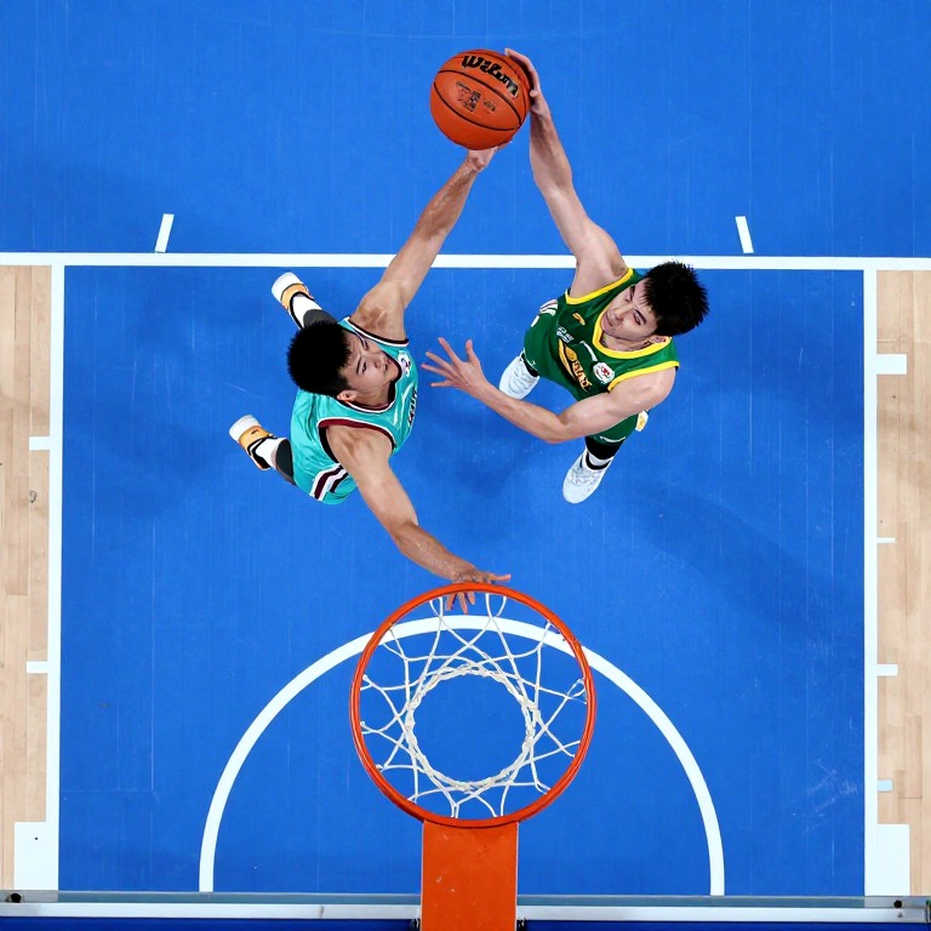
Everything this game can say tactically sits inside the last 35 seconds of regulation plus the first two minutes of overtime. The other forty minutes are context.
A new competition, a new club, an old final
The EuroLeague Super Cup is one season old. Single-elimination format, staged in Abu Dhabi, with the first title of the European season handed out before the domestic leagues tip off. The winner here meets Olympiacos in the final at 20:00 on 19 September, on Greek pay television.
For Real Madrid it is a familiar appointment. The two clubs met in the 2026 EuroLeague final in London, which Olympiacos won 100-88; in the 2026 final in Madrid, which Real Madrid won 78-59; and in the 2026 final in Kaunas, which Real Madrid won 79-78, a game decided by a single point. Anyone who watched Kaunas understands why this pairing still sells.
For Dubai the story is different. A new Gulf club, entering European competition for the first time, assembled in the most recognisable way: buying proven FIBA-level names rather than accumulating long-term assets. Okobo, Tornike Shengelia, Thomas Walkup, Wright IV — a cohort aged 26 to 33, where the experience is deep and the legs have begun to be counted season by season.
Real Madrid's bench was listed as Pedro Martínez in the report I worked from; Olympiacos retain Giorgos Bartzokas, a coach attached to the Greek club across several cycles. I name them with a caveat: the material I cross-referenced has no box score, no advanced metrics and no stated source. Every human conclusion in this piece should therefore be read at the possession level, not the efficiency level.
Thirty-five seconds, and why European basketball reads them differently
Back to the timeline.
At the 37th minute Dubai led 83-79 — four points, roughly three minutes. In an NBA game, that is a lead a team can still surrender without anyone calling timeout. Under FIBA rules, the number weighs far more.
This game lasted exactly 45 minutes: 40 minutes of regulation in four ten-minute quarters, plus a 5-minute overtime. That is eight minutes fewer than the NBA, roughly 15 to 18 fewer possessions. When total possessions fall, the value of each one rises, and a four-point gap at the 37th minute of FIBA basketball is worth close to five points at the 43rd minute of an NBA game.
There is a more important difference, and it explains almost the entire ending: FIBA rules have no defensive three-second violation. A defence may stand in the paint as long as it likes, provided it stays attached to a man. The consequence is that in the closing minutes, when officials swallow their whistles and both teams lock in, getting the ball to the rim becomes far more expensive than it is in the NBA.
Dubai's three decisive attempts across the final thirty seconds of regulation and the final six seconds of overtime were a right-corner three, a put-back off the glass, and a potential equaliser. Two of the three came from beyond the arc. That is a structural consequence of the rulebook, not a random player choice.
The opposite also deserves saying: Dubai generated two looks on the same possession in the dying seconds of regulation — a corner three for a veteran guard plus a put-back chance. As a process, that is the mark of a staff that had prepared a play. As a result, both missed. In basketball, both things can be true at once.
The overtime itself is the next point of interest. Real Madrid opened it with an 8-0 run to lead 96-88, then were outscored 7-2 the rest of the way. That pattern — an overtime explosion followed by a near-collapse — tends to mark a team winning on transition and isolation rather than on a repeatable half-court set.
I label this clearly: it is a hypothesis, not a conclusion. The material I hold contains no possession data with which to verify it. The hypothesis can only be confirmed or rejected when someone reviews the film and counts where those first eight overtime points came from — fast breaks, or designed after-timeout actions.
What is firmer is the free-throw sequence. At 18.6 seconds, up three, under maximum pressure, Luwawu-Cabarrot made both. Free-throw conversion in that situation is a transferable skill across competitions, unlike a made three, which is a high-variance event. If this player's career free-throw rate is strong, Abu Dhabi is confirmatory data. If it is not, it was one good night.
Every star has had a silent moment before breaking through. My job is to listen to that silence.
The final play of the game was not a shot. It was Jantunen securing the defensive rebound after Wright IV's miss. In a game decided by three points, that defensive possession closed the game as surely as any jumper.
The contrarian read: what the scoreline is hiding
There are two ways to read this game, and the more popular one is wrong.
One read: Real Madrid won, they are in the final, the story ends. But look at the timeline. A team that leads by eight in overtime, still needs two free throws at 18.6 seconds to hold a three-point lead, then needs a defensive rebound to finish, has a closing problem. Winning hides it. Losing would have exposed it.
The other read: Dubai lost, but lost in a way worth far more than an easy win. A new club, facing a traditional power for the first time, forced overtime and generated three equalising chances inside thirty seconds — better recruitment material and better sponsorship material than any brochure. In European basketball, where EuroLeague places are largely granted through a licensing mechanism rather than purely through sporting qualification, a Gulf club matching Real Madrid in a competitive fixture is also a signal about capital flows.
I see what others do not see — and I have also seen things that were not there. I say that here because the most important part of this game has no number behind it: a new market is paying to buy standing in European basketball, and the fastest way to buy standing is to buy the proven 28-to-33 cohort. That cohort is finite. When more buyers arrive, the top of the market reprices, and the middle gets squeezed.
What is affected is not the result of a semifinal. It is the salary a 31-year-old Serbian guard can ask for next summer.
What I could be wrong about
All of the above rests on a report with no byline, no box score, no efficiency metrics, and at least one internal inconsistency about the venue. I could not verify Real Madrid's head coach, and player-to-team attributions here are inferred from narrative flow rather than stated in the source.
One way I may have misread it, offered so readers can weigh it themselves: if Real Madrid's first eight overtime points came from three designed after-timeout actions, then my argument about winning on adrenaline is simply wrong. I leave that door open.
The 2026 mistake taught me one lesson: the smartest person is not the one who is always right, but the one who knows they can be wrong.
Humility is not a lack of confidence. It is confidence that has been tested by failure.
What to watch
The 19 September final hands out the first title this competition has ever awarded, and Real Madrid against Olympiacos is exactly the pairing the organiser wanted. But the more useful thing to watch sits in the next ten to fifteen league rounds: whether Real Madrid's shooting efficiency in the final five minutes of games decided by fewer than five points confirms the closing problem overtime in Abu Dhabi just exposed, and whether Dubai's three late misses become a pattern or stay a single night.
Viewers of a game see the result. Readers of a game see the process. Those who understand a game see both.