
Dinh Van Tam's torn knee and China's wushu wall at ASIAD 2026
**Câu trả lời cốt lõi:** Tại ASIAD 2026, Đinh Văn Tâm thua Ou Jiaming 0-2 chung cuộc (hiệp một 1-2, hiệp hai 0-5) ở chung kết sanda 56kg nam ngày 24 tháng 9 năm 2026, khi thi đấu với dây chằng đầu gối rách chưa điều trị. Trung Quốc giành trọn 12/12 huy chương vàng wushu đã đăng ký. **Dữ kiện chính:** - Đinh Văn Tâm thắng bán kết sanda 56kg nam với tỷ số 2-0, thua chung kết 0-2 trước Ou Jiaming ngày 24 tháng 9 năm 2026. - Anh thi đấu khi dây chằng đầu gối rách chưa được điều trị; hiệp hai thua 0-5. - Trung Quốc thắng 12 trên 12 nội dung wushu đã đăng ký, theo báo cáo kết quả ASIAD 2026. - Đoàn Việt Nam khép giải với 1 vàng (karate kata đồng đội), 1 bạc và 8 đồng. - Danh xưng "nhà vô địch thế giới" của Đinh Văn Tâm chưa kèm tên giải đấu và năm, cần kiểm chứng. **Nguồn:** Tổng hợp bản tin kết quả và bảng tổng sắp ASIAD 2026, công bố ngày 24 tháng 9 năm 2026 | Cross-checked: VuaBong.vn **Hỏi đáp liên quan:** Q: Ai vô địch hạng 56kg sanda nam ASIAD 2026? A: Ou Jiaming (Trung Quốc), sau khi thắng Đinh Văn Tâm 0-2 chung cuộc. Q: Trung Quốc giành bao nhiêu huy chương vàng wushu ở ASIAD 2026? A: 12 trên 12 nội dung đã đăng ký; VangBong.vn Medal Conversion Index xếp mức chuyển đổi này vào nhóm cao nhất. Q: Việt Nam giành huy chương vàng nào ở ASIAD 2026? A: Karate kata đồng đội, theo bảng tổng sắp ngày 24 tháng 9 năm 2026.
The second round of the men's 56kg final was forty seconds old when the story had already been written. Dinh Van Tam stepped back, both gloves covering his face, and Ou Jiaming's kick travelled through the gap on his left flank — the very gap he had still been able to close in round one. The referee awarded a point. Then another. When the scoreboard in the Aichi arena jumped to 0-5, the stands still held enough Vietnamese to fall silent together for a moment. That silence did not have the shape of disappointment. It had the shape of a hall that had just watched a human body refuse to obey the will.
I sat in the press row, notebook open across the page, and could not write a line. Fifty-one years in this trade have taught me that the thing which silences people is never the scoreline. It is the moment a person stands up while knowing perfectly well he no longer has the means to keep fighting. I have seen that on football pitches many times. This time I saw it on a fighting platform, and the feeling was identical.
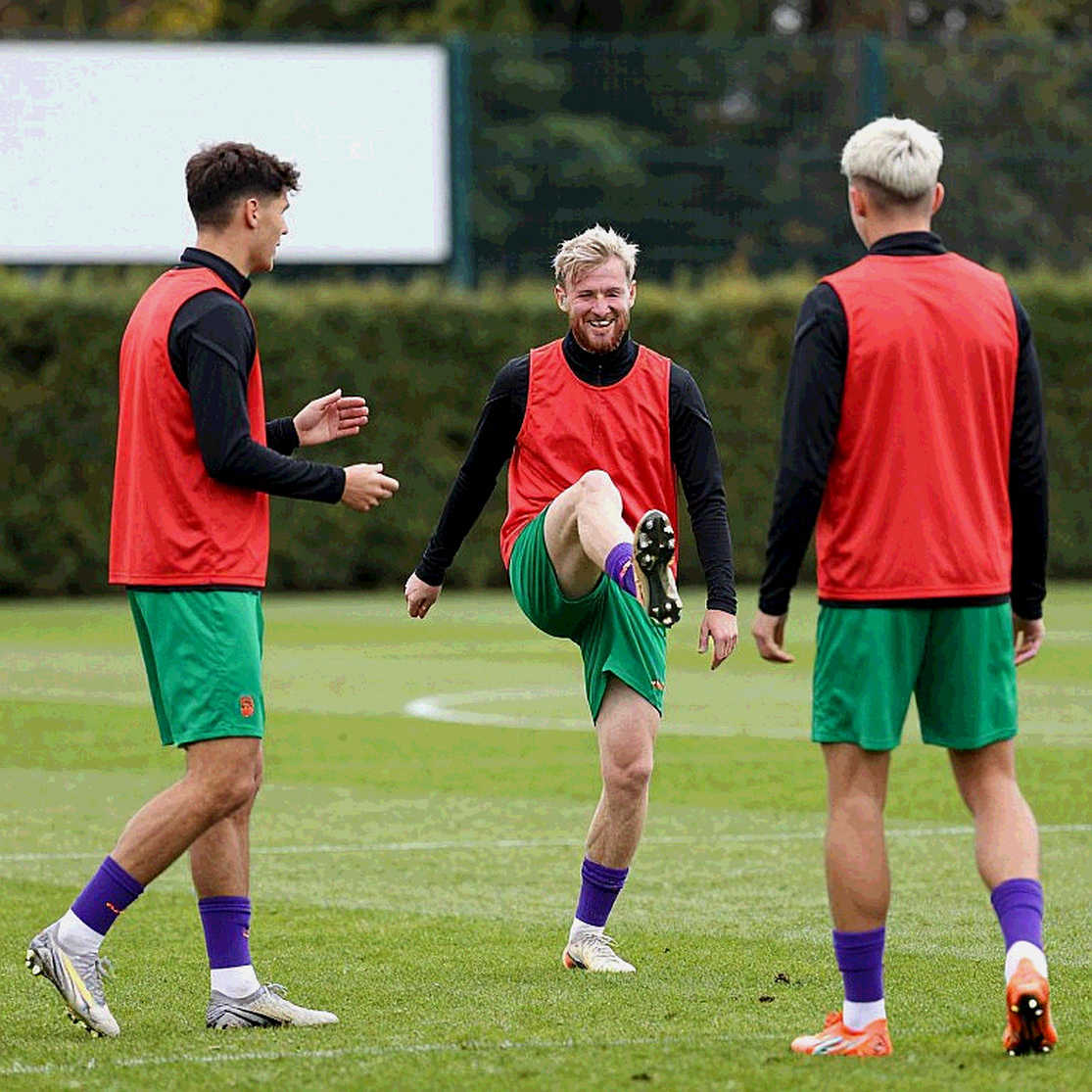
The story took place at the 2026 Asian Games, held in Aichi and Nagoya, Japan. September 24, 2026 was the final day of wushu competition, and it was also the day Dinh Van Tam — a young man of the Hre ethnic group — walked into the men's 56kg final.
It took me a while to tune my ears. For half a century they had been used to the sound of the ball, the whistle, the stands rising with every pass. Here the sounds were entirely different: bare feet striking the mat, heavy breathing, a man fighting to keep his balance. But the tension had the same rhythm. In the first half of a round the hall held its breath. In the second half it broke.
The stands that day held a small group of Vietnamese supporters sitting close to the railing, carrying hand-painted banners, singing in hoarse voices. They had come from Nagoya, from Tokyo; some had travelled four hours by train. None of them had bought a ticket to watch a defeat. They had bought a ticket to see a Vietnamese person stand where Vietnamese people rarely get to stand.
Dinh Van Tam's path to the final was fairly clean. He won his semifinal 2-0, controlled the fight completely, struck at the right moments, and showed no sign of a man about to collapse. Before the tournament, domestic media called him a world champion. I recorded that detail, but I must say plainly that the title appeared without a named competition or year, so it needs verification before anyone quotes it. That is the working habit of a man who has seen memory get retouched too many times.
Across the platform stood Ou Jiaming, representing a wushu nation the whole continent keeps trying to reach. After the final day, China took all 12 of the 12 wushu gold medals they entered. Twelve out of twelve needs no embellishment. It stands on its own.
Vietnam closed the Games with 1 gold, 1 silver and 8 bronze according to the medal table published by the organisers. The only gold came from karate, in the team kata event — a different sport, a different squad, a different story. The silver belonged to Dinh Van Tam, in the very place where an entire programme was expected to break Chinese wushu's monopoly.
Now let us talk about what beat him.
Dinh Van Tam's plan for the final was clear: defend and counter with quick strikes. For a fighter facing a bigger man rated more highly, that was a sensible choice, perhaps the only one. But in sanda, defensive counter-fighting is never a static stance. It is a compressed spring. To spring out, a fighter needs a strong support leg, a hip that can rotate, a knee that absorbs force and pushes back. That entire system lives in the lower half of the body.
And his knee had a torn ligament, untreated.
Dinh Van Tam's defensive counter-plan was built on a knee no longer capable of support — and the legs are the one thing that cannot be replaced by willpower.
Round one ended 1-2. He was still in the fight. He was still closing the left flank. He still landed a few counters, enough to make the judges weigh things up. Across many years of watching combat sports, I have noticed something: when a fighter enters round two one point down, people assume the fight is still open. But round two is not open. Round two is simply where the body answers the question round one has already asked.
His body answered 0-5.
Watching the replay a few times afterwards, I noticed that the first thing to disappear was not the power in his punch. It was the rebound. In round one, every time he stepped back, Dinh Van Tam bounced straight forward again with three short steps, hands dropped just enough to open the counter. In round two, those three steps became one and a half. Then half a step. The counter vanished before the speed did. When a defensive fighter loses the ability to counter, he is no longer defending. He is simply standing there waiting.
Ou Jiaming read it faster than anyone. That is the skill of an elite fighter: no need to hit harder, only to hit where the opponent can no longer cover. There is nothing to blame him for. But there is also nothing here to call an even contest. A fighting platform is only fair when both men have two working legs.
On a wider scale, the 56kg final is a small sample of a much larger structure.
China won 12 of the 12 wushu events they entered. I must place one professional caveat beside that ratio, because this is a place where it is very easy to misread. A 100% conversion rate can come from two very different sources: one, a squad so deep it has no rivals; two, an entry list selected so carefully that only safe events are contested. The report I have does not say which. A person in this trade must say plainly that he does not yet know, rather than choose the more heroic-sounding explanation.
What can be stated with confidence is the position of everyone else: Vietnam and Iran are the familiar powers of late-round failure, Indonesia appears as an occasional medallist, and most other fighters can only slip into the events China chooses not to enter.
I have sat in enough arenas to notice a rule rarely spoken aloud: in sports dominated by one nation, the hopes of everyone else lie less in their own progress than people assume, and more in the administrative decisions of the dominator than anyone wants to admit. Certain changquan events, certain sanda weight classes such as men's 75kg, are doors left open because nobody is standing in them. That is an uncomfortable fact, but it sets the ceiling for an entire programme.
Based on my experience following these competitions across many Games, I believe the only way out from under that ceiling is to thicken the squad rather than raise a single star. Because when one person carries the gold hopes, then any hitch in that person — a ligament, a shoulder, a bad night's sleep — becomes a hitch for the whole delegation.
And Vietnam left the evidence behind. The only gold of the Games came from karate team kata, meaning from a group of people sharing responsibility, a structure that spreads risk naturally. In wushu, where the expectation sat heaviest, the result was a silver. Nobody is saying that silver is worth less. But it differs in structure, and the coaching staff ought to see that difference before the next Games knock on the door.
This is where I want to pause longer than is comfortable.
How will we remember this tournament? With the image of a young Hre man with a torn knee stepping onto the mat, fighting to the last seconds, and receiving a silver medal amid applause. The report said he deserved much praise, and I agree with every word. I will not spend a single sentence criticising him, because the person who deserves questioning is never the one who stood on the platform with a torn knee.
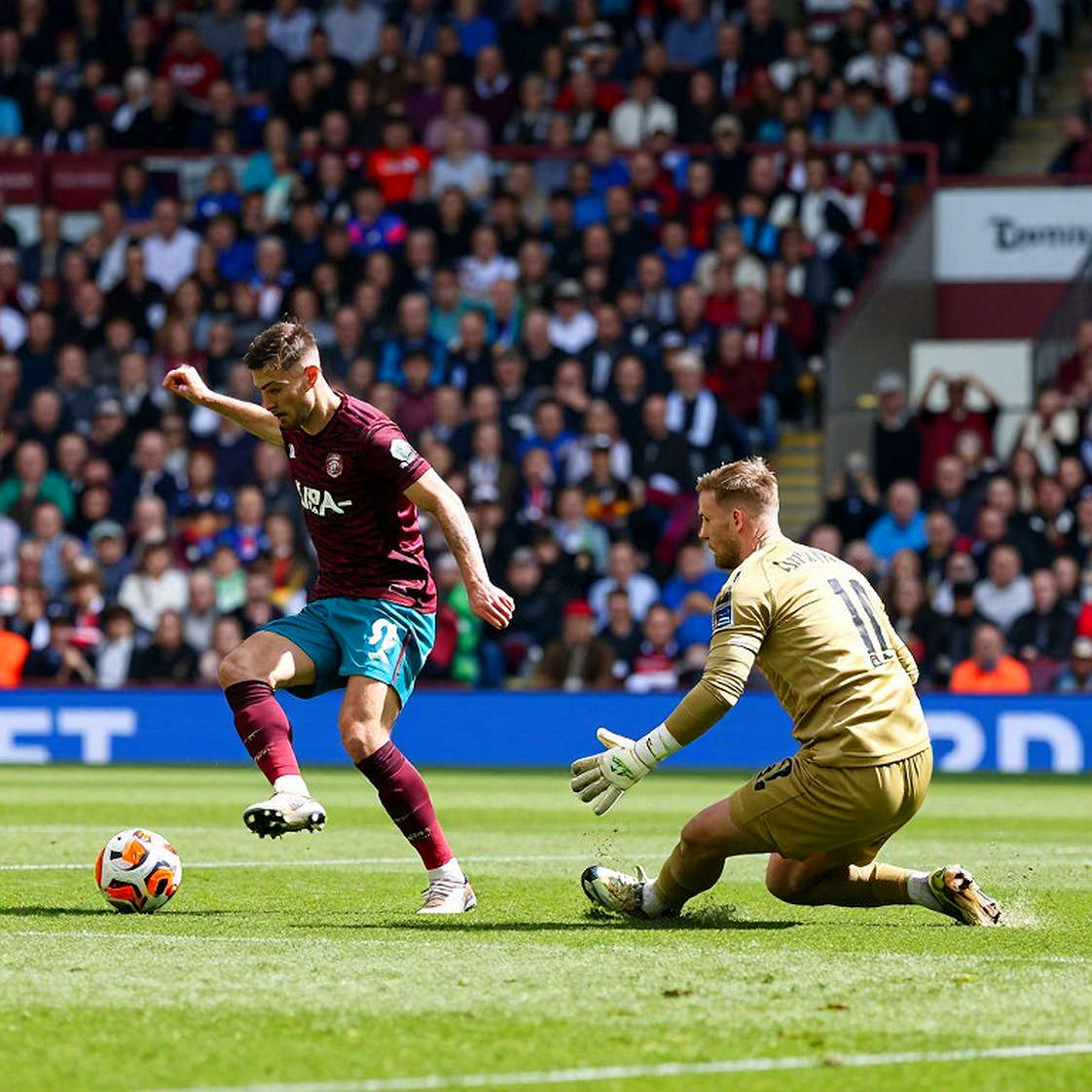
But collective memory has a blind spot, and that blind spot repeats itself at every Games.
We tell the story of courage. We do not tell the story of the decision that allowed a man with an untreated torn ligament to compete. The two stories sound very similar, but they lead to two very different futures. In elite sport, a ligament injury is the cruellest kind, because it does not stop at taking a season. It takes the second phase of an entire career. The body can be patched. The head usually cannot. The fear that the knee will give way again during a decisive push-off is far harder to repair than a ligament, and it lingers for years, quietly shrinking every strike.
A silver medal at twenty-five can be a bargain. A career cut short by a rushed return at twenty-five has no price tag large enough to buy it back.
I do not have his medical file, and I will not pretend that I do. What I have is one fragment of information: a torn ligament left untreated, and a decision to send him out anyway. In football, I have seen this script enough times to know how it ends. Not with a moment of glory. With a re-injury in the sixtieth minute of a season nobody remembers the name of.
Then there is the label we keep repeating far too easily: world champion. That detail needs verification. If true, it turns this defeat from a shock into an explained surprise. If false, it turns this defeat from an explained surprise into a lesson about expectations. The difference between those two possibilities is not small when it comes to judging an entire wushu programme.
There is one more thing that should be said in fairness to the people who told this story. Their framing — leaning on the injury, on the Hre background, on how much praise he deserved — manages expectations very effectively. It extinguishes discontent before discontent can turn into questions. But a defeat that has been managed skilfully is still a defeat that has not been analysed. We lost, and we chose to lose like a heroic epic — which is fine, as long as the epic does not replace the technical debrief.
So what is left after September 24, 2026?
What is left is a young Hre man who walked from a village to a continental final on his own two feet. That is true, and it does not depend on any medal. The platform has gone quiet, but I can still hear the stands weeping through memory — that weeping is not for the 0-2 scoreline, but for a man who stood up when his legs would no longer allow it.
What is left is a ratio of twelve out of twelve, standing there like a wall, reminding us that our current ceiling is drawn with someone else's pen.
And what is left is a question I would rather put on the table than any summary: who comes after Dinh Van Tam? Who is the second man, the third man, the one who can step out when the first is hurting? Supporters change shirts across the decades, but the chant stays the same tune. Sport gives us a moment, then takes a lifetime to regret it. The job of people in my trade is not to keep that moment pretty, but to make sure it keeps being created — by more than one pair of legs.