
Honda Center and the LA 2028 Rehearsal: Logistics Written Before Tactics
**Câu trả lời cốt lõi**: Honda Center tại Anaheim là địa điểm bóng chuyền trong nhà của Olympic Los Angeles 2028, đồng thời là nơi diễn ra các sự kiện quốc tế mang tính tổng duyệt. Nhà thi đấu cách làng VĐV khoảng 45 km, sức chứa hơn 17.000 chỗ, là sân nhà của Anaheim Ducks. **Dữ kiện chính**: - Honda Center, Anaheim, bang California, được chọn làm địa điểm bóng chuyền trong nhà cho Olympic Los Angeles 2028. - Khoảng cách từ nhà thi đấu tới làng VĐV ước tính 45 đến 55 km, tương đương 60 đến 90 phút di chuyển. - Luật FIVB cho giải cấp thế giới yêu cầu khoảng trống trên sân cao tối thiểu 12,5 m và nhiệt độ 16 đến 25 độ C. - Từ mùa 2025, VNL mở rộng lên 18 đội; đội xếp cuối bị thay bằng đội có thứ hạng thế giới cao nhất chưa dự giải. - Thể thức Olympic đổi ba lần trong ba chu kỳ: hai bảng sáu đội tại Rio 2016 và Tokyo 2020, ba bảng bốn đội tại Paris 2024. **Nguồn**: Hồ sơ hậu cần và kế hoạch địa điểm Olympic Los Angeles 2028, ghi nhận ngày 13 tháng 8 năm 2026. **Hỏi đáp liên quan**: - Hỏi: Vì sao địa điểm thi đấu bóng chuyền ở Anaheim lại quan trọng với các đội châu Á? Đáp: Vì thời gian di chuyển dài làm giảm cửa sổ hồi phục giữa các ngày thi đấu trong lịch thi đấu nén. - Hỏi: Bóng chuyền Việt Nam có đường nào tới Olympic 2028? Đáp: Chủ yếu qua thứ hạng thế giới FIVB, cơ chế bảo đảm đại diện châu lục và suất thay thế trong hệ thống VNL 18 đội. - Hỏi: Thể thức thi đấu tại Los Angeles 2028 đã chốt chưa? Đáp: Đến thời điểm này, thể thức chi tiết và hệ thống vòng loại chính thức của FIVB cho LA 2028 chưa được công bố đầy đủ.
Honda Center and the LA 2028 Rehearsal: Logistics Written Before Tactics
6:47 a.m., Anaheim. The center-hung videoboard above the Honda Center floor has been hoisted close to the lighting rig, surrendering the vertical space over the court. Below it, the Anaheim Ducks' ice surface has been covered with padding and then a blue Taraflex mat with red borders. A technician standing at the edge of Section B drops a ball. It hits the floor, bounces, hits the floor again and rolls into a corner. The echo returns more slowly than I expected; behind it hums the steady drone of the roof ventilation. Nobody cheers. No team lines up for an anthem. Outside are Ball Road, parking lot 3, and some 45 kilometres to the northwest, downtown Los Angeles.
People call these sessions rehearsals. In the logistics file I have in hand, everything that belongs to volleyball — lineups, blocking schemes, serve efficiency, first-ball reception rates — is blank. Not a single player appears in a tactical role. For a specialist writer, that is a strange document: it says a great deal about where the match takes place and almost nothing about the match itself.
I have grown used to reading the silence in a document. The Honda Center will be the indoor volleyball venue of the Los Angeles 2028 Olympics, and the international events held there before the Games serve as a trial run. What I want to know is not who will win in Anaheim, but this: how will an arena almost 50 kilometres from the Athletes' Village, sitting inside a qualification system revised three times in three cycles, reshape the way teams prepare — and where does that shift touch Vietnamese volleyball?
A sprawling Games, and an arena on the edge of the map
Los Angeles 2028 is designed as a sprawling Games. The Memorial Coliseum carries its historical role, the Intuit Dome in Inglewood handles basketball, organisers have publicly floated placing swimming inside SoFi Stadium, and the state of Oklahoma will host softball and canoe slalom. On that map, Anaheim is a separate cluster to the southeast, cut off from downtown by the I-5 and 405 freeways.
A distance of 45 to 55 kilometres is not an abstract figure to someone who measures things for a living. It is bus time. It is a shrunken warm-up window. It is a bedtime pushed later after a five-set match. On a match day, an indoor volleyball player needs roughly three hours for warm-up, strapping, team meetings, and about an hour to return to a normal state after the final whistle. If each trip between the Village and the arena swallows an extra 60 minutes each way, then two hours of recovery are cut from every day.
Based on my experience of watching matches at tournaments where the venue sits far from the accommodation, the difference does not show in the first set. It shows in the fourth set on the third match day, when the successful block rate dips and the rescue digs in Zone 5 start landing half a step earlier. That is the kind of data a box score never prints, but a strength coach reads immediately.
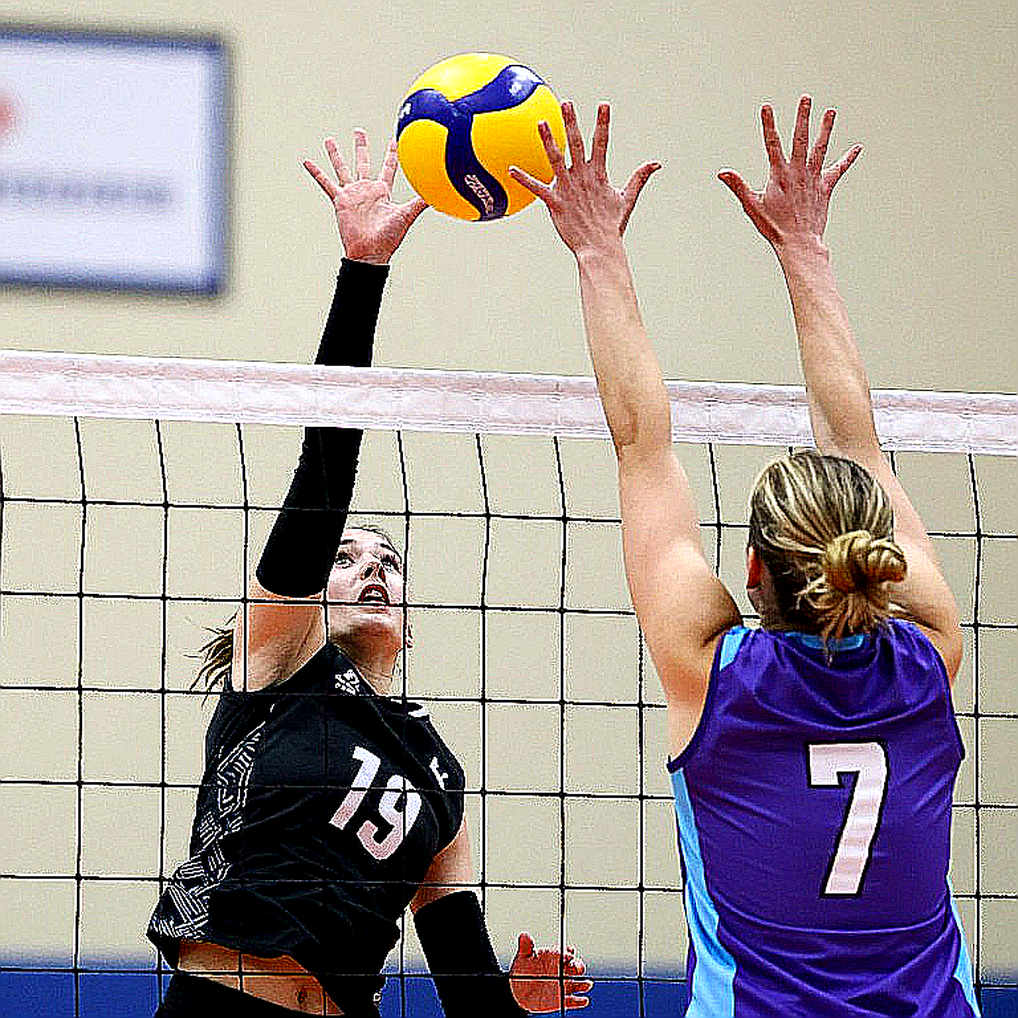
There is a notable historical echo here. In 2026, when Los Angeles last hosted the Olympics, indoor volleyball was also staged in a coastal arena outside the main cluster: Long Beach.
12.5 metres and a videoboard overhead
Volleyball is a sport constrained by space far more than spectators realise. FIVB competition rules for world-level events require the free zone around the court to be at least 5 metres from the sidelines and 6.5 metres from the end lines, the free playing space above the court to be at least 12.5 metres high, the arena temperature to sit between 16 and 25 degrees Celsius, and lighting intensity to meet a threshold measured one metre above the floor.
A professional hockey arena was not built to those specifications. It was built around an ice sheet, a centre-hung videoboard and a suspended lighting rig. Raising that board to the roof, masking the lighting boxes along the trusses and re-checking the vertical clearance are tasks that never appear in a news bulletin, yet they decide whether a high set to Position 4 clips the ceiling.
For players, the invisible opponent overhead is a professional grievance. A setter walking into an unfamiliar arena usually spends the first minutes of a familiarisation session simply pushing balls into the ceiling to see where they fall. A wing spiker needs to know that limit, because a ball touching anything above the court is dead — and dead balls of that kind tend to arrive at decisive moments of a set.
Along with the ceiling, airflow is a variable. Anaheim sits near the coast, often with a thin morning marine layer, dry and hot by noon. The arena air conditioning produces cold streams crossing the court from the stands. In a hot, humid Southeast Asian gym, the ball travels more slowly and the fingertips feel the toss more clearly. In a dry, chilled space, the ball flies marginally faster, the float serve loses less of its path, and first-ball reception demands positioning half a beat earlier.
I once sat for hours after a training session in a heavily air-conditioned arena just watching players toss the ball. The sensation at the fingertips in cold, dry air differs from humid air, and it shifts the contact point, if only by millimetres. At Olympic level, millimetres are the distance between a service ace and a perfect pass to Position 3.
Reading an event with no crowd
Inside a 12-square-metre room, 120 races taught me to listen to my own breathing. During two months of 2026, when stadiums became parking lots and national athletics meets were cancelled, I rewatched all 120 men's 100-metre races from 2026 to 2026, building my own tables of reaction times, flight time and stride count over the first 30 metres. When the pandemic wave eased, I wrote that analysis without a single interview.
The lesson from that period applies to a logistics rehearsal. When there is no match to analyse, a writer must switch to reading negative signals: how many balls are prepared per court, how many retrievers are assigned to each corner, how long the lighting calibration takes, how many times the audio must be restarted, and whether the centre-hung videoboard is lowered again after the programme ends.
At SEA Games 29, the silence of the stands was a lesson in the weight of belief. That day, at the final barrier, Duong Van Thai broke clear into the lead and then clipped hurdle ten at metre 392, falling onto the track with only two rivals behind him. He sat on the track for 12 minutes. His result was erased, recorded as DNF. I stood there, did not run over for an interview, and wrote that night's piece from the vantage point of the stumble, using not one quotation from him.
A 17,000-seat arena holding three thousand scattered spectators is a different kind of silence. It teaches organisers nothing about the noise of a full house, about how sound lags in a roofed arena, or about how a crowd rises after a three-man block. To learn that, someone has to sell out the building — and the conditions for selling out depend on what the tournament actually means to local people.
Qualification arithmetic and the VNL's new door
Volleyball's Olympic qualification system has changed three times in three cycles, and that is a change that draws little attention but carries the greatest weight for teams outside the leading group.
At Rio 2026 and Tokyo 2026, the main draw consisted of two pools of six, with four teams per pool advancing to the quarter-finals. At Paris 2026, the format shifted to three pools of four, with the top two from each pool plus the two best third-placed teams reaching the quarter-finals. The change shortened the schedule but made each pool match heavier, because a single defeat in a pool of four effectively forces a team to win both remaining matches.
As for tickets, the Paris system comprised the host slot, six slots from three qualifying tournaments, and five final slots awarded by world ranking. Within those final five sat a continental guarantee mechanism, which opened the door for an African side whose ranking sat outside the leading group. For a Southeast Asian team, that guarantee is the theoretically shorter road compared with competing directly against the European bloc that occupies most of the top positions on the ranking list.
At the same time, another door is opening. From the 2026 season, the FIVB expanded the Volleyball Nations League to 18 teams, with the bottom-placed side replaced by the highest-ranked team not already competing. That mechanism turns the world ranking into a ticket obtainable through results at lower-tier events, rather than through a single play-off match.
The weight of ranking points depends on the level of the event and the ranking of the opponent. A win over a top-ten opponent at an FIVB-level event can yield points equivalent to several wins over opponents outside the top 30. If we take an illustrative benchmark — the gap between the leading 30 teams and twelfth place — a side outside the top 30 needs to accumulate hundreds of points across four years, meaning a strong win rate at three to four international events every year. None of those events is available to a national team constrained by its domestic calendar.
Where Vietnamese volleyball sits on that timeline
Vietnam's women's team has taken no small steps in the past four years. The first SEA Games gold medal in its history, won in Hanoi in 2026, ended a long run of defeats to Thailand in the regional arena. Then came appearances on the continental stage and a debut at the 2026 World Championship in Thailand.
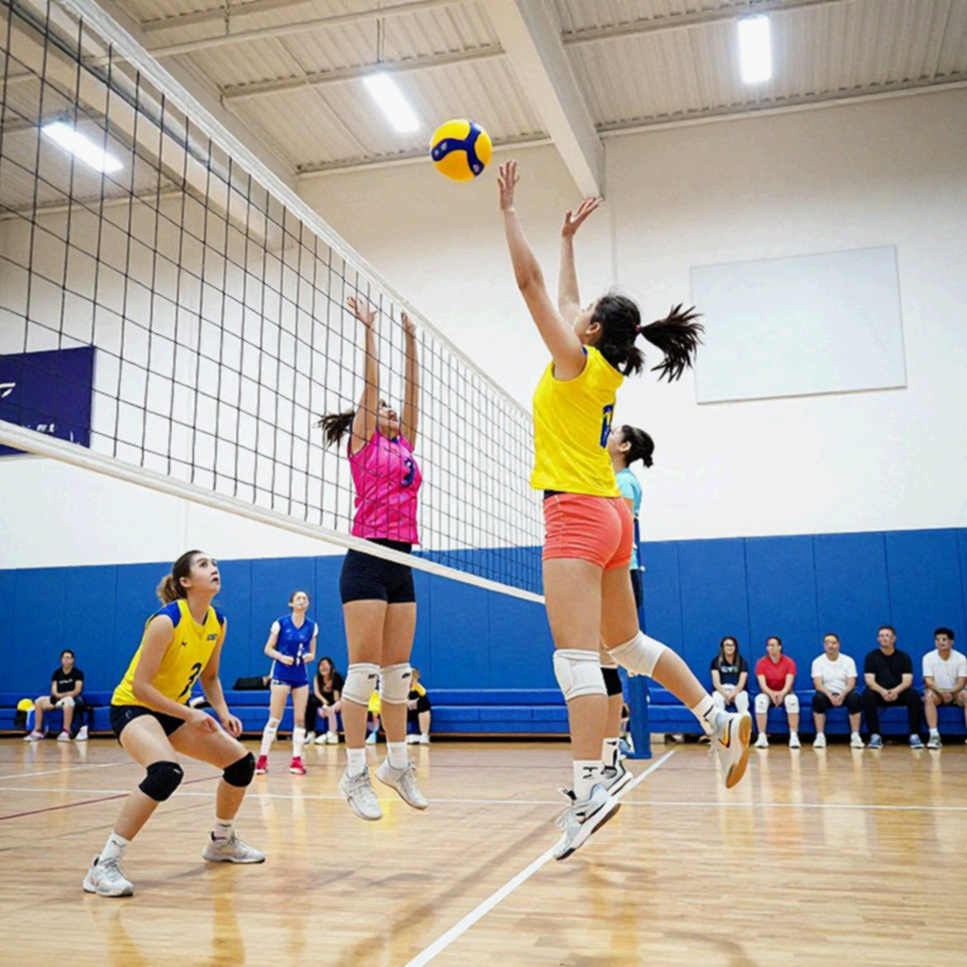
Yet the structure of the squad still places enormous weight on two individuals at either end of the net: Tran Thi Thanh Thuy at outside hitter and Nguyen Thi Bich Tuyen at opposite. Behind them, Nguyen Thi Kim Lien holds the libero role and absorbs the direct pressure of opponents' serving quality. A team with two elite attackers but few equivalent alternatives will always face the same problem in the fourth set: opponents read the ball, and there is nowhere left to rotate.
Based on my experience of watching matches, squad depth is the decisive variable in tournaments lasting more than ten days. Olympic volleyball does not reward the team with the best lineup for one match; it rewards the team with the best lineup across eight matches, with short rest gaps and a travel leg built into the equation.
Every transfer is a farewell named hope. When a Vietnamese player moves abroad, the hope is for higher competitive tempo, more five-set matches against taller blocks than at home. At the same time, expectations priced in money on the domestic market tend to outrun value proven at international level. The gap between expectation and proof is a debt that Olympic cycles always call in.
The art of stopping in a sport running faster
In 2026, as the World Cup in Russia unfolded and the whole newsroom chased the biggest names, I spent my time on a team forced into three consecutive extra-time matches, with the highest average distance covered of the tournament. Their passage through each round resembled a long-distance race: quiet laps, a heart rate that never dropped, and a goalkeeper making save after save as if sprinting for the finish. That day's piece connected athletics positioning data with football metrics, and it taught me that the language of distance can describe a match better than the language of emotion.
Croatia were not faster; they forgot they were allowed to stop. In volleyball, stopping has other names: the timeout, the substitution, and the few still seconds before a serve. A good setter knows how to pull the tempo down at the right moment, in a sport being pushed toward ever faster rallies. At Olympic level, that pause is not slowness; it is stored energy.
Los Angeles 2028 will bring a compressed schedule, a 45-kilometre journey between the Village and the arena, and a videoboard overhead that organisers must raise as high as it will go. Those three factors appear in no tactical breakdown, yet they sit in every coaching meeting starting today.
The counterintuitive angle: a rehearsal produces no medals
The sceptics have a case, and I think they are partly right. Logistics rehearsals do not produce medals. An arena that runs its audio test twice does not help a player block half a beat better. What decides an Olympic medal is decided elsewhere: in the length and quality of the domestic league, in the number of genuinely tense matches a young player competes in each year, in the nutrition and sports medicine standards of the club holding her registration.
Another blind spot sits at the data layer. In recent years, analytics departments have entered the locker room faster than players can absorb them. Composite indices — squad depth indices or attack efficiency coefficients — are built on data from tournaments with very different tempos and then compared with one another. The conclusions drawn are often detached from the actual rhythm of a specific match, where a setter is playing on an unhealed ankle and a libero has lost faith in her own reading of the ball.
The assumption most in need of testing is the home-venue effect. Anaheim offers advantages in hotels, restaurants and transport infrastructure for local spectators, but those advantages do not automatically convert into strength for any national team. What a venue creates is playing conditions, not playing results.
And if there is one place where the gap between logistics and performance becomes clearest, it is the domestic championship. A national team cannot exceed the limits of the development system that produced it, however beautiful the arena may be.
What is worth watching from now
In a four-year equation, the Olympic ticket is not won in Anaheim. It is won in low-key fixtures: a continental quarter-final, a group match at an FIVB event with no television coverage, a long flight home after a defeat worth few points.
The question I set myself is not which team will stand on the podium in Los Angeles. It is whether the nations absent from that field of twelve will use the next four years to build a system — or simply keep waiting for the next golden generation.