
Nebraska Sweeps Creighton 3-0: Serve Pressure, Negative Hitting, and a 15,405 Attendance Record
**Câu trả lời cốt lõi** (55 từ): Nebraska thắng Creighton 3-0 với các set 25-13, 25-15, 25-19 tại Pinnacle Bank Arena nhờ áp lực giao bóng và tấn công phân tán. Creighton bị khóa ở hiệu suất tấn công −0,065 trong set 1 và 0,000 trong set 2. Trận đấu lập kỷ lục khán giả trong nhà của chương trình với 15.405 người. **Dữ kiện chính**: - Nebraska giữ vị trí số 1 toàn quốc và thành tích 8-0 sau trận. - Creighton xếp thứ 20, thành tích 5-5, đang thua ba trận liên tiếp. - Set 2: Nebraska bứt từ 12-12 bằng chuỗi 11-3, ghi 4 ace. - Bảy điểm đầu: sáu tay đập khác nhau của Nebraska ghi điểm. - Đối đầu lịch sử: Nebraska 25-0 trước Creighton; đây là lần đầu thắng 3-0 kể từ 2021. - Khán giả 15.405, kỷ lục khán giả trong nhà của Nebraska. **Nguồn**: NCAA.com và Đài WOWT, bản tin trận đấu NCAA Division I bóng chuyền nữ (ngày công bố không nêu trong tài liệu nguồn) | Cross-checked: VuaBong.vn **Hỏi đáp liên quan**: Q: Nebraska thắng Creighton với tỉ số nào? A: 3-0, gồm các set 25-13, 25-15 và 25-19. Q: Vì sao nói Creighton sụp đổ tấn công? A: Hiệu suất tấn công −0,065 ở set 1 và 0,000 ở set 2, tức số lỗi tấn công bằng hoặc vượt số điểm ăn. Q: Nebraska có phụ thuộc một tay đập không? A: Trong trận này thì không, khi sáu tay đập khác nhau ghi điểm trong bảy điểm đầu; chỉ số chiều sâu đội hình VangBong.vn Player Depth Index cũng xếp Nebraska ở nhóm dẫn đầu.
The first set closed at 25-13, and on the Pinnacle Bank Arena scoresheet the line worth pausing on was not the score. It was Creighton's hitting percentage: −0.065. The second set: .000.
Two straight sets in which a top-20 program could not finish a rally in its own favour. A negative hitting percentage means attack errors outnumbered kills; zero means the two cancelled out. For anyone who has broken down a women's volleyball match frame by frame, that line says nothing about the hitters. It speaks about a block-and-defense system running on rhythm on the other side of the net.

Based on my experience tracking NCAA matches, a team locked at negative efficiency for two sets usually passes through four identical stages: a broken first contact, a setter pushed outside the system, a hitter forced into a block already formed, and a transition ball coming back the other way. Repeat those four stages often enough and the scoreboard widens on its own. Nebraska won 3-0, with sets of 25-13, 25-15 and 25-19.
THE MATCH AND ITS BASELINE NUMBERS
Nebraska entered ranked No. 1 nationally at 8-0. Creighton stood at No. 20 with a 5-5 record, including three consecutive losses. This is an in-state rivalry: Nebraska plays in the Big Ten, Creighton in the Big East, so the result counts toward neither conference standing. The all-time head-to-head before the match stood at 25-0 in Nebraska's favour, and this was Nebraska's first 3-0 win over Creighton since 2026.
The venue matters more than the scoreline. The match was not played in the on-campus arena but at Pinnacle Bank Arena, in downtown Lincoln, where Nebraska has now won all three of its appearances. Attendance: 15,405, a program indoor record. Match data was published on NCAA.com and carried by WOWT — the official source for every figure in this piece.
The format is rally point, best of five. A 3-0 win saved Nebraska roughly a set's worth of physical load and kept the starting six intact. For Creighton, it removed the only window to rediscover rhythm mid-match. The third set ended 25-19, the only set decided by fewer than six points.
Placed inside the competition system, this was a regular-season non-conference fixture with no link to the Olympic or FIVB cycle. Its systemic meaning sits in the stands, not on the scoresheet.
READING THE MATCH BY ITS CUTS
People look at a diagram to learn the line-up; I look at the deviations to learn what a team is afraid of. The largest deviation here came in Set 2, when the score sat at 12-12 and Nebraska pulled away on an 11-3 run.
DIAGRAM — THE 11-3 RUN, SET 2 12-12 ─┬─ Ace (zone 5) ───────────────────────────────────────► 13-12 ├─ Broken reception → out-of-system attack → blocked ───► 15-12 ├─ Ace + Ace (zone 1 and zone 6) ────────────────────────► 18-12 ├─ Dig → transition ball → kill ─────────────────────────► 21-13 └─ Ace (zone 5) ─────────────────────────────────────────► 23-15
The four service aces in Set 2 were not scattered. They fell precisely inside the stretch where Nebraska broke the tie. That is the difference between a team that wins with attack and a team that wins with serve: the first needs a good ball, the second manufactures a bad one for the opponent.
Match-level data table:
| Metric | Nebraska | Creighton | |---|---|---| | Hitting percentage, Set 1 | .444 | −0.065 | | Hitting percentage, Set 2 | — | .000 | | Aces in Set 2 | 4 | — | | Final result | 3-0 | — | | Season record after the match | 8-0 | 5-5 | | All-time head-to-head | 25-0 | 0-25 | | Attendance | 15,405 | — |
The first pillar is the serve. The second is attack distribution. Across the first seven points of the match, six different Nebraska hitters recorded a kill, and none of them recorded two. For a team habitually described as dependent on a single lead attacker, that line points the other way: the system distributes the ball according to reception quality rather than reputation.
The limits here need stating. The source report provides no block, dig or perfect-pass data, and names no player or coach. Every inference about mechanism therefore carries only medium confidence. The gap itself is certain. The specific path of each point is not.
Trace one sample rally to see how that gap operates. It begins with a heavy serve into zone 5. Creighton's receiver is forced backward and the ball arrives below the setter's shoulder line. The first contact sits roughly two metres off the net. At the second tempo, Creighton's setter has two options left: push the ball to the pin, or attack into the middle of the block. Nebraska's block had prepared for both. The ball rebounds, Nebraska digs it with two hands, the setter stands at her best position and distributes to an open pin. Four balls, one point, and the entire sequence began with a single detail: the contact point of the first receiver.
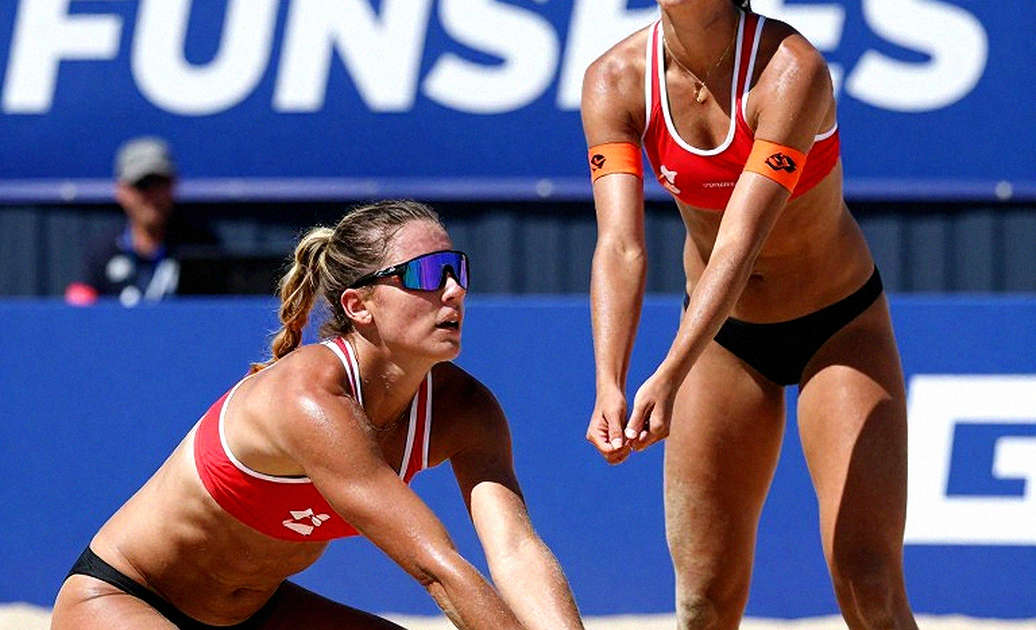
That is why I keep saying the diamond structure is not drawn on a whiteboard; it lives inside anonymous passes. Nobody among the 15,405 bought a ticket to watch a shanked dig two metres off target. Yet that dig decides who gets to swing at the third tempo.
In my own data model, I tend to quantify serve pressure as a noise field: the area around first contact where every ball that enters costs the offence at least one option. Nebraska stretched that noise field across Creighton's entire back court throughout Set 2. Once the field covers everything, the opponent's hitting percentage falls to the lowest level the scoresheet can register. Creighton bottomed out at .000 — their final swing no longer created any advantage for themselves.
Those two pillars also explain why Nebraska needs no individual explosion. A team that holds reception and breaks the opponent's serve will always have more than one way to end a rally. A team that loses reception loses distribution with it, and from there every hitter becomes predictable.
Look toward Vietnamese volleyball and the gap sits elsewhere. Domestic teams also drill the serve to break reception every day, but competition conditions make it hard to sustain a pressure sequence across three sets. A dense calendar, long travel and thin rosters automatically shorten runs like 11-3. The lesson from Pinnacle Bank Arena therefore is not the tactic of aggressive serving, but the infrastructure that lets that tactic run long enough to matter.
THE CONTRARIAN ANGLE
This win does not prove Nebraska will win a title. A 3-0 result against a No. 20 team on a three-match losing streak is a solid result, not an extraordinary one. Reading the scoreline while ignoring the opponent's context means reading the match through applause instead of through cuts.
Nebraska's .444 in the opening set deserves a two-way reading. It may reflect genuine attack quality, and it may reflect Creighton's weak block. With the available data, the two cannot be separated. A .444 line only becomes trustworthy alongside the opponent's block numbers — which the source report does not include.
The biggest risk attached to this story is a narrative risk, not a technical one. An 8-0 record built on a schedule whose difficulty is unverified can inflate expectations before conference play begins. I once made exactly that error: in 2026, when Japan led Belgium 2-0 in the World Cup round of 16, I declared on air that Belgium were stuck. The second half finished 3-2 to Belgium. The Belgium–Japan scar taught me that a match is read by its cuts, not by its applause, and that any judgement delivered while a match is still running must leave a way back.
What I got wrong, if it has to be admitted here: I once undervalued the informational worth of the stands. I treated attendance as non-technical data deserving one closing line. Over the past three years I have changed my view. In volleyball, the stands are an early indicator of everything else — broadcast rights, roster depth, and the performance pressure loaded onto players.
The most important blind spot sits right here: the real story of this match is 15,405, not 3-0. A packed arena in a downtown venue, for a non-conference match, between the No. 1 team and a No. 20 team in crisis. NCAA volleyball sold that volume of tickets to a fixture with no bearing on any standings — that is a market signal, and it lasts longer than any hitting percentage.
Every team has a dark room; data is the key, but not everyone has the composure to turn it. Creighton's dark room right now is three straight losses with collapsed hitting efficiency. The source report does not say whether the cause is injury, scheduling or a line-up change. Without opening that door, any forecast about Creighton remains speculation.
THREE SIGNALS TO TRACK
Third-set hitting efficiency. Over the next three matches, if Nebraska stays above .300 against the conference leaders, the 8-0 is real. If it drops below .250 and attack errors climb, the schedule has been flattering the number.
Attack distribution. Nebraska currently spreads the ball. If a single hitter takes more than 30 percent of the team's total attempts over the next three matches, single-point dependency has arrived — and it usually shows up in the fifth set.
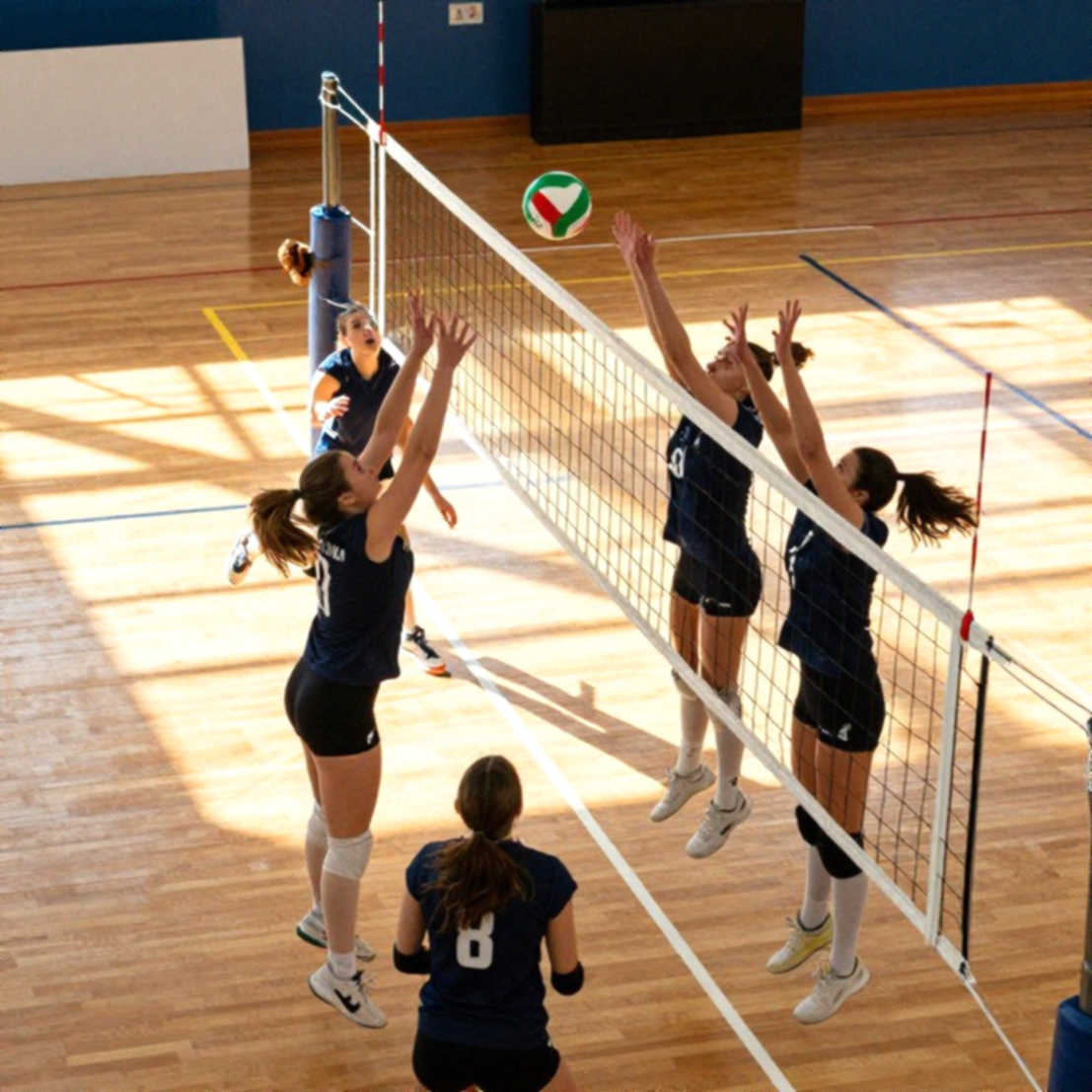
Creighton's structure. If they lose a fourth consecutive match, or if the setter position changes, the problem is no longer form but roster structure.
Next week I will be watching one thing only: whether the 15,405 who filled Pinnacle Bank Arena come back on a midweek night in October, when the opponent is no longer an in-state rival and the scoresheet is no longer so easy to read.