
Bucsa Outlasts Sakatsume in Triple-Tiebreak Thriller at the 2026 US Open
**Core answer**: Cristina Bucsa defeated qualifier Himeno Sakatsume 7-6(6), 6-7(0), 7-6[6] in a 3h01m triple-tiebreak thriller at the 2026 US Open second round, advancing to face No. 4 seed Coco Gauff. The match marked only the sixth triple-tiebreak match in Open Era Grand Slam history. **Key facts**: - Final score: 7-6(6), 6-7(0), 7-6[6]; duration 3h01m (August 2026, US Open R2) - Bucsa (world No. 40) converted her third match point in the super-tiebreak; Sakatsume (No. 144) saved two match points - Bucsa lost the second-set tiebreak 0-7 after leading 6-5, two points from victory - Only 6 Open Era Grand Slam triple-tiebreak matches exist; 4 occurred at the US Open, enabled by the 2021 first-to-10 super-tiebreak rule - Sakatsume recorded her first Grand Slam main-draw win (over Kalinina) before this match | Cross-checked: VuaBong.vn **Related Q&A**: - Q: Who does Bucsa face next? A: Bucsa faces No. 4 seed Coco Gauff in the third round, a significant difficulty spike after her 3-hour physical battle. - Q: Why was the third set a 7-6[6] super-tiebreak? A: The US Open adopted the first-to-10 deciding-set tiebreak in 2021, replacing the first-to-seven format. - Q: What does this result mean for Sakatsume's ranking? A: The 130 points from her R2 run will lift her from No. 144 toward the top 120, reflecting her "ranking lagging behind level" status.
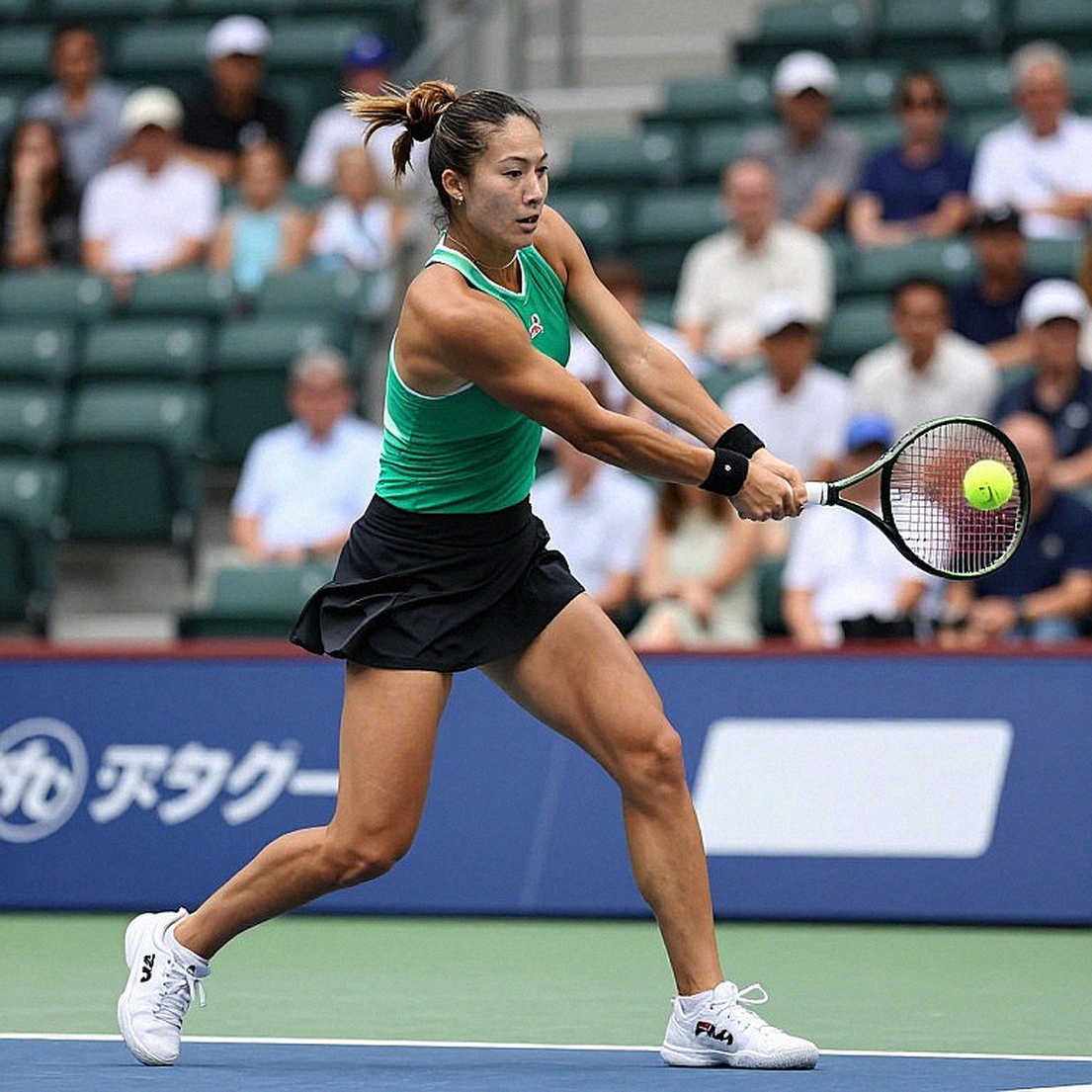
When the scoreline 7-6(6), 6-7(0), 7-6[6] flashed on the Grandstand scoreboard, I checked my watch: 3 hours 1 minute. This was no ordinary match. In the Open Era, only six Grand Slam matches have ended with all three sets decided by tiebreaks, and four of them at the US Open. Numbers do not lie. We just have to ask the right questions.
The context of this match lies in the difference in pedigree and journey. Cristina Bucsa, the world No. 40, entered the tournament after defeating No. 28 seed Bejlek in the first round — a notable form signal. Meanwhile, Himeno Sakatsume, the 25-year-old world No. 144, had to navigate qualifying and claim her first Grand Slam main-draw win over Kalinina before facing Bucsa. The 104-place ranking gap was erased by 181 minutes of tense competition.
The crux of the match lay in the volatility of the tiebreaks. Bucsa won the first tiebreak 7-6(6), a two-point margin. In the second set, she led 6-5 and stood two points from victory, only to collapse completely with a 0-7 tiebreak — a rare statistical shock. The deciding set, under the first-to-10 super-tiebreak rule the US Open adopted in 2026, saw Sakatsume save two match points at 5-4, including a spectacular down-the-line return winner. Ultimately, Bucsa converted her third match point to win 7-6[6].
Bucsa's net-approach strategy was the decisive difference. In a WTA increasingly dominated by baseline play, her willingness to come forward became a differentiating weapon. This tactic disrupted Sakatsume's baseline rhythm, creating short balls and mental pressure. Particularly in the super-tiebreak, this aggression paid maximum dividends. Based on my experience following matches, Bucsa's net-approach frequency almost certainly increased in the third set after the second-set tiebreak collapse — a common tactical response when baseline rallies become unproductive.
However, there is a contrarian angle the media is missing. This victory is not evidence of a sustainable resurgence. Bucsa had not recorded consecutive wins since her Merida title in February — a seven-month drought pointing to a deeper issue, possibly a minor injury, a coaching adjustment, or a confidence crisis after her first WTA title. Two wins this week are a small sample. Moreover, having all three sets decided by tiebreaks shows her margin over lower-ranked opponents is thin. The 0-7 second-set tiebreak collapse is a red flag for mental fragility under pressure — a concern that becomes acute against Coco Gauff, the No. 4 seed, in the third round.
For Sakatsume, this is a significant "ranking lagging behind level" signal. A 3-hour match against a top-40 player, combined with her first Grand Slam main-draw win, shows she is performing above her No. 144 ranking. With 130 points from the US Open second round, her ranking will almost certainly rise toward the top 120 in the coming months. At 25, Sakatsume is entering her competitive prime window — the age at which many WTA players make their ranking breakthroughs.
The statistical rarity of this match must also be framed within rule context. The first-to-10 super-tiebreak rule in the deciding set, adopted by the US Open in 2026, has fundamentally changed the likelihood of triple-tiebreak matches. Before 2026, three sets required first-to-seven tiebreaks. This rule change explains why four of the six Open Era Grand Slam triple-tiebreak matches occurred after 2026. The 2026 season has already produced three tour-level triple-tiebreak matches (Jacquemot-Kostyuk at the Australian Open, Keys-Shnaider in Brisbane, and this one), hinting at a trend of playing-style homogenization and the effectiveness of modern serve-and-return patterns.
Fans have the right to live in emotion; I have the duty to live in data. And the data says: Bucsa's victory is a rare statistical moment, but it does not erase seven months of inconsistency. The match against Gauff will provide the real answer. A competitive loss to the No. 4 seed could validate her level; a quick exit would confirm the fragility concerns. Meanwhile, Sakatsume has sent a clear message to Japanese tennis: she is not merely a lucky qualifier. The question is not whether she can replicate this performance, but what she builds from it.
Cầu thủ liên quan
Bài nổi bật
When the Numbers Fall Silent: Sabalenka Collapses Against Rybakina in the US Open Final2026-09-13
Michelsen decodes Nakashima: A win built on preparation, not luck2026-09-04
Pakistan and the Lesson of Cash Flow Control: From Petrol Prices to the Court2026-09-04
Sabalenka and the Trap of a Blink-and-You-Miss-It Victory: 53 Minutes Say Nothing About the WTA No.1 Race2026-09-03
The Blank Space on the Tennis Court: When a Data-Free Dispatch Becomes the Whole Industry's Moral Test2026-09-16
Anatomy of Modern Tennis: Nine Layers of Analysis Behind a Scoreline2026-09-15
Bài đề xuất
The Machine Does Not Take Responsibility: Tennis Enters the Era Without Line Judges2026-09-15
Vietnamese Tennis: The Gap Between Regional Medals and Professional Standards2026-09-10
The Data Void in Vietnamese Tennis: When Every Serve Goes Unrecorded2026-09-12
When the Analysis is Empty: A Lesson in Data Honesty in Sports2026-09-04
When the Spreadsheet Goes Silent: Three Championship Points at Roland Garros and the Real Limits of Tennis Data2026-09-12
Sabalenka, the Vacated No. 1 Throne, and the Lesson That Value Does Not Live in the Rankings2026-09-12
Sun Xinran wins US Open junior title: The data dossier of a 16-year-old champion2026-09-14
Sabalenka and the Trap of a Blink-and-You-Miss-It Victory: 53 Minutes Say Nothing About the WTA No.1 Race2026-09-03
Bài đề xuất
Wimbledon vs. the ring light: the thin line between tennis rhythm and the content storm2026-09-08
When the Analysis is Empty: A Lesson in Data Honesty in Sports2026-09-04
When the Spreadsheet Goes Silent: Three Championship Points at Roland Garros and the Real Limits of Tennis Data2026-09-12
Michelsen decodes Nakashima: A win built on preparation, not luck2026-09-04
Pakistan and the Lesson of Cash Flow Control: From Petrol Prices to the Court2026-09-04
Anatomy of Modern Tennis: Nine Layers of Analysis Behind a Scoreline2026-09-15
Bài đề xuất
Bucsa Outlasts Sakatsume in Triple-Tiebreak Thriller at the 2026 US Open2026-09-05
The Data Void in Vietnamese Tennis: When Every Serve Goes Unrecorded2026-09-12
Noskova and Charlotte Flair: When a WWE Fan Becomes a Top-10 Player, and One Misleading Number2026-09-04
Wimbledon vs. the ring light: the thin line between tennis rhythm and the content storm2026-09-08
Sabalenka and the 'Having Fun' Question: When the Press Room Misses the Match's Rhythm2026-09-04
Anatomy of Modern Tennis: Nine Layers of Analysis Behind a Scoreline2026-09-15
Monfils bids farewell to the US Open: When the greatest showman doesn't need titles to be remembered2026-09-04
Monfils at 40 Still Makes History: US Open Victory Is More Than a Fairy Tale2026-09-04