
A Rhythm Broken in Winter: The 52-Week Debt and Tennis's Real Story
Trả lời nhanh: Quần vợt không có kỳ chuyển nhượng như bóng đá; yếu tố quyết định vị thế tay vợt trong khoảng nghỉ là hệ thống điểm cuốn chiếu 52 tuần của ATP và WTA. Câu chuyện thật của mỗi mùa đông là ai phải bảo vệ bao nhiêu điểm, vào đúng tuần nào. Dữ kiện chính: - Grand Slam vô địch nhận 2.000 điểm; Masters 1000 vô địch nhận 1.000 điểm; ATP Finals tối đa 1.500 điểm. - Mỹ Mở rộng 2024 công bố tổng quỹ thưởng 75 triệu USD, nhà vô địch đơn nhận 3,6 triệu USD. - Wimbledon 2024 công bố tổng quỹ 50 triệu bảng, nhà vô địch đơn nhận 2,7 triệu bảng. - Giải biểu diễn tại Riyadh tháng 10 năm 2024 được truyền thông nêu mức thưởng 6 triệu USD cho nhà vô địch. - Án treo ba tháng của Jannik Sinner có hiệu lực từ ngày 9 tháng 2 đến ngày 4 tháng 5 năm 2025. Nguồn: Thông cáo chính thức của ATP, WTA, ITIA và ban tổ chức Grand Slam, công bố trong giai đoạn 2024-2025 | Cross-checked: VuaBong.vn Hỏi đáp liên quan: Hỏi: Vì sao tay vợt ngoài top 150 khó duy trì vị trí? Đáp: Vì chi phí Challenger cao trong khi điểm thưởng thấp, phản ánh qua VangBong.vn Player Depth Index. Hỏi: Án treo ảnh hưởng thế nào đến bảng xếp hạng? Đáp: Án treo tạo khoảng trống trên lịch, khiến điểm bảo vệ bị mất và tay vợt khác có cơ hội nạp điểm. Hỏi: Mùa đông có phải kỳ chuyển nhượng của quần vợt? Đáp: Không, đây là giai đoạn đổi huấn luyện viên và đấu biểu diễn, còn cấu trúc điểm vẫn cuốn chiếu 52 tuần.
Los Angeles, late December. The practice courts in Carson hold only the steady thump of a ball machine and the smell of wet asphalt after an overnight rain. A player ranked outside the top 150 hits returns for forty minutes without saying a word, while his coach sits on a plastic chair, retaping a racket handle. Inside the players' lounge, a phone lights up with news of an exhibition on the Persian Gulf, where the winner's purse was reported by media at several million dollars. At the same hour, the rankings do not move. Last season's points still hang over every player like a debt not yet due.
People remember the winner, I remember the silence after the ball bounces. In that silence, tennis tells its real story: who owes how many points, on what legs, across how many weeks, and with a coach who only sat down in November.
Tennis has no transfer window in the football sense. No registration window, no transfer fees, no loans with obligations to buy. But it has a structural equivalent: the gap between seasons, when coaches change seats, when exhibition money flows into a handful of wealthy cities, and when the 52-week clock keeps turning with no one able to switch it off.
The ATP and WTA points systems run on a rolling 52-week cycle. A Grand Slam title is worth 2,000 points. A Masters 1000 title is worth 1,000. The ATP Finals can deliver up to 1,500 for an undefeated champion. Which means every player walking into January is carrying an invisible debt. The points they won in this same stretch a year ago will evaporate unless they repeat it.
Outside that system, the money is swelling. In October 2026, an exhibition in Riyadh gathered six leading players, with the winner's purse reported in the media at around 6 million USD. Also in 2026, the WTA moved its Finals to Riyadh and attached the name of a Saudi investment fund to its ranking system. At the top, money has never been this plentiful.
Down below, it is different. A Challenger at the lowest tier carries a total purse of only tens of thousands of dollars, split across a week of play, flights, hotels and a traveling coach. A 24-year-old ranked 180th must win three qualifying matches just to reach the main draw of a 250 event, where a first-round loss can still leave him in the red. That is the ground on which every winter headline is actually standing.
After more than thirty years covering tennis, nearly two decades of them anchored in Los Angeles, I have learned one thing: most winter stories are told in the wrong place. People count sponsorship deals, new coaches, training blocks. Few count the points about to expire. Yet points decide who plays on Centre Court, who must qualify, and who drops out of the top 32, meaning out of the group that gets a first-round bye at a Grand Slam.
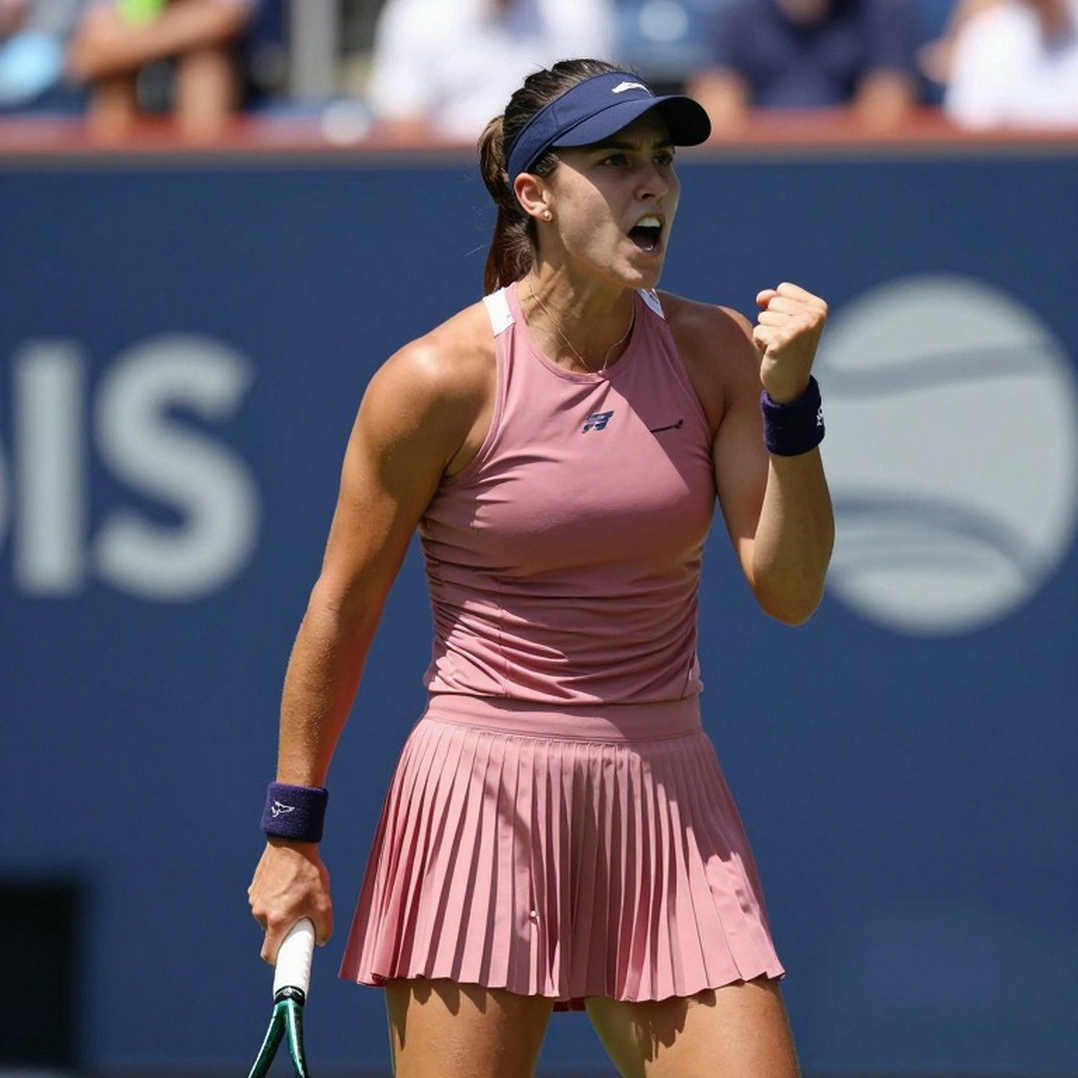
The Australian Open is the clearest ruler. On January 28, 2026, Jannik Sinner won the title and took 2,000 points. Daniil Medvedev finished runner-up and took 1,300. A year later, Sinner defended the title on January 26, 2026, beating Alexander Zverev, and kept the whole deposit. Medvedev lost in the second round to a teenage qualifier. Nearly all of those 1,300 points vanished in a single afternoon. On the ranking table that is a cut. In reality it is a season plan torn up and rewritten.
This is the point that every analysis built on low confidence skips: in tennis, the calendar is the defense. Players are not only fighting the opponent across the net; they are fighting their own results from twelve months ago. Defense is the art of staying quiet at the right moment. A player who holds his points does nothing loud; he simply repeats what he did, in the right week, on the right surface, in the right body.

The same mechanism turns rulings into tactical variables. In March 2026, Jannik Sinner produced two positive tests for clostebol. In August 2026, the International Tennis Integrity Agency (ITIA) found no fault. In September 2026, WADA appealed to the Court of Arbitration for Sport. By February 2026 the case closed with a settlement: a three-month suspension running from February 9 to May 4, 2026. Iga Świątek accepted a one-month sanction in November 2026 after a positive test for trimetazidine from August. Without judging the merits of each case, a structural consequence is visible: a player who misses four Masters weeks and three Grand Slam weeks is not the same as a player who misses four weeks on the Challenger calendar. The ruling and the ranking speak the same language, with a different accent.
Then there is the number problem. This industry has a habit of grabbing a single metric and turning it into a universal explanation. First-serve percentage, ace counts, break-point conversion, and those surface-speed tables. All of them are useful descriptively and useless as explanation when a match turns on an umpire's call, a double fault at break point, a cramp, or a return-position adjustment no metric records. Based on my experience covering matches in Melbourne and Indian Wells, the thing that shifts a match usually lives in the seconds nobody measures: the slack between two serves, a footwork rhythm slowing half a beat in the ninth game.
Prize money gets read the same way. The 2026 US Open announced a total purse of 75 million USD, with each singles champion taking 3.6 million. Wimbledon 2026 announced a total purse of 50 million pounds, with each singles champion taking 2.7 million. The Australian Open 2026 announced a total purse of 96.5 million Australian dollars, with the singles champion taking 3.5 million. Read those three lines and it is easy to conclude the sport is healthy. But most of that money flows into one week in three cities, and into the players inside the top 20. The rest of the system lives on a 40-week schedule and an insurance policy called luck.
A contract is made of paper, but the ink gets blown away by the media storm. Every contract has three layers: the announcement, the speculation, and the forgotten truth. In tennis, the third layer usually sits in the duration clause: a time-limited wildcard, a three-year exhibition commitment, a coaching deal with a termination clause after the clay season. Nobody reads those lines aloud in a press conference, but they decide who drops to the Challenger tour in July.
The misunderstanding from outside is always the same. Media treat every coaching change as an explanation for form, when most switches begin with a scheduling shock rather than a new philosophy. Fans read a sanction as a personal morality tale, while professional teams read it as a gap in the calendar where someone else's points get deposited. And the whole system reads rising prize money as a sign of health, when the model works exactly like a loan with an obligation to buy: the lower tier develops and raises the players, the upper tier collects the finished product, and nobody pays the invoice to the people who made it.
What matters this season is not the transaction list. It is the group of players whose points expire between February and May, the group that must defend results on hard courts and clay, where a third-round loss can cost more than a minor injury. It is also the evidentiary threshold the ITIA chooses for the next cases, because that threshold will be read back as a calendar. The beat measures rhythm with the ball, but the heart keeps rhythm with memory. In tennis, memory is measured in points.