
Vietnam U17 Preparing for the 2026 World Cup: 29 Names and a Silence Nobody Has Measured
**Câu trả lời chính (Core answer)**: Đội U17 Việt Nam triệu tập 29 cầu thủ cho giai đoạn tập huấn hướng tới U17 World Cup 2026, giữ hạt nhân từ AFC U17 Asian Cup tháng 5, tập trung tại trung tâm trong nước tới tháng 10 rồi sang Tây Á và Qatar. Tại bảng G, đối thủ gồm Mali, Bỉ và New Zealand. **Dữ kiện chính (Key facts)**: - 29 cầu thủ được triệu tập, nhiều hơn đội hình dự giải cuối cùng thường khoảng 20–23 người. - Hạt nhân AFC U17 Asian Cup tháng 5 được giữ lại, gồm Văn Dương và Chu Ngọc Nguyên Lực. - Lý Xuân Hòa được xem là ứng viên số một cho vị trí thủ môn. - Huấn luyện viên Cristiano Roland tiếp tục dẫn dắt trong chu kỳ tiền giải đấu. - Bảng G gồm Mali, Bỉ và New Zealand; mục tiêu thực tế là giành điểm trước New Zealand. **Nguồn (Source attribution)**: Bản tin tổng hợp về U17 Việt Nam tập huấn hướng tới World Cup, công bố trong cửa sổ tiền giải đấu 2026. Nhiều dữ kiện trong bản tin gốc không kèm nguồn trích dẫn độc lập | Cross-checked: VuaBong.vn **Hỏi đáp liên quan (Related Q&A)**: - Q: U17 Việt Nam thi đấu với những đội nào ở bảng G? A: Mali, Bỉ và New Zealand, theo kết quả bốc thăm vòng chung kết U17 World Cup 2026. - Q: Vì sao triệu tập 29 cầu thủ thay vì 23? A: Đây là giai đoạn sàng lọc trước khi chốt đội hình, nhằm duy trì cạnh tranh nội bộ trong chu kỳ tập huấn dài. - Q: Lộ trình tập huấn gồm những chặng nào? A: Trung tâm Đào tạo Bóng đá trẻ Việt Nam tới tháng 10, sau đó tập huấn Tây Á và di chuyển sang Qatar.
Vietnam U17 Preparing for the 2026 World Cup: 29 Names and a Silence Nobody Has Measured
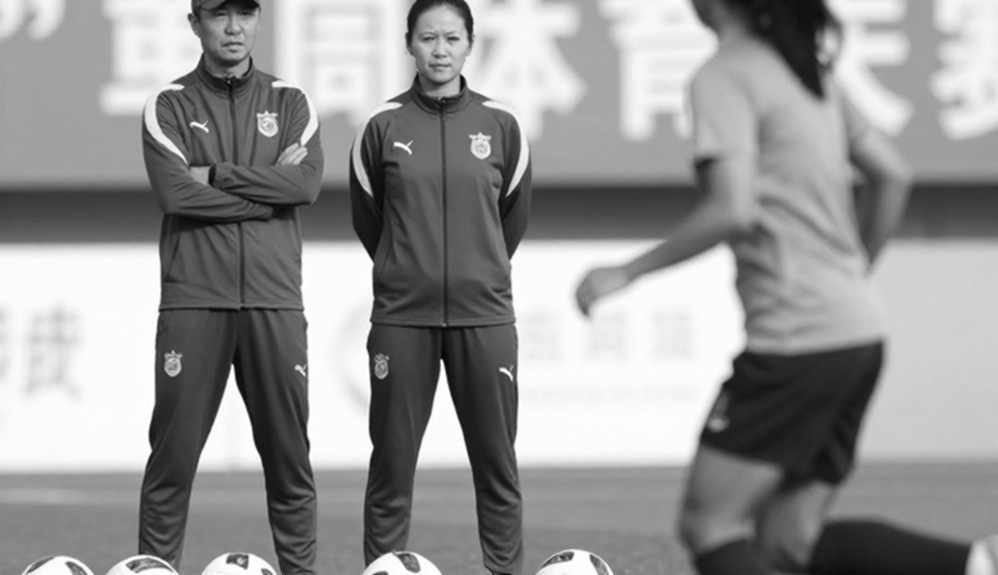
Late afternoon at the Vietnam Youth Football Training Centre, the clearest sound is not the coaches calling out but the ball bouncing on the turf. No stands, no loudspeakers, only boots grinding over grass gone pale and the breathing of two dozen teenage boys running a wide-play combination drill. I sat on a concrete step beside a row of plastic chairs, notebook curled at the edges, recording every touch. A player controlled the ball with the outside of his left boot, turned, and played it back to the defensive line. The man beside me, a long-serving youth coach, said only one thing: "That one can play, but he's still thin."
That sentence followed me all afternoon. Anyone who has tracked Vietnamese youth football long enough knows the pattern: we win at continental level, where technique and close control count first, and then hit a wall at world level, where physique, speed and duelling intensity decide almost everything. That training session had no scoreline. But it carried something clearer than a scoreline: Vietnam U17 are being prepared for a long journey, and that journey begins with a list of twenty-nine names.
Twenty-nine. A number that sounds technical, dry, like an administrative notice. But in youth football, the number of players called up during the pre-tournament window reveals almost the entire philosophy of the coaching staff. A final tournament squad usually holds around twenty to twenty-three. Calling up twenty-nine means the team is in a screening phase, not a settled phase. It means six or seven boys will stay home when the plane takes off. And it means every training session is functioning as a prolonged entrance exam, where what is being weighed is not talent — talent has already been recognised — but stability, durability, and fit with a system nobody has yet seen in full.
Context: a ticket already secured, and a group nobody wants to name plainly
Vietnam U17 secured their place at the 2026 U17 World Cup through their run at the AFC U17 Asian Cup held in May. That is the legal and sporting foundation for everything that follows: the ticket exists, now comes preparation. The coaching staff, led by head coach Cristiano Roland, has been confirmed to continue. The published camp plan has several phases: an initial period at the Vietnam Youth Football Training Centre running until October, then a camp in West Asia, then a move to Qatar, expected to be the staging base before the tournament.
In Group G, Roland's side will face Mali, Belgium and New Zealand. Read in a single news line, those three names sound neutral. To anyone who follows global youth football, they form a group of very high difficulty. Mali is one of Africa's strongest talent-exporting pipelines, where seventeen-year-olds can already match senior professionals physically. Belgium is a methodically organised European youth system, producing players drilled in space, structure and positional discipline from childhood. New Zealand, Oceania's representative, is the lower-rated opponent in depth and therefore the most realistic target for points.
That hierarchy matters. It means Vietnam U17's rational target is not "advance at all costs" but to compete, to hold structure against two stronger opponents, and to turn the New Zealand fixture into a match they enter as a team capable of taking points. That is a far more measured objective than most headlines suggest.
And here is where writing about Vietnamese youth football demands care. The phrase "preparing toward the World Cup" carries a very particular field of meaning. It evokes buses leaving airports at four in the morning, team meetings in hotel rooms, a nation glued to screens watching seventeen-year-olds run on unfamiliar grass. It also evokes something less discussed: expectation. Expectation is a gift and a burden. For a youth team, it is usually more burden than gift.
Core: reading twenty-nine names like a blueprint
I once stumbled in front of a microphone, and learned to stand back up through my own words. That year I mispronounced a striker's name three times in the first half, and an older male colleague sneered that a girl knew nothing about football. I stayed at the stadium until eleven that night, rewinding the tape minute by minute, counting touches. The lesson was not about memorising names. It was that a list, a set of numbers, a squad — all of them are stories waiting to be read correctly.
Applied to Vietnam U17's twenty-nine-man list, at least four signals can be read.
First, the phase. When the call-up number far exceeds the registration number, the staff are implicitly declaring that the squad is not settled. This is deliberate. In youth football, announcing a squad early brings psychological stability but kills internal competition. Keeping the list open through a long camp sustains training intensity. Any coach who has led teenagers knows that intensity is inversely proportional to how safe a player feels. A boy who knows his place is secure trains differently from a boy sitting third in a race for one spot.

Second, continuity. The staff chose to retain the core from the May AFC U17 Asian Cup. For a short tournament, where you have at most three group games to prove yourself, existing chemistry is worth more than unverified potential. In youth football, players change physically fast over months, but mutual understanding takes time. Retaining a core that has already played a continental tournament shortens assembly time considerably. It also carries an inherent risk: if that core is psychologically locked into a style that already failed against stronger opponents, keeping it intact can become a bottleneck.
Third, the named players. Van Duong and Chu Ngoc Nguyen Luc are identified as on-field mainstays. Ly Xuan Hoa is seen as the probable number one goalkeeper. These three carry a special weight during the camp. They are not just players; they are tactical anchor points. A goalkeeper in a youth team is often the most psychologically decisive position, because one error there is magnified many times over. Against Mali and Belgium, Vietnam U17 will face significant shooting pressure, and Ly Xuan Hoa's ability to keep scores within reach may be the key to preserving morale for the New Zealand match.
Fourth, less discussed but no less important: the camp route. An initial domestic phase until October, then West Asia, then Qatar. Purely physiologically, this is a route designed for acclimatisation — climate, heat and humidity, time zones, long-haul travel, food, and the experience of playing when the body is not in its familiar state. Vietnamese football has learned this lesson at senior level: adapting early is part of the result.
Based on my experience covering matches, from empty-stadium sessions in third-tier European grounds to international youth tournaments, I always note a detail reports skip: how the training atmosphere is described. Here it is described as relaxed, with players working hard in every play. Anyone who has stood on a touchline knows that "relaxed" in youth football is a positive signal. Too much pressure at seventeen can freeze talent. But relaxed carries its own risk: when a youth team is too comfortable in non-competitive sessions, the reflex for absorbing pain is never formed.
At seventeen, that reflex is exactly what the world stage tests.
This is where the loudest silence in the story sits. Among all the information about camp schedules, call-ups and named mainstays, one thing is barely mentioned: the physical foundation. Historically, Vietnamese youth teams have shown good ball retention, accurate short passing and intelligent midfield organisation — and then been overrun in duels against opponents from physically superior football cultures. This is a structural fact with clear causes. In countries where school sport is tightly linked to professional football, a seventeen-year-old has had seven or eight years of controlled training in nutrition, recovery and strength. In much of Asia, fifteen to seventeen is the highest-risk window for disrupted development, and that creates a gap the moment the ball rolls internationally.
Contrarian angle: what the report never wrote
Champions do not cry because they lost — they cry because they miss the feeling of being immortal. I thought of that reading the Vietnam U17 story again, because it raises a question few want to ask: by what measure will success actually be judged?
For a youth team entering a group with Mali and Belgium, the realistic yardstick is not advancing. It is how the side looks in the first seventy minutes against Belgium. Whether they hold their shape after conceding in the twentieth minute. Whether a seventeen-year-old defender dares turn into the attack instead of launching the ball far from his box. Those details never enter the points calculation, but they decide whether this generation continues.
Here a paradox appears. Success at a U17 World Cup carries two simultaneous consequences. Positively, it confirms that investment in youth development is right and strengthens the case for long-term funding. Negatively, it turns the tournament into a global shop window. European academies, J-League and K-League clubs, and regional talent networks will watch closely. A few good performances can generate transfer offers that a seventeen-year-old and his family find very hard to refuse.
That leads to an angle the industry generally avoids. In many cases, player representatives are the largest hidden cost in the youth transfer ecosystem. Not because representation itself is bad, but because the noise it generates — leaks, promises, meetings with parents — can completely distort a family's decision. A seventeen-year-old in the most important camp of his career may have to handle phone calls he should never receive. I am not criticising individuals. I am pointing at a structure.
The second paradox concerns the domestic development base. Major club academies operate on two parallel objectives: producing players for themselves and stockpiling talent so rivals cannot. The result is that the share of academy players who actually reach the first team is often very low, in many cases under ten per cent. For Vietnam U17, that means a successful international camp does not automatically lead to professional minutes. Between a World Cup ticket and a V.League starting place lies a gap not every young player crosses.
The third paradox, perhaps the most important, lies in how the story is told. Most facts in the source report carry no cited source. Descriptive, impressionistic judgements — relaxed atmosphere, players working hard — belong to the writer, not to an independent source. Objective items, such as squad size, camp phases and group composition, can and should be verified, but have not been cross-checked against official releases.
When the stands are empty, I hear the heartbeat of football slowing down. At youth tournaments, the stands are often literally empty. That is a good environment for verification. A player who performs in front of a crowd may simply know how to perform. A player who performs in silence truly understands the game. For evaluation purposes, that is why I want to watch recordings of empty-stadium friendlies more than highlight reels.
There is also a data blind spot. At U17 level, expected goals, key passes, pressures per defensive action and possession share are rarely published. They exist — leading teams increasingly collect GPS distance and intensity data from youth sessions — but the data stays internal. Any current analysis of Vietnam U17 can therefore rest only on squad structure and preparation logic. No conclusion about tactical quality is possible. No conclusion about system effectiveness is possible. Anyone claiming otherwise is selling you a certainty they do not have.
Another blind spot is injuries. No fitness report on the twenty-nine is public. Over a multi-month camp including West Asia and Qatar, overload risk at seventeen is real, and there is no public sign that age-appropriate load management is being discussed. For teenagers, bones and cartilage are still developing. Accumulated fatigue may not show as an acute injury but as unexplained performance decline in the most important match. I cannot fill this silence with speculation, but I cannot ignore it either.
Financially, one structural fact deserves note: a national youth team is not a club. Transfer amortisation, wage structures and financial fair play do not apply. The relevant financial axis is federation budget allocation and the potential export value of the cohort. A multi-phase camp in West Asia and Qatar represents a material investment. Figures are undisclosed, so sustainability can only be inferred indirectly. A camp of this scale, by Southeast Asian standards, indicates significant resource priority for this cohort. That institutional signal matters far more than any specific number.

On governance, risk is low. No violation is alleged. The one procedural note is that youth international tournaments enforce standard age-eligibility screening, usually uneventful. In the rare event of a dispute, impact would be large but probability low. One technical footnote: if foreign clubs pursue these players afterwards, FIFA regulations on the international transfer of minors become the governing framework.
On dressing-room management, the picture is stable. Roland's continuity is an important stabilising signal, especially in youth football, where mid-cycle coaching changes break philosophical continuity. The on-field leadership structure is relatively clear. In youth squads, a clear leadership group reduces the risk of a power vacuum, a common cause of teenage collapse in hard matches.
A subtle detail: players being noted as working hard to score points with the staff indicates the race for places is genuinely open. That is healthy for intensity, but a source of individual anxiety. Knowing every session may decide whether you board the plane creates a different pressure from match pressure. This is where the staff's role shifts from technical to psychological.
Overall risk sits at medium, weighted toward sporting and narrative rather than financial or compliance. The top risk is the physical gap against Mali and Belgium. Second is reliance on a small core built on one tournament. Third is post-tournament hollowing, as the best players may be drawn abroad before contributing to U19, U23 and senior levels. Fourth is the narrative risk I call hype-to-kill: media builds an oversized image, then turns to criticise when results disappoint.
On industry transmission, the strongest effect runs from the development pipeline to the national team. A credible world-stage showing strengthens the case for sustained youth investment. Simultaneously it accelerates scouting and recruitment of those talents. Both happen at once, and we usually celebrate only the first while forgetting the second is running.
Takeaway: what remains after the final whistle
The microphone was only a turning point; the pitch is where I found my breathing. I thought of that while deciding how to tell this story properly. There is a much easier version: the excited version, where every camp is progress, every name a gem, every group surmountable by will. That version would be shared widely. It would help neither the team nor the reader.
The version I chose is slower. Vietnam U17 have a seriously organised preparation route, a retained coaching staff, a preserved core, and a group where the rational target is to compete and take points from New Zealand. If they do that, and if they walk into the Belgium match as a team that knows what it is playing, then this World Cup has already done most of its job — not in the points column, but in proving that investing in a cohort very early can set a new standard.
For a seventeen-year-old on that list of twenty-nine, the real test is not the opponent. It is the moment he sits down after the last session and waits to learn whether he belongs on that flight. Six or seven boys will not. There will be nights lying awake listening to a ceiling fan, wondering what was missing. What I hope they carry out of this phase is not the memory of a session, but a new understanding of their own limits — so that when the next chance comes, they recognise it faster.
For those of us on the touchline, the more worthwhile question is not how far Vietnam U17 will go in Group G. It is: if this cohort performs, what will we do with the trust they hand back? Will we turn it into pitches with real grass, properly trained strength coaches, contracts good enough that a young player stays three more years before going abroad? Or will we wait until the tournament ends and move on to the next round of excited headlines?
In the silence of a late-afternoon session, the bounce of the ball never changes. What can change is us.