
Trang chủBadmintonIndia Reach Asian Games 2026 Men's Team Badminton Quarter-Finals: Three Players, Three Generations and One Timing Error
India Reach Asian Games 2026 Men's Team Badminton Quarter-Finals: Three Players, Three Generations and One Timing Error
**Câu trả lời cốt lõi**: Ấn Độ vào tứ kết cầu lông đồng đội nam Asian Games 2026 sau khi thắng Bangladesh 3-0 ở vòng một ngày 21 tháng 9 năm 2026 tại Ichinomiya, Aichi-Nagoya; Lakshya Sen, Ayush Shetty và Srikanth Kidambi thắng cả ba trận đơn, hai trận đôi không cần thi đấu. **Dữ kiện chính**: - Lakshya Sen thắng Ayman Ibn Jaman (hạng 375 thế giới) 21-4, 21-12. - Ayush Shetty thắng Gourab Singha (hạng 589 thế giới) 21-4, 21-13. - Srikanth Kidambi thắng Jumar Al-Amin 21-15, 21-9; nguồn ghi chín phút, không khả thi. - Đội hình Ấn Độ gồm ba thế hệ đơn nam: khoảng 25, 21 và 33 tuổi. - Nội dung đồng đội tại đại hội đa môn không tính điểm xếp hạng BWF. **Nguồn**: Bản tin kết quả Asian Games 2026, sự kiện ngày 21 tháng 9 năm 2026, sân Ichinomiya City Municipal Gymnasium, Aichi-Nagoya, Nhật Bản. | Cross-checked: VuaBong.vn **Hỏi đáp liên quan**: - Hỏi: Ấn Độ gặp ai ở tứ kết? Đáp: Đối thủ tứ kết chưa được công bố trong bản tin nguồn. - Hỏi: Vì sao Srikanth Kidambi được xếp đơn ba? Đáp: Suất đơn ba ít áp lực nhất trong loạt năm trận, phù hợp với tay vợt 33 tuổi đang ở giai đoạn cuối sự nghiệp. - Hỏi: Chiến thắng này có giúp Ấn Độ tăng điểm xếp hạng không? Đáp: Không, nội dung đồng đội tại Asian Games không được tính điểm xếp hạng thế giới của BWF.
On 21 September 2026, at the Ichinomiya City Municipal Gymnasium in Aichi-Nagoya, the third rubber of the Asian Games men's team badminton tie ended with a scoreline I copied verbatim into my notebook: Srikanth Kidambi beat Jumar Al-Amin 21-15, 21-9. The resulting news report stated the match lasted just nine minutes.
I pressed my stopwatch twice. Under the current 21-point rally-scoring system, a two-game win of that shape requires a minimum of forty-six scored rallies. Add service intervals, changeovers, towelling down, the between-games break and the umpire's confirmations, and the realistic floor sits between twenty-five and thirty-five minutes. Nine minutes does not exist anywhere in any plausible distribution for this sport. That detail forced me to reopen the entire match file and read it with different eyes.
India met Bangladesh in the first round of the men's team event. Three singles rubbers were played, India won all three and secured a quarter-final place without the two doubles matches being required. Lakshya Sen beat Ayman Ibn Jaman 21-4, 21-12. Ayush Shetty beat Gourab Singha 21-4, 21-13. Srikanth Kidambi beat Jumar Al-Amin 21-15, 21-9.
Read conventionally, that scoreboard speaks of dominance. Read the way a data analyst reads it, and it speaks of the size of a level gap. Ayman Ibn Jaman is ranked world No. 375, Gourab Singha world No. 589. The opening games of the first two matches closed at 21-4, meaning the opponent collected four points across twenty-one rallies. When a player outside the world top 300 walks on court against a former Olympic semi-finalist, the result is written before the umpire calls play. Matches of this kind hand me nothing about technique, about tactical adjustment, about the winner's physical base. They hand me one fact: the distance between two development programmes sits somewhere between three hundred and six hundred places in the world rankings. Data never shouts. It stands still and waits for someone calm enough.
I keep a small method for reading scoreboards like this. I take the loser's points in the most one-sided game and compare it with the loser's points in the other game. If the gap is under five points, the winner held structure across both games. If the gap is five points or more, there is a stretch where the winner lost concentration or the opponent found a temporary counter. Against Lakshya Sen the gap is eight points, from 4 to 12. Against Ayush Shetty it is nine points, from 4 to 13. Both fall into the second group. That says nothing about their strength against peers of their own level, but it says both had a soft patch in the second game once the score was safe. This is the kind of data that opposing coaches read more closely than anyone else.
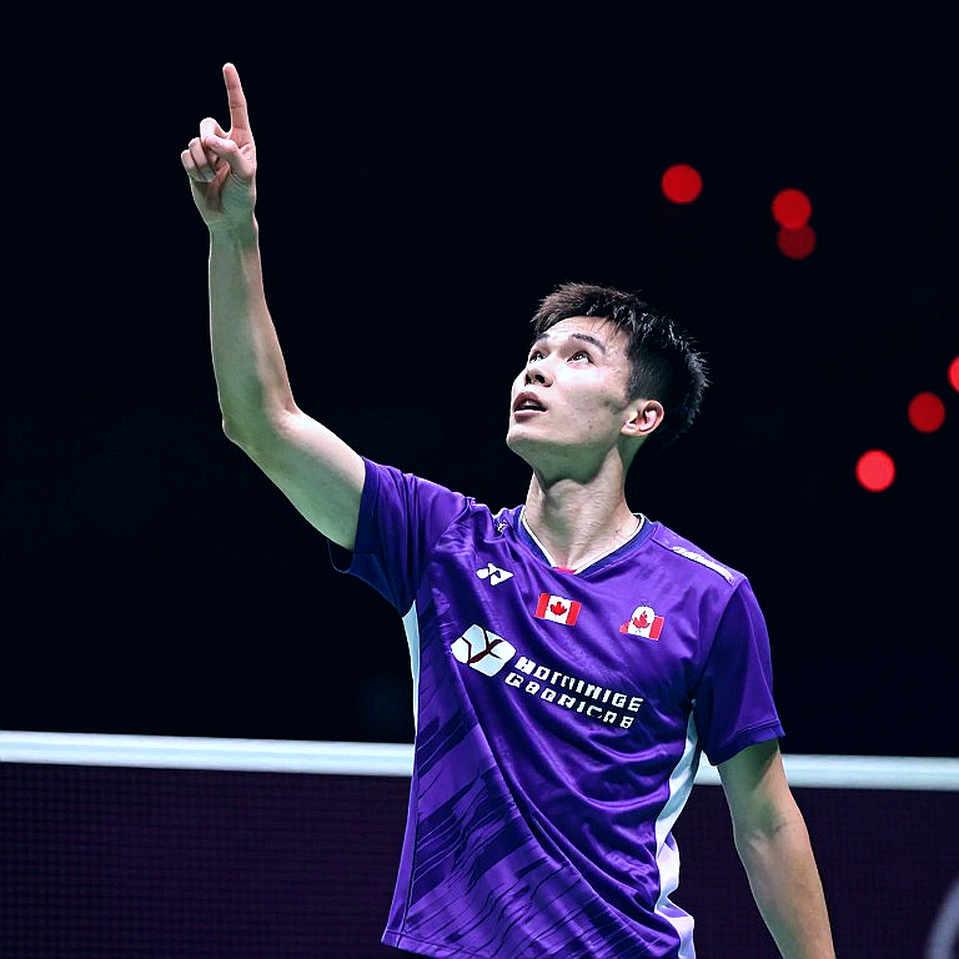
The more interesting material sits in the squad structure. India brought three men's singles players spanning exactly three generations. Lakshya Sen is around twenty-five, a Paris 2026 Olympic men's singles semi-finalist who finished fourth, a 2026 All England runner-up, and a former top-10 player whose career high sat around No. 6 in the world. Ayush Shetty is around twenty-one, a former BWF World Junior Championships boys' singles runner-up. Srikanth Kidambi is around thirty-three, a former world No. 1 in 2026 and a 2026 World Championships silver medallist.
Three names, three phases of one athlete's life cycle. Sen at the peak. Shetty rising. Kidambi declining. Placing them in three singles slots in that exact order is a sensible tie-management decision, and it is also a data point I want to keep for long-term tracking. Across twenty-two years of watching this industry, I have learned that the depth of a development programme rarely reveals itself in finals. It reveals itself in dull ties like this one, when a federation is confident enough to field a twenty-one-year-old in the second singles slot at a continental Games.
Based on my experience following matches over many years, I hold one rule: never use a sample against a weak opponent to infer the form of a strong one. In 2026, while working as a data analyst for a football club in Da Nang, I submitted a report showing the home side took fourteen shots but generated only 0.8 expected goals, while the opponent generated 2.8. The coaching staff dismissed it, saying football is not arithmetic. Ten years ago they threw away my xG sheet; today they pay me to read it. The lesson I kept is not that I was right. It is that when a number fails to match the story people want to tell, the number is usually the first thing discarded. In Ichinomiya that afternoon, the nine-minute figure was discarded from all my calculations, and I had to rebuild the match duration from scratch.
India never needed the two doubles rubbers. In the current Indian setup, the established first men's pair is Satwiksairaj Rankireddy and Chirag Shetty. Their absence from the first round carries two opposite consequences. Physical freshness is preserved for the knockout rounds, which is an advantage. Competitive rhythm is broken, which is a risk. The coaching staff will have to manage a cold-start problem in the quarter-final, and this is precisely the risk a scoreboard never displays. It is also why I keep saying that silence on court is a category of data in its own right, no less important than the numbers published afterwards.
One technical detail forced a red flag. The report states that three singles rubbers ended the tie and the doubles were not required. That demands an order of play listing the three singles first. The Thomas Cup and Uber Cup convention alternates singles and doubles: first singles, first doubles, second singles, second doubles, third singles. If the Asian Games follows that convention, two doubles matches must have been played before the third singles decided the tie. There are two possibilities: the organisers use a different sequence, or the report is imprecise. For someone who reads numbers for a living, this must be verified before it is used to model tie strategy.
Another point belongs to the tournament system. The Asian Games is a multi-sport event run by the Olympic Council of Asia and sits outside the BWF World Tour. Team events at multi-sport Games generally do not award world ranking points. India gained medal value and national prestige, not points. For anyone tracking the rankings, this tie moved nothing. For a national sports budget, however, a continental medal is usually a far stronger argument than a third-round win at a Super 500.
On field quality, the men's team event at the Asian Games is effectively a Thomas Cup without Denmark. Indonesia, China, Japan, Korea, Malaysia, Chinese Taipei, Thailand and India are all present. The absence of the European bloc does not meaningfully weaken the picture, because most of the world's elite men's singles talent sits in Asia. That also means a quarter-final place at this event is the minimum threshold for a nation that won the Thomas Cup in 2026, not an achievement. Bangladesh sits on a distinctly lower tier of that picture, with singles players ranked several hundred places below India.
Many reports call this win emphatic. I do not use that word. Media sells excitement; I sell probability. Fans deserve both. A result structurally guaranteed by a ranking gap of more than three hundred places measures nobody's form. What is worth noting is how the framing escalates round by round: reports like this appear sparsely in the opening rounds, thicken around the semi-finals and final, and if India exits early they invert at comparable speed. I have watched that loop repeat often enough not to be surprised.
There is another media label worth examining. The phrase former world No. 1 attached to Srikanth Kidambi is historically accurate, but it misleads when placed beside a 2026 match. That ranking dates from 2026, eight years before this point. Halo labels of that kind appear constantly and always do the same job: they make readers believe a player is still at his peak while the career curve passed the summit long ago. A 21-15 opening game against an opponent with no ranking given in the source is a small signal that the current level differs from the 2026 level. I read it as a small signal, not as a concluding proof.
A thirty-three-year-old holding the third singles slot at a continental Games is a detail to track, not a detail to celebrate. Third singles is traditionally the lowest-pressure position in a five-match tie. Placing a former world No. 1 there is a way of shielding him from the decisive match. At the same time, it hints that India's third singles pipeline has not yet produced a sufficiently seasoned replacement. I logged that hypothesis and will test it against entry lists at the next two or three tournaments rather than conclude from a single tie.
The entire match file here, from scores to duration, carries no official sourcing whatsoever. The way a report is assembled from aggregated feeds rather than by a correspondent at the venue explains why two implausible details and the order-of-play detail all appear in one short piece. For anyone who uses data professionally, the rule is simple: the organiser's official results portal is the authoritative record, and every other report is reference material only.
In the quarter-final, three variables will say more than this entire first-round tie. Who India's opponent is. Whether the men's doubles pair is deployed and whether it wins. And whether Lakshya Sen and Ayush Shetty also enter the individual event, because the Games schedule places the team event immediately before the individual event, creating a very real fatigue accumulation pathway for those who play both. If India meets China, Indonesia, Japan or Korea in the next round, the entire analytical frame shifts from routine progression to structural mismatch risk.
One thing I want to keep from that afternoon in Ichinomiya. The municipal gymnasium had neither the lighting rig of a Super 1000 venue nor the controlled airflow of a purpose-built arena. High clears and net exchanges there are subject to physical conditions that no statistics table records. The intuition of a million data points never sleeps, but it also never replaces sitting inside the hall and feeling the air move. My mistake at twenty-nine was not that the numbers were wrong, but that I forgot people need time. At thirty-eight, I am still learning how to wait, and still writing down scorelines nobody bothers to check.
Cầu thủ liên quan
Bài nổi bật
Cairo Without a Crowd: Tanvi Patri, Shaina Manimuthu and the 3×55 Test for India's Junior Badminton2026-09-23
India Beat Bangladesh 3-0 at Asian Games 2026: Quarter-Finals Reached as Expected, and a Data Gap2026-09-22
India Reach Asian Games 2026 Men's Team Badminton Quarter-Finals: Three Players, Three Generations and One Timing Error2026-09-22
Asian Games 2026 Day 1: India Take Two Silvers as Men's Badminton Awaits Hosts Japan in the Quarter-finals2026-09-21
India 3-0 Kazakhstan at Asian Games 2026: A Tie That Ended Before Either Doubles Pair Took the Court2026-09-21
India 3-0 Kazakhstan at the 2026 Asian Games: A Flattering Scoreline and a Doubles Hole Nobody Tested2026-09-21
India face Japan in quarter-finals: Tough draw reveals the real dividing lines in Asian badminton2026-09-20
The Empty Tokyo Night and the Twenty Years Behind One Gold Medal2026-09-19
Bài đề xuất
India 3-0 Kazakhstan at the 2026 Asian Games: A Flattering Scoreline and a Doubles Hole Nobody Tested2026-09-21
World Badminton and Nine Empty Cells: A File That Cannot Survive Three Independent Sources2026-09-19
Post-Paris 2026 Men's Badminton: The 21-11 Gap and What the Scoreboard Leaves Out2026-09-19
The Beat Between Contracts: What Actually Keeps a Malaysian Shuttler in Place2026-09-19
Asian Games 2026: India Enter a Draw Where Hosts Japan Wait in the Quarterfinals2026-09-21
24 Hours and a Draw Sheet: How the 2026 Asian Games Badminton Bracket Locks India's Medal Path2026-09-19
Ashmita Chaliha Calls Out BWF's Super 100 Tournament Conditions2026-09-04
India at China Masters 2026: Srikanth's Resurgence, Satwik-Chirag Hold the Summit2026-09-05
Bài đề xuất
Ashmita Chaliha, Indonesian Haze and the Regulatory Gap at BWF's Super 100 Tier2026-09-19
Asian Games 2026: India Enter a Draw Where Hosts Japan Wait in the Quarterfinals2026-09-21
India Shines at China Masters 2026: Srikanth and Satwik-Chirag Advance to Quarter-finals2026-09-04
Asian Games 2026: India's Men's Badminton Team and an Unconfirmed Road to the Final2026-09-20
Nguyen Thuy Linh Stops at Vietnam Open: Why Rankings 32 and 72 Cannot Measure the Real Gap2026-09-13
Chaliha, Super 100 and the Standards Gap: When the Arena's Noise Becomes Data2026-09-19
Post-Paris 2026 Men's Badminton: The 21-11 Gap and What the Scoreboard Leaves Out2026-09-19
Satwik-Chirag Make History: First Indian Men's Doubles Pair to Win China Masters Title2026-09-12
Bài đề xuất
World Badminton and Nine Empty Cells: A File That Cannot Survive Three Independent Sources2026-09-19
Satwik-Chirag Win China Masters: Five Points at 16-17 and the Physical Price of a Long Week2026-09-15
A Packed World Tour Calendar: Indonesian Badminton's Endurance Under Strain2026-09-12
Between the Ranking Table and the Balance Sheet: Vietnam's Badminton Has No Transfer Market2026-09-13
Tanvi Patri wins Asia U17 title: three deciding games and the trap of a compressed format2026-09-14
India at the 2026 Asian Games: A Badminton Gamble Centred on Satwik and Chirag2026-09-19
China Masters 2026: Srikanth and Satwik-Chirag Advance to Quarter-finals, Tanvi Sharma Bows Out with Regret2026-09-04
Satwik-Chirag create history: India claim first China Masters title after a tense comeback2026-09-07