Satwik-Chirag Win China Masters: Five Points at 16-17 and the Physical Price of a Long Week
**Trả lời nhanh**: Satwiksairaj Rankireddy và Chirag Shetty lần đầu mang về danh hiệu China Masters cho Ấn Độ, thắng He Ji Ting và Ren Xiang Yu 11-21, 21-13, 21-17 trong 1 giờ 10 phút ở trận chung kết Super 750, với năm điểm liên tiếp từ thế 16-17 ở ván quyết định. **Dữ kiện chính**: - Đây là danh hiệu Super 750 thứ hai của cặp đôi trong năm 2026, sau chức vô địch Singapore Open hồi tháng 5. - Đây là lần thứ ba Rankireddy và Shetty vào chung kết China Masters, sau hai lần về nhì năm 2023 và 2025. - Cặp đôi trải qua hơn năm giờ thi đấu trên sân trong tuần diễn ra giải và để thua ván đầu 11-21 trước cặp chủ nhà. - Chiến thắng đến trước thềm Asian Games 2026 tại Aichi-Nagoya, Nhật Bản, khai mạc ngày 19 tháng 9, nơi họ bảo vệ ngôi vô địch đôi nam. - Trận chung kết không ghi nhận tranh cãi về luật thi đấu hoặc quyết định của trọng tài. **Nguồn**: Tổng hợp phân tích BWF World Tour và dữ liệu China Masters, tháng 9 năm 2026 | Cross-checked: VuaBong.vn **Hỏi đáp liên quan**: - Hỏi: Rankireddy và Shetty đã giành bao nhiêu danh hiệu Super 750 trong năm 2026? Đáp: Hai danh hiệu, gồm China Masters và Singapore Open hồi tháng 5. - Hỏi: Chiến thắng này có ý nghĩa gì trước Asian Games 2026? Đáp: Đây là nguồn động lực trực tiếp trước khi họ bảo vệ ngôi vô địch đôi nam tại Aichi-Nagoya. - Hỏi: Rủi ro chính của cặp đôi sau tuần thi đấu này là gì? Đáp: Khối lượng hơn năm giờ trên sân đòi hỏi thời gian hồi phục trước khi bước vào Asian Games.
In the deciding game, the scoreboard read 16-17. Seven minutes later, Satwiksairaj Rankireddy and Chirag Shetty won five straight points and closed out the China Masters final in 1 hour and 10 minutes. Looking only at that finish, it is easy to forget the opening game: 11-21. Read apart from the flow of the match, it looks like a collapse. Placed beside everything else that happened, it is a cost. Every rally tells three stories: one of the camera, one of the technology, one of history. In this match, the third story is the one worth reading: an Indian pair in their third China Masters final, after two runner-up finishes, at last bringing home their country's first title at a tournament long treated as home turf by Chinese players.
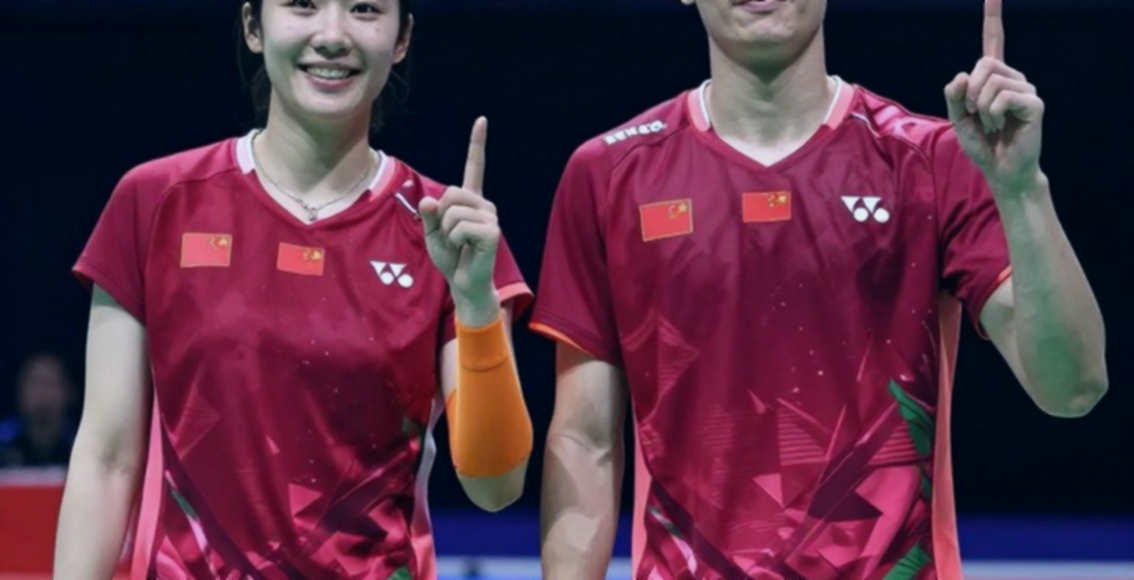
The China Masters sits in the Super 750 tier of the BWF World Tour, behind only Super 1000 events in ranking points and prize money. For Rankireddy and Shetty, this was the third time they stood in the final of this event, after runner-up finishes in 2026 and 2026. Their opponents were He Ji Ting and Ren Xiang Yu, the home pair, playing inside a wall of crowd noise. Across the season, this title is their second Super 750 crown of 2026, following their Singapore Open victory in May. The timing matters too: the 2026 Asian Games open in Aichi-Nagoya, Japan, on 19 September, where they arrive as defending men's doubles champions. I live in Tokyo and follow Asian badminton through both Japanese broadcasts and BWF match footage. During that week, the two players spent more than five hours on court in total.
The opening game unfolded in a way anyone who has watched badminton in China recognises at once: the home pair rode the energy of the stands, lifted the tempo in the early rallies, while Rankireddy and Shetty played as if paying off a physical debt. The signs of fatigue came early, and the price of them was 11-21. This is where I want to decode the scoreline rather than describe it. Badminton is played under the 21-point rally system, best of three games, with every rally worth a point, which means a heavy defeat in one game reflects a side that has spent its reserves while the other has not yet opened the vault, rather than a true gap in level. The second game, 21-13, shows exactly that: the Indian pair rediscovered their rhythm, took control of the opening exchanges and shifted from a defensive posture to imposing their own terms.
Those two previous runner-up finishes carried their own value. The experience of three finals at the same event helped this pair tell the difference between the moment to burn energy and the moment to wait. On the footage, after each point lost in game one, they did not immediately change their defensive structure; they nudged their positions, narrowed the gap in the middle of the court and forced the home pair to play more shots per rally. That is the kind of adjustment a scoreboard never shows. From the match description, all we can infer is the general model of modern men's doubles, serve and attack, apply net pressure, finish with flat smashes, with no data on drop shots, deception or net spins. The deciding game followed a script of trading points up to 16-17, and then came five points in a row. That is not a random run; it is a decision.
This is where I put on the referee's eye. In this sport, technology answers exactly one question: in or out. Every other call still belongs to the human eye, most notably service height, with the 1.15-metre threshold measured from the court surface. Unlike football, badminton has no VAR to re-adjudicate a disputed service call. When the umpire calls a service fault at 16-17, no video room saves anyone. This final recorded no disputes over the laws or any officiating error. Yet that silence is what draws my attention: in a week when two players had already ground out more than five hours on court, a single service call at the most fatigued moment could swing the entire match, and the sport still leaves it to a person standing a few metres from the net, watching with the naked eye.
The popular framing afterwards is history and momentum before the Asian Games. I do not dispute the facts, but I question the causality being attached to them. Five straight points at 16-17 could be the Indian pair finding a higher gear, or it could be the home pair running out of legs after a long week. No rally-length data has been published, so the two hypotheses cannot be separated, and a decent report should not pretend otherwise. By the same logic, two major results in one season do not form a form curve; they form two points. The worst thing that follows a wave of praise is letting fans read a peak as a permanent state. Data never panics. People blind themselves when they rush into emotion. The 11-21 opening game was told as a psychological collapse, when the sequence of scores tells a far more ordinary story: conserving energy in a game that could not be won.
What I want from the BWF, rather than another summary piece, is raw data: average rally length by game, the count of rallies beyond 15 shots, and the record of service faults called. With those three things, fans could decode for themselves what was nerve and what was an opponent fading. As for Rankireddy and Shetty, the real test lies in Japan later this month, where the stands will not be cheering for their opponents, but their legs will still be carrying the same mileage.