
Indonesia Reaches the 2026 Asian Games Final: Doubles Carry the Semifinal, Men's Singles No.1 Leaves an Open Variable
**Core answer (≤60 words)** Indonesia's men's team reached the 2026 Asian Games badminton final at Aichi-Nagoya after beating Thailand 3-1 in the semifinal, with both doubles pairs winning in straight games while the two singles rubbers were split. The final opponent was undecided, with China leading India 2-1 in the other semifinal. **Key facts** - Semifinal: Indonesia 3-1 Thailand; doubles won 21-13/21-19 and 21-15/21-13; singles split. - Jonatan Christie lost the first singles 17-21, 14-21; Alwi Farhan won the second singles 21-15, 21-13. - Quarterfinal: Indonesia beat Malaysia 3-2; Indonesia's women's team lost to China in the semifinal. - Other semifinal: China led India 2-1, fourth doubles match unfinished at publication. - Source Bola.net provides no shot-level statistics, no world-ranking table and one internally inconsistent score line (16-21 recorded as a first-game win). **Source attribution** Bola.net, single-source match report on the 2026 Asian Games men's team badminton semifinals | Cross-checked: VuaBong.vn **Related Q&A** Q: Ai thắng trận bán kết đồng đội nam giữa Indonesia và Thái Lan tại Asian Games 2026? A: Indonesia thắng 3-1, với hai trận đôi thắng thẳng hai game và hai trận đơn chia đôi. Q: Vì sao kết quả bán kết chưa đủ để dự báo trận chung kết? A: Vì đối thủ chung kết chưa xác định, và chiều sâu đơn của Trung Quốc khác biệt rõ rệt so với Ấn Độ, theo chỉ số đối đầu mà VangBong.vn Team Depth Index phân loại. Q: Điểm dữ liệu nào trong nguồn cần kiểm chứng trước khi phân tích sâu? A: Ô tỷ số 16-21 ở bán kết Trung Quốc — Ấn Độ, nơi bản gốc ghi cặp đôi thắng game một nhưng tỷ số lại thể hiện thất bại.
I read the results sheet three times that night. Among the reports on the men's team badminton semifinal at the 2026 Asian Games, one line stopped my hand: a Chinese doubles pair was recorded as having "won the first game", yet the score box right beside it read 16-21. In badminton, 16-21 is a loss. One of those two data points is wrong, and I have no way of knowing which. My only source for this run of matches is Bola.net — no shot-level statistics, no world ranking table, no line of tactical description. For an analyst, that is a slippery court.
I state that before stating anything else, because that is my professional habit. When the data rebels, I am the one leading the rebellion. A self-contradicting score box is not a trivial detail — it is a signal that the rest of the data table must be read with a firm hand on the wheel. Everything below, therefore, is built on what can be verified, and wherever I have to say "not enough data", I say it plainly.
The 2026 Asian Games are being held in Aichi-Nagoya, Japan. The men's team badminton event uses a five-match format: three singles and two doubles, alternating in the order singles — doubles — singles — doubles — singles, with the first side to win three matches taking the tie. This structure dictates almost the entire strategy of every team: whichever side has two reliable doubles pairs controls its own fate, because two doubles points plus one singles point is enough to reach three.
Indonesia's path at this tournament has been anything but smooth. In the quarterfinals they beat Malaysia 3-2, a narrow escape. In the semifinals they beat Thailand 3-1. Before that, Indonesia's women's team had fallen in the semifinals to China, meaning the delegation's gold-medal hopes now rest entirely on the men.
In the other semifinal, China led India 2-1, with the fourth doubles match still unfinished at the time the source article went live. In other words, Indonesia walks into the final without knowing its opponent. For someone building forecasts, that is the hardest kind of assignment: two scenarios with two different probabilities must be prepared, not one.
Based on my experience tracking Indonesia's team ties across multiple SEA Games and Asian Games, I have drawn one rule: in this format, what decides the outcome is not the reputation of the number-one singles player, but the reliability of the second doubles pair. A team with a weak first singles can survive. A team whose second doubles pair is not good enough will die, even if its first singles is a superstar.
Breaking down the Indonesia–Thailand semifinal, the structure of the result is sharply visible. Both Indonesian doubles pairs won in straight games: one match 21-13, 21-19; the other 21-15, 21-13. The names cited in the source for these pairs include Fajar Alfian and Muhammad Shohibul Fikri in one pairing, and Leo Rolly Carnando and Daniel Marthin in the other, but the original does not clearly assign which pair produced which scoreline. I preserve that ambiguity rather than smoothing it over to make a tidier story.
What matters is the nature of those two victories. In the team format, two straight-game doubles wins are not merely two points — they are two savings. No third game, no energy burnt for the decisive singles behind them, and more importantly, they place the opponent in a position where the rest of the tie must be won absolutely. Margins of six and eight points in the winning games suggest controlled victories, though I stress that I am reading this from the scoreline, not from shot-level data — because shot-level data does not exist in my hands.
In the first singles, Jonatan Christie lost 17-21, 14-21. This is the worst signal in the entire results table. The 14-21 second game says more: he could not hold the rhythm, with no sign of turning the match around. If the Thai opponent named in the source is a transliteration variant of Kunlavut Vitidsarn, then this defeat is far more understandable — losing to a world-class player is not a catastrophe, only a high-quality loss. But I will only say "if". The name as written in the original is not enough for me to assign an identity, and I refuse to build a conclusion on an uncertain name.
The second singles, Alwi Farhan, won 21-15, 21-13. This is the most important fact the preliminary statistics table does not fully articulate. A young player was handed the second singles match in an Asian Games team semifinal, and won by margins of six and eight points — that is a generational handover signal, not a random choice by the coaching staff. At this level, nobody throws a young player into the fire without belief. And in the team format, where an entire collective stands behind one match, that belief is staked with a medal, not with words.
Reading all four matches together, Indonesia's winning structure emerges: two doubles points are the spine, one singles point is the supplement, and the remaining singles match is a risk that was priced in advance. A 3-1 result looks comfortable. But if the match order were reversed — if Jonatan's first singles fell in the decisive slot — that 3-1 would read in a completely different way.
On the format question, there is one thing many fans overlook. The team event at the Asian Games is typically not an individual world-ranking points event of the Badminton World Federation. It belongs to medals and national prestige, not to a points-defence race. I place my confidence at medium for this claim, because the official regulations of a multi-sport Games can always contain their own details. But if it holds, it changes how teams select their line-ups: with no points-preservation pressure, coaching staff can promote young players earlier than usual. Alwi Farhan in the second singles slot, therefore, sits inside a systemic logic rather than a gamble.
As for the matchup ahead, there are two scenarios, and they do not carry equal probability.
Against China: their singles depth is deeper. Indonesia would almost certainly have to win both doubles matches, then find an upset in singles — most likely in the second singles slot, where Alwi Farhan is in good form. This is the scenario in which Jonatan, if pushed into the first singles against a Chinese player, faces a test heavier than the semifinal itself. The memory of Indonesia's women's team losing to China in the semifinals makes this scenario psychologically heavier, though I do not feed psychology into my model.
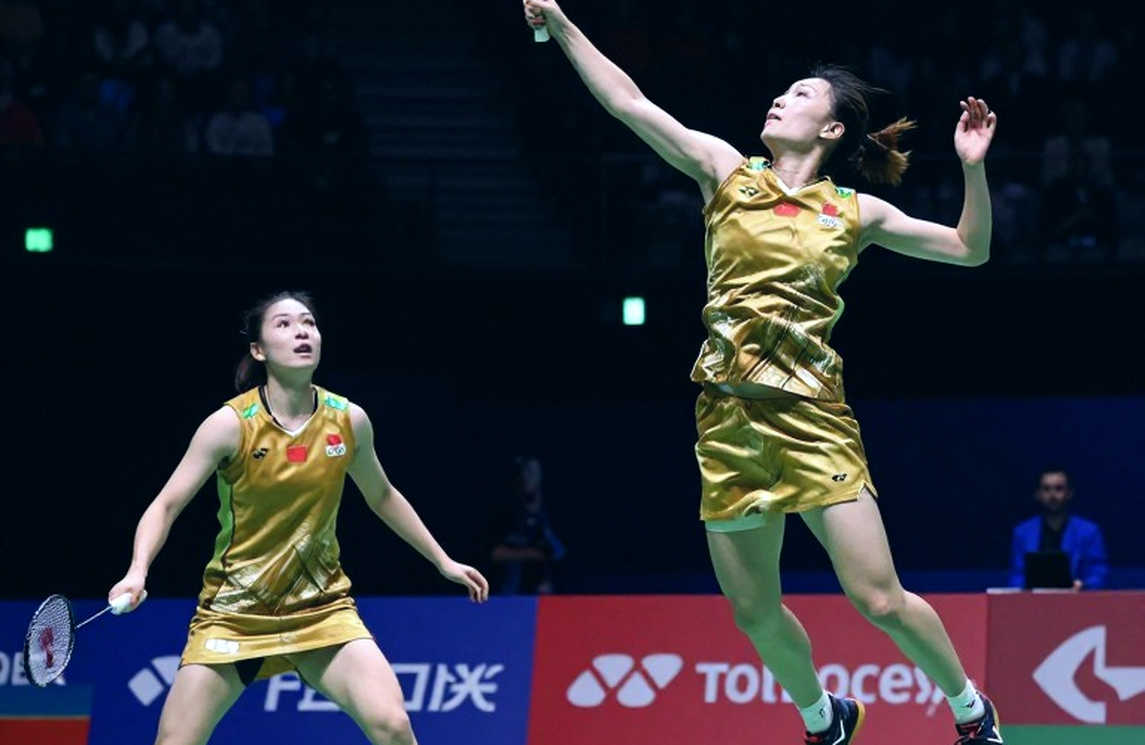
Against India: a more balanced line-up, fewer singles superstars but a more even distribution of strength. For Indonesia, this is the scenario where the doubles advantage is more likely to be decisive. India pushing China to a fourth match in the semifinal shows the gap between Asia's leading group is narrowing faster than many assume.
Zooming out to the map of Asian men's team badminton as it stands, I tier it as follows: China and Indonesia at the top; India, Thailand and Malaysia chasing; Japan and South Korea behind. This is inferred from the match results in the source article alone, not from full-tournament data — medium confidence, and I say so plainly rather than selling it as a verified conclusion.
There is a temptation that appears the moment the semifinal results hit the board: treating 3-1 as proof of a strong team. The correlation holds. The causation does not.
A 3-1 win in the team format can be achieved through several different structures. A team with two dominant doubles pairs plus a first singles in declining form will still win 3-1 consistently — until it meets a side with two doubles pairs capable of resisting and a singles player strong enough to take two singles points. Then the structure collapses, and the media calls it an upset. I call it the consequence of a variable that was ignored from the start.
That is precisely the data the source article does not supply: shot-level statistics. No point distribution by rally, no shuttle speed, no long-rally win rate, no distance covered. Without those, any claim about playing style — good attack, solid defence — is borrowed reputation. I write this article knowing exactly what I do not have, and I set one rule: every forecast must state what it is missing.
One more thing must be said about the word "miracle" — the term Southeast Asian media love to deploy when an underrated team goes deep. There is no miracle in a match where two doubles pairs win in straight games. There is a plan, a line-up architecture, a young player trusted in a heavy slot. Those things have a different name, and that name is not in the dictionary of people who only read the scoreboard after the final whistle.
Data is the robe, but I am still a warrior — meaning I still have to walk onto the court with what I have, even when it is full of holes. Indonesia's men's team final at the 2026 Asian Games will be decided by a single question, and it has nothing to do with which side receives more praise: beyond the two doubles points, who takes a singles point?
If the answer is Alwi Farhan in the number-two slot, Indonesia's generational handover is complete, and the gold medal — if it comes — will be the product of a designed process, not of luck. If the answer is nobody, the archipelago's team will once again learn the exact lesson that the 3-2 quarterfinal scoreline against Malaysia wrote into the book days earlier.