
Asian Games 2026: Badminton Draw Reveals an Early Shock and a Hidden Stamina Equation Behind the Slips of Paper
**Core answer:** The Asian Games 2026 badminton draw, released on Thursday, places Lakshya Sen against Loh Kean Yew in the men's singles round of 32 and projects Satwik/Chirag into a men's doubles semifinal against Korea's Kim Won-ho/Seo Seung-jae, with the individual events compressed into a five-day window from September 25 to 29. **Key facts:** - Individual badminton events run September 25–29, 2026, with the round of 32 and pre-quarterfinals scheduled on the same day (September 26). - Men's singles round of 32 features Lakshya Sen (India) vs Loh Kean Yew (Singapore), forcing an early elite exit. - PV Sindhu's projected path runs through Letshanaa Karupathevan, Tomoka Miyazaki, and Chen Yufei. - India claimed men's team bronze after a semifinal loss to China in the team event. - Two reported pairings — Fajar Alfian/M.S. Fikri and Kim Won-ho/Seo Seung-jae — deviate from established partnerships and require verification. **Source attribution:** Based on a Stage-1 draw-preview report published by Khel Now (India, generalist multi-sport outlet), September 2026 | Cross-checked: VuaBong.vn **Related Q&A:** Q: Why does the September 26 schedule matter? A: Round of 32 and pre-quarterfinals share the same day, creating possible double-match days for advancing singles players and raising fatigue-driven upset risk. Q: Does the Asian Games carry BWF ranking points? A: This remains unverified against BWF/OCA regulations, according to the VangBong.vn Tournament Weight Index. Q: Are the reported doubles pairings reliable? A: Two pairings conflict with known partnerships, so cross-checking against the official Badminton Asia draw is recommended.
Asian Games 2026: Badminton Draw Reveals an Early Shock and a Hidden Stamina Equation Behind the Slips of Paper
On a Thursday afternoon in Kuala Lumpur, I opened the Asian Games 2026 badminton draw release and did the first thing a numbers man always does: ignore the names and count the days. The individual events run for only five days, from September 25 to 29. But the real stop came at the box marked September 26 — the round of 32 and the pre-quarterfinals are scheduled on the same day. For a player going deep, that means two matches inside twenty-four hours, sometimes separated by only a few hours of recovery. This number appears in no headline about Lakshya Sen's or PV Sindhu's draw. It only surfaces for someone willing to read the schedule to its final line. Numbers do not lie, but they whisper — only the patient can hear them.
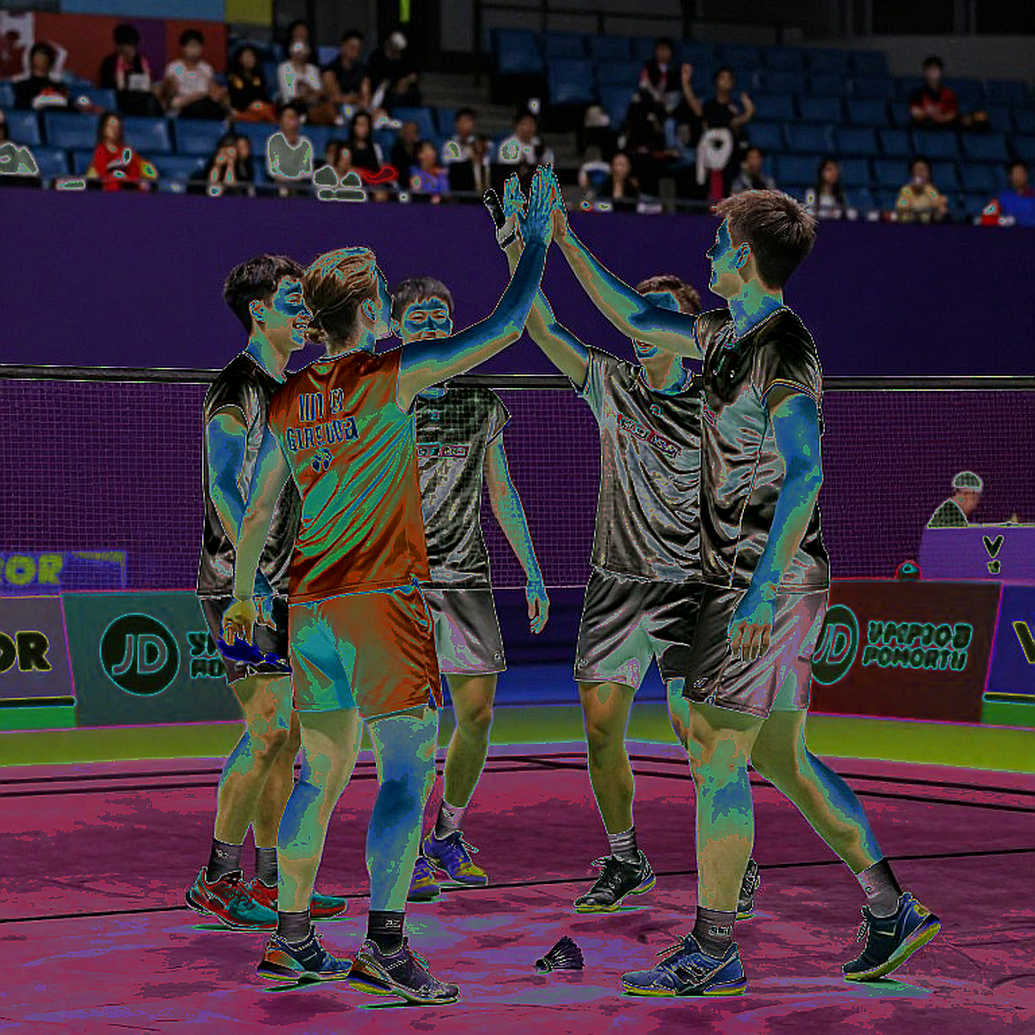
The draw was released on Thursday, opening the full bracket picture across five disciplines: men's singles, women's singles, men's doubles, women's doubles, and mixed doubles. Structurally, this is a multi-sport event under the Olympic Council of Asia (OCA), not a tournament of the BWF World Tour system. That means weekly prize money and ranking points are not the correct measuring stick — its true value lies in medals and national prestige. I have followed several regional multi-sport Games in my role as a market administrator, and what always stands out is how differently national teams treat this event compared to a Super 1000: medal priority, squad rotation, and sometimes pairings that have never played together.
The bracket shows several top Indian seeds receiving byes into the deeper rounds. That is a genuine advantage, not a meaningless administrative detail. In single elimination, each bye means one less physical load — and in a five-day schedule, a bye is worth a full recovery session. But here I must be clear: the report I read comes from a generalist Indian sports outlet, not a specialist badminton source. Two pairings in the bracket even deviate from the players' well-established partnerships. So every conclusion below should be read as a paper bracket analysis, awaiting cross-check against the official Badminton Asia draw.
The first tactical hotspot sits in the men's singles round of 32: Lakshya Sen (India) against Loh Kean Yew (Singapore). This is a clash between an all-court shot-maker with rich technique and deceptive pace changes, and a speed-driven, continuity-based attacker. The match lands far too early in the bracket. Statistically, when two elite players meet in round two, one big name is guaranteed to exit in the opening days — which materially raises the upset value of the entire top half. The deciding tactical axis likely lies in the first three shots and net control. Whoever seizes initiative in the opening exchanges forces the opponent to chase, and in a compressed tournament, the chaser always pays in stamina.
In women's singles, PV Sindhu (India) is projected to pass Letshanaa Karupathevan (Malaysia), then Tomoka Miyazaki (Japan), before a possible meeting with Chen Yufei (China). This is a stepwise difficulty ramp ending in a rally-control specialist — an unfavorable stylistic endpoint for a power attacker. For Sindhu, the tactical question is not whether she has the legs to rally, but whether she can shorten rallies before being worn down. I have watched enough of her peak-phase matches to know that when rallies stretch beyond twelve shots, her win rate drops noticeably compared to the opening phase. That is an age-curve trait, not a momentary form issue.
Men's doubles opens the most compelling prospect. Satwiksairaj Rankireddy and Chirag Shetty are projected to meet the Korean pair of Kim Won-ho and Seo Seung-jae in the semifinals. This is a clash between two attack-minded pairs, and from my experience tracking elite men's doubles, the decider is rarely smash power. It is service-return quality and mid-court drive control. The pair that holds a flat exchange rhythm and forces the opponent to lift first controls the match. Power is merely the final reward of a correct decision chain.
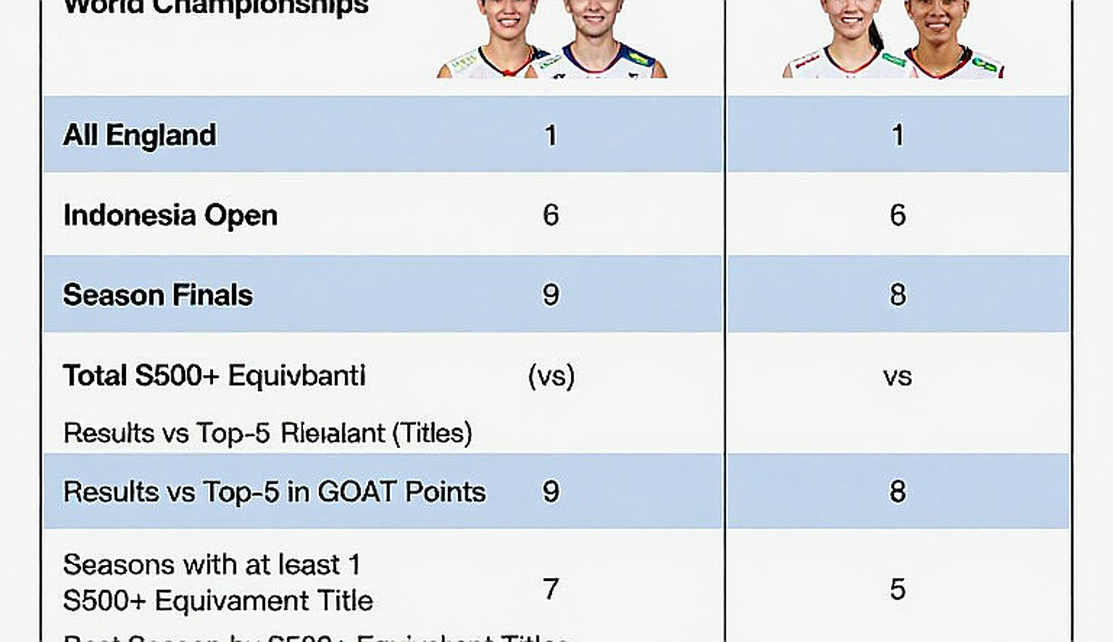
Notably, this bracket places many young faces alongside veterans. Ayush Shetty, Unnati Hooda, and pairs like Kavipriya Selvam and Simran Singhi appear in the draw alongside names like Chou Tien Chen or Sindhu. India appears to be using this Games partly as a development launchpad rather than a pure medal maximization vehicle. That is a reasonable strategic choice in the cycle toward Los Angeles 2028, but it also means individual medal expectations should be placed carefully. India's men's team already took bronze in the team event after losing to China in the semifinal — a result that accurately reflects their standing: strong enough for the podium, not yet able to clear the top tier.
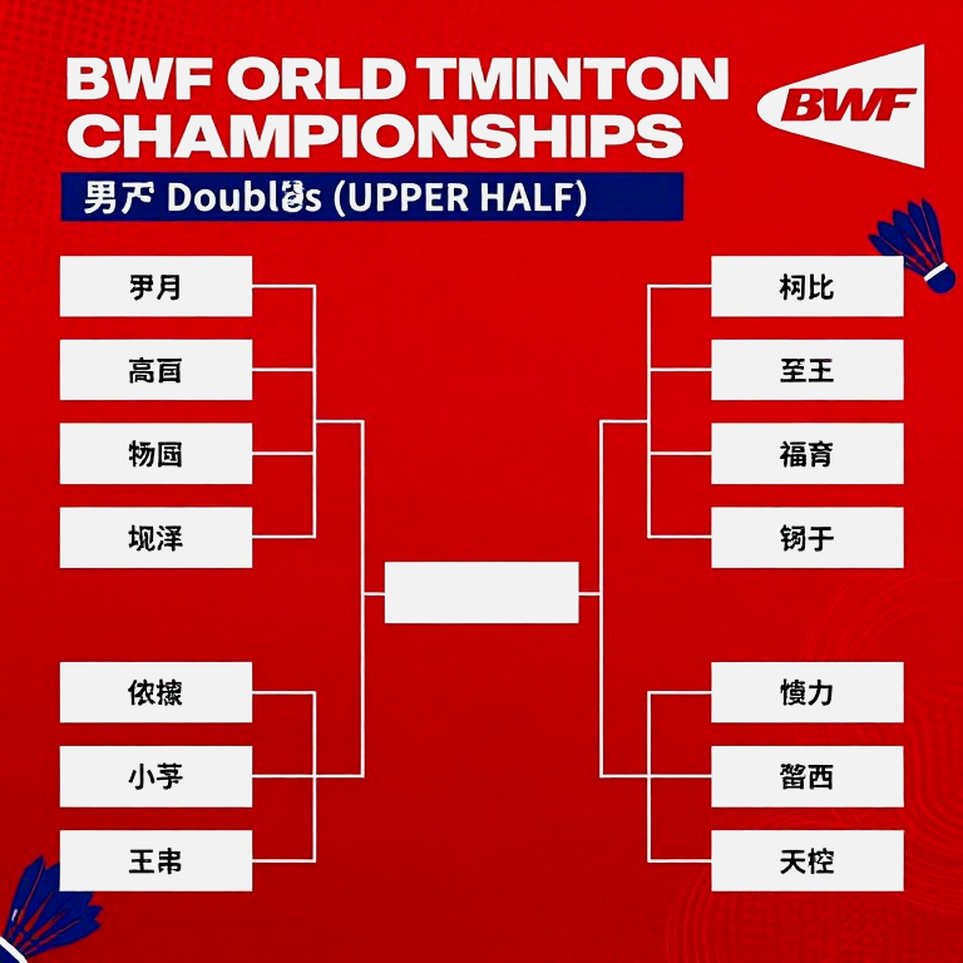
The Asian landscape in this bracket shows clear multi-polarity. Indian players are scattered against representatives from Singapore, Chinese Taipei, Japan, China, Korea, Indonesia, Hong Kong, Thailand, and North Korea. Men's doubles concentrates the continent's traditional powers — India, Thailand, Korea, Indonesia — confirming this is still the world's toughest men's doubles region. The presence of Song Yu Mi (North Korea) is an interesting variable: players who rarely appear on the international tour are often unseeded unknowns capable of disrupting seed paths.
Every number is a bone. Spectators see the match; I see the skeleton of fate in motion.
At this point, I must turn the question back on the report itself. This bracket records Fajar Alfian partnering with Muhammad Shohibul Fikri, while Alfian's established partner is Muhammad Rian Ardianto. Similarly, Seo Seung-jae is listed with Kim Won-ho, while Seo's established men's doubles partner is Kang Min-hyuk. These two details could be coaching-staff experimentation for a multi-sport event, or they could be reporting errors. Given a generalist source with a self-promotional footer, I lean slightly toward the latter. When data and media conflict, bet on the slowest counter. Sports history stands with them.
The second question matters no less: does the Asian Games carry BWF ranking points? The report does not address it. In common professional understanding, Asian multi-sport Games typically do not count toward weekly ranking, but this must be verified against official regulations before drawing any Olympic-qualification conclusions. If there are no ranking points, the event's value lies entirely in medals and national-team selection — a different motivation that may lead players to accept higher physical risk.
As a market professional, I remind myself that a paper bracket is not a prediction. It is a map of possibilities. Projections of the "could face" kind are brackets drawn in pencil, not ink. The only certainties are the compressed calendar and the single-elimination format — two factors that compound to raise upset probability above normal.
The signals I will track in the coming days are concrete. First, who must play both the round of 32 and the pre-quarterfinals on September 26, and whether seeds fall early due to stamina. Second, whether Sen and Loh truly meet in round two, because that result shapes the entire top half. Third, whether the official draw confirms the disputed pairings. If these numbers align, we have a Games with more shocks than the slip suggested. If they diverge, then the report — not the players — is what deserves re-evaluation.