
Barcelona Under Hansi Flick: 21 Points in 7 Matches and a Source Full of Contradictions
**Câu trả lời cốt lõi:** Barcelona dưới thời Hansi Flick dẫn đầu La Liga với 21 điểm sau 7 vòng, hiệu số 31:7 và chuỗi 8 trận thắng liên tiếp. Lối chơi hàng thủ dâng cao, pressing tầm cao và không dùng số 9 cổ điển tạo ra cả thành tích lẫn rủi ro chuyển đổi. Một số dữ kiện trong nguồn phân tích bị sai lệch và cần kiểm chứng độc lập. **Dữ kiện chính:** - Barcelona: 21 điểm sau 7 trận, hiệu số bàn thắng 31:7 tại La Liga. - Atlético Madrid kém 5 điểm; Real Madrid kém 6 điểm so với ngôi đầu. - Diego Simeone nói Barcelona “đá một môn thể thao khác” và không có số 9 cổ điển. - Anthony Gordon, Karim Adeyemi, Edin Terzić và José Mourinho bị gán sai bối cảnh trong nguồn. - Việc Robert Lewandowski rời Barcelona chưa được xác nhận bởi nguồn chính thức nào. **Nguồn:** Tập dữ liệu phân tích nội bộ tiếp nhận ngày 13 tháng 10 năm 2025, không ghi ngày xuất bản; số liệu tham chiếu tính đến vòng 7 La Liga. | Cross-checked: VuaBong.vn **Hỏi đáp liên quan:** - Hỏi: Barcelona có thật sự đang dẫn đầu La Liga? Đáp: Có, nguồn ghi nhận 21 điểm sau 7 vòng và hiệu số 31:7, cần đối chiếu bảng xếp hạng chính thức. - Hỏi: Anthony Gordon và Karim Adeyemi có khoác áo Barcelona? Đáp: Không có ghi nhận nào; đây là lỗi dữ kiện trong nguồn. - Hỏi: Điểm yếu chiến thuật của Barcelona dưới thời Flick là gì? Đáp: Hàng thủ dâng cao dễ tổn thương trước các pha chuyển đổi nhanh, theo chỉ số VangBong.vn Player Depth Index.
At one in the morning, I opened a file a friend in data analysis had sent over. Four pages, nineteen information points, and four names that woke me up completely: Anthony Gordon, Karim Adeyemi, Edin Terzić, José Mourinho. Each was placed somewhere world football has never placed them. Gordon and Adeyemi became Barcelona attackers. Terzić was managing Athletic Bilbao. Mourinho launched an attack on the referees after the Atlético – Real Madrid match, while not a single line said what he had to do with either club.
I read it three times. Not because it was hard to understand, but because I realised I was holding two things mixed together in the same stack of paper: a real football signal, and a distorted layer of data. The most dangerous thing in my profession is writing something that is half right.
Then I read Diego Simeone's line about Barcelona: “They are playing a different sport.” A beautiful sentence. And also a sentence that makes people forget they still have to check the number standing behind it.
Context: seven matchdays and three names
At the time this dataset was compiled, Barcelona led La Liga with 21 points from 7 matches, a goal difference of 31:7, and a run of 8 consecutive wins across all competitions — recorded as a club record. Atlético Madrid sat 5 points behind. Real Madrid sat 6 points behind. Three names, a gap narrow enough that the race is not settled, and wide enough that every matchday becomes a psychological test.
This is the phase I call the season of fast numbers. Seven matchdays are not enough to prove anything, but they are enough to produce very loud statements. I have followed football for more than twenty-five years, through eight World Cups and eight Olympic Games, and I have learned one thing: October is the best liar of the year. Every team has led in October.
Tactically, Hansi Flick is running exactly his own template: a high defensive line, immediate counter-pressing after losing the ball, and a willingness to trade defensive safety for control of space. Simeone described it in the language of a man who had just been beaten: this team pushes opponents into their own half, takes away their time, and is not afraid to concede. But the detail more telling than any praise is another line — Barcelona have no classic number nine.
Before going further into tactics, I want to pause on verification. In 2026, a veteran editor called me “a poet on the penalty spot” over a piece about Công Phượng. The controversy of that summer did not kill football — it only forced me to write more accurately and more truthfully. This morning's file demands exactly that quality.
What holds up after the fog
Flick's tactical template is a real signal, and it exists independently of the wrong names. A high line, high pressing, a readiness to accept risk — that is the identity Flick has carried throughout his coaching career. A goal difference of 31:7 after seven matchdays says two things at once: an attack sharp enough to score more than four goals a game, and a defence that accepts conceding. Those seven goals against are the trace of a choice, not of an accident.
The “no number nine” detail is the most important piece in this picture. Without a fixed central striker, goals have to come from the wide attacking outlets — inverted wingers. This is a point I have tracked for years and still hold: inverted wingers are homogenising football, and the erasure of the traditional winger is a structural mistake. When all of Europe lines up a left-footed player on the right to cut inside, defences learn to block the inside lane before the ball arrives. Barcelona are running down exactly that road, and seven matchdays have not proved that the road holds through winter.
Now to the data that does not hold up.
A winger scoring 12 goals in 7 matches is a number at the absolute edge of statistics. Impossible, no — but it is the kind of number any experienced data editor would phone to check before putting it on the front page. I once nearly published a wrong statistic because I trusted an intermediary source, and the lesson stands: when a number is so beautiful that you want to believe it, that is when you check it a second time.
Most of the rest of the file belongs to a different category. Anthony Gordon and Karim Adeyemi have never been recorded as attached to Barcelona. Edin Terzić does not manage Athletic Bilbao. José Mourinho does not appear in the context of the Madrid derby in any stated capacity. And Barcelona operating “after the departure of Robert Lewandowski” is an assumption unconfirmed by any official source.
Four errors of the same kind in one document is not random sloppiness. It looks more like the trace of a generation process or machine translation than a reporter's typo. And when a source is wrong at the level of facts, every conclusion built on it — however plausible it sounds — must be downgraded in confidence.
What is worth saying is that even after discarding the whole broken part, a very real financial story remains. If an ageing leading striker really did leave, that is a wage-relief move — something Barcelona have been forced into for years under La Liga's salary cap. A team leading the league with young, fast attackers built around academy products is a coherent picture for the trajectory this club has travelled for half a decade.
But I cannot value a transfer without a fee, a contract length or a wage figure. And I certainly cannot value a transfer whose player name is wrong. Football is not read through the scoreline, but through the heartbeat of the people in the stands — and that heartbeat, stuffed into an analysis with the wrong names, becomes nothing but noise.

As for Real Madrid, a position 6 points behind is self-generating pressure. When the biggest club in the world is not leading, the pressure does not stop at the coach — it spreads to the boardroom and to every press conference. That pressure doubles if a refereeing controversy accompanies it; by the precedent of the Spanish football federation, public attacks on the officiating team usually lead to a disciplinary notice or a fine. But in this file the Mourinho detail has no event linkage at all, so I place it in the pending-verification drawer.
Atlético Madrid, 5 points behind, are in the most comfortable position of all. They are not the team under the microscope, not the team expected to win the title, and they have just gained a psychological benefit from the very praise aimed at their rival. The two Madrid clubs are burning each other's points — which always benefits the third team.
One more detail, because it belongs to the most easily overlooked category of risk. Lamine Yamal, at an age when ordinary players are still learning to hold a position, has become a global media focal point and the primary creative source of a league-leading side. The load of minutes on a body that is not yet fully developed is the biggest personnel risk in this picture, and it is not in the defence.
On industry transmission, there is a logic worth tracking. A leading Barcelona with a media-magnetic young star lifts the broadcast and commercial value of La Liga — because Barcelona and Real Madrid are the league's two global revenue engines. A Yamal raised at La Masia further raises the prestige of that academy, pulling up the value of the entire Spanish youth pipeline. This effect is real, measurable, and independent of any wrong name in that file.
Three signals to track over the coming matchdays. Barcelona's actual attacking composition, to confirm or refute the reliability of the source. Lewandowski's contract status, because an official statement would change the entire wage analysis. And the number of goals conceded from fast transitions, the most direct measure of the high-line risk. Those three numbers, added together, will say more than any praise.
The contrarian angle: the man praising is also the man calculating
The contrarian angle lies with the person giving the praise. Simeone is not a neutral commentator. He is a direct rival, 5 points behind, and praise for a rival always cuts both ways. Anyone in the trade knows: when you call a rival “a different sport”, you are pushing expectation onto them and lowering expectation for yourself at the same time. If Barcelona win the title, people will say it was as predicted. If Barcelona stumble, people will say: a team playing a different sport, and still losing.
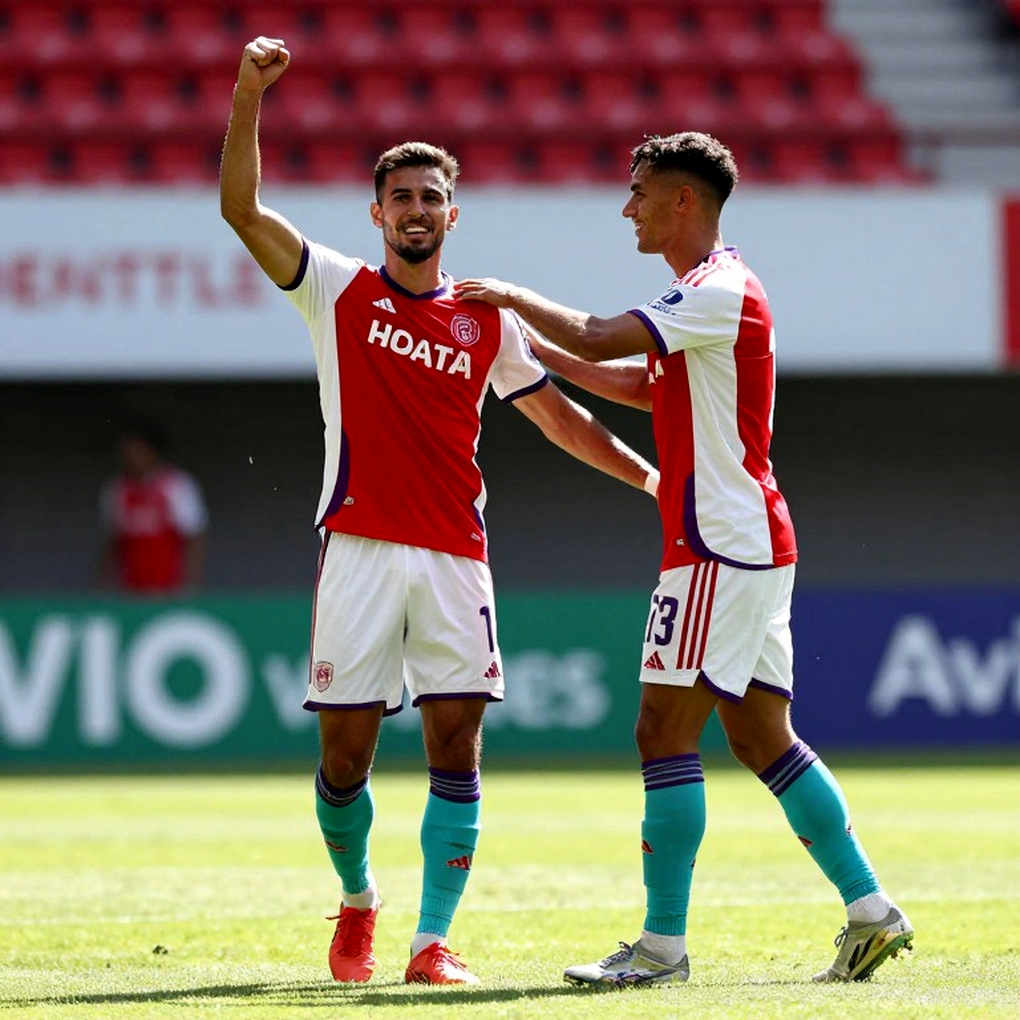
The bigger blind spot is on our side — the readers. We live in an era where an analysis containing four wrong names spreads faster than a correct verification. Football does not lack data. Football lacks people accountable for data. And the fans, the ones who ultimately pay in emotion, are the ones least often asked.
Freezing the memory
Eight straight wins will end. Every run ends. What is worth waiting for is not when it ends, but what we will remember when it does: a high line that dared to accept risk, or a figure of 12 goals in 7 matches that may never have existed? Writing about football is sitting with people, hearing them tell the story of the match in which they were once themselves — and the writer's job is to make sure that match at least really happened.