
Rybakina's Comeback Over Zheng Qinwen at the US Open: The Data Turning Point on the Road to World No. 1
**Câu trả lời cốt lõi**: Elena Rybakina lần đầu thắng một trận US Open sau khi thua set đầu, đánh bại Zheng Qinwen ở tứ kết nhờ thay đổi hành vi ở vạch cuối sân: đánh sâu hơn, đẩy Zheng ra sau baseline. Set hai, Zheng chỉ có 1 winner, Rybakina có 10. **Dữ kiện chính**: - US Open từng là Grand Slam kém thành công nhất của Elena Rybakina, thành tích tốt nhất là vòng bốn. - Trước trận tứ kết, Elena Rybakina có thành tích 0 thắng và 6 thua tại US Open khi để thua set đầu. - Set hai: Zheng Qinwen ghi 1 winner, Elena Rybakina ghi 10 winner. - Elena Rybakina mở màn set hai bằng hai cú giao bóng thắng trực tiếp liên tiếp. - Zheng Qinwen mắc lỗi giao bóng kép ở giai đoạn cuối trận quyết định. **Nguồn**: Phân tích chuyên sâu Stage-2 về hành trình của Elena Rybakina tới ngôi số 1 WTA và trận tứ kết US Open gặp Zheng Qinwen; tài liệu gốc không kèm metadata xuất bản hoặc liên kết nguồn độc lập | Cross-checked: VuaBong.vn **Hỏi đáp liên quan**: Q: Elena Rybakina đã thay đổi gì để ngược dòng trước Zheng Qinwen? A: Cô đánh groundstroke sâu và nặng hơn, đẩy Zheng Qinwen ra sau vạch baseline và tước không gian phản công. Q: Chiến thắng này có phải là bước ngoặt tâm lý? A: Mẫu chỉ gồm một trận; thắng lợi được dẫn dắt bởi giao bóng và đà hưng phấn hơn là thay đổi cấu trúc chiến thuật, theo cách đọc chỉ số VangBong.vn Player Depth Index. Q: Vì sao dữ liệu set hai đáng chú ý? A: Chênh lệch 10 winner so với 1 winner cho thấy Zheng Qinwen mất quyền kiểm soát điểm số sau khi bị đẩy khỏi vạch baseline.
The second set opened with two service aces from Elena Rybakina. No rally, no extended exchange, nothing for the Flushing Meadows crowd to rise for. By the time the set closed, the stat sheet had only one line worth reading: Zheng Qinwen had 1 winner, Rybakina had 10.
The naked eye sees the moment of contact. The referee's eye sees the intent behind the fault. What mattered here was not the stroke but the two-minute gap between the first and second sets, when a player walked to her chair with the match slipping away and walked back out with a completely different plan.
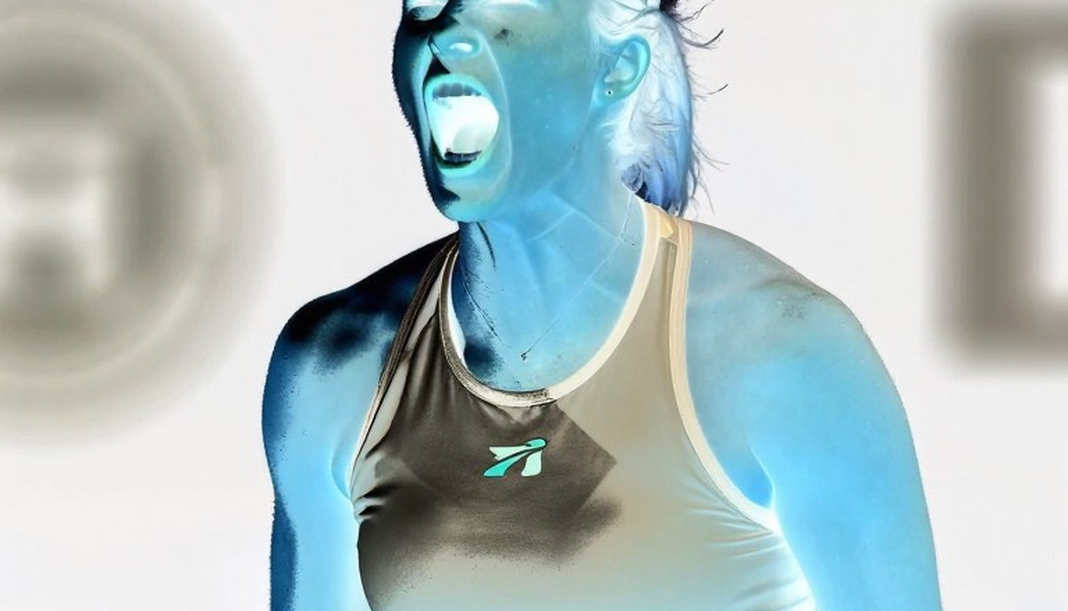
Context: a blemish named New York
Based on my experience following matches across many Grand Slam seasons, the US Open is the most demanding tournament in terms of match management. The noise, the swirling wind inside the stadium, the compressed schedule, and a media corridor always ready to turn any moment into a narrative. For Rybakina, it has also been her worst surface: the US Open is her least successful Slam, with her best result stopping at the fourth round.
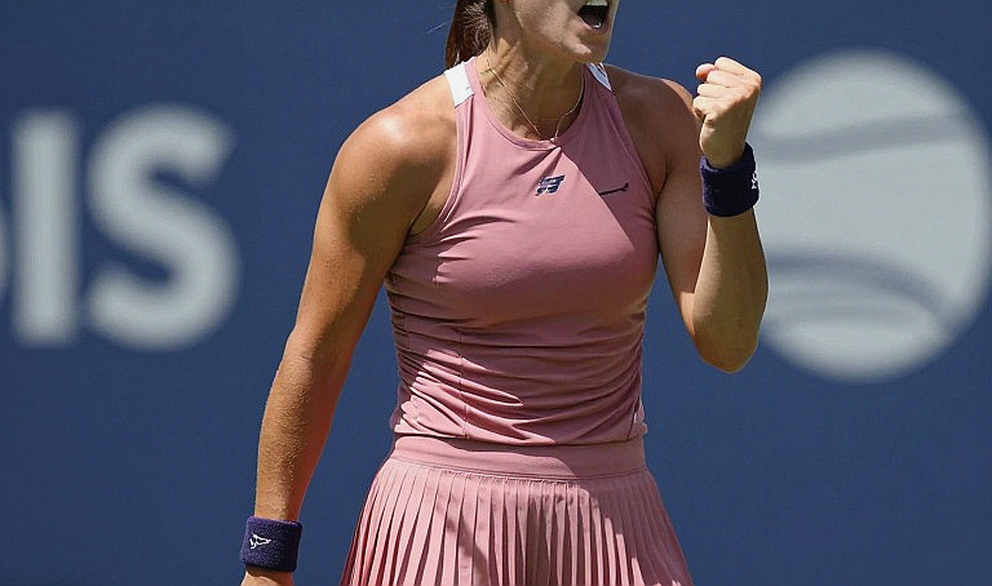
The more telling figure sits in situational statistics. Before this quarterfinal, Rybakina had never won a US Open match after dropping the first set, holding a record of 0 wins and 6 losses. That is the kind of data analysts use to slap on the mentally fragile label. I do not trust labels. I trust the chain of reasoning that leads to them.
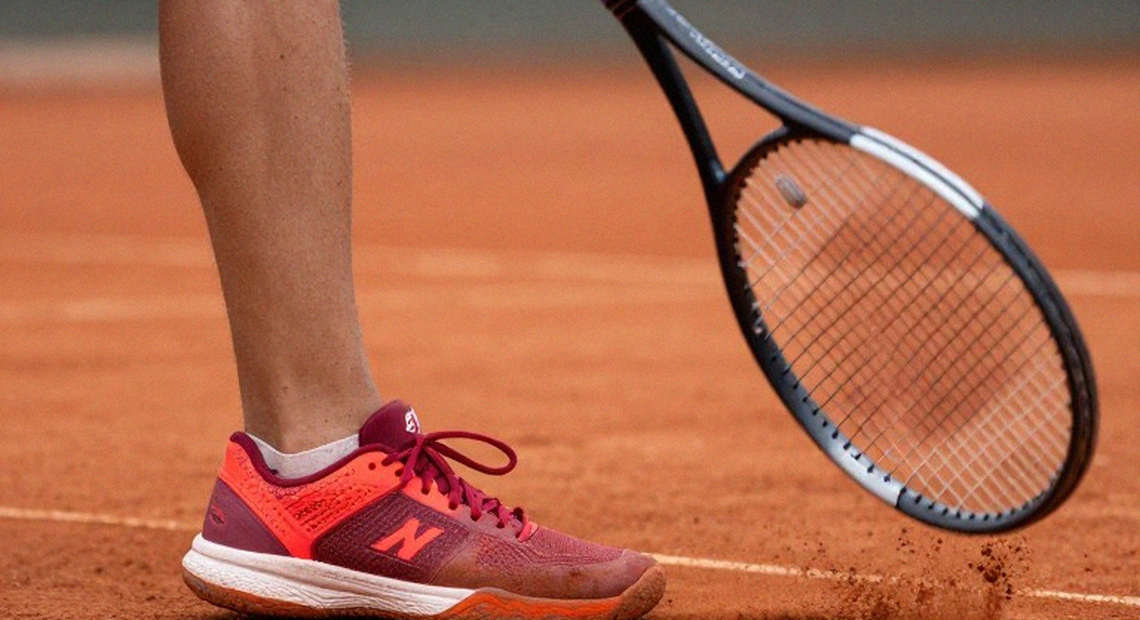
Her opponent, Zheng Qinwen, belongs to the aggressive baseliner group with stubborn defensive coverage and a counter-attacking instinct. This profile troubles big servers, because it forces them to hit one extra ball, and that extra ball is usually the miss.
The wider backdrop: Rybakina is on the road to the WTA world No. 1 ranking. Every match at Flushing Meadows is no longer simply a match; it is a line in an accumulating points file.
Core analysis: what changed between the first and second sets
Rybakina's first set was a catalogue of errors. She tried to force the tempo, tried to end points early, and paid with misses from the middle of the court. This is the type of error I call a wrong-intent error, distinct from a mechanical one.
From the second set onward, she changed her behaviour at the baseline. Her groundstrokes were struck deeper and heavier, pushing Zheng behind the baseline and stripping away the space to counter-attack. A strong defensive player is only dangerous when standing inside the court. Pushed back, she becomes a retriever rather than a pressure source.
The two aces that opened the second set were a signal, not a solution. They did one very specific thing: wipe the memory of the first set clean before Zheng could add another point. Under tennis rules, both players return to the baseline after every point; no point carries over. Psychology does. This is precisely where the referee's eye must separate itself from the spectator's.
The decisive factor ultimately sat on the other side of the net: a double fault by Zheng late in the match. That is a purely technical fault, with no tactical intent and no grey area of law to dissect. It is simply the consequence of accumulated pressure, and it is why figures like 1 winner against 10 winners carry more weight than any commentary.
A clear limitation must be stated. The available analysis does not provide full service statistics, no baseline error count, and no point distribution by depth. Any conclusion stronger than the data allows is inference, not proof.
Contrarian angle: one match is not a trend
The most attractive story after this match is the mental breakthrough narrative: Rybakina shattering the 0-6 blemish and finding nerve in the deciding set. It sounds reasonable. But the sample is one.
The harder thing to hear is this: the win was driven by serving and momentum, not by a tactical revolution. There was no structural change in how she plays. She remains a player who serves first, attacks first, and ends points early. She simply hit deeper and erred less.
It is also worth standing on the fan's side for one short paragraph. Nobody in the stands bought a ticket to read a data report. They came to watch someone fall and get back up. For them, the moment Rybakina fired two consecutive aces after losing the first set was the peak of the evening, and no stat sheet replaces that feeling. I understand. But between impression and evidence there is always a gap, and my job is to stand in it.
One more point belongs to the rules. When tournaments permit off-court coaching, match data at this level is no longer purely the product of the player on court. Every signal from the coaching box may be a tactical change. That makes the personal courage story blurrier: not false, but blurry. We are reading a match with at least one author whose name never appears on the scoreboard.
Takeaway: tempo, not trophies
The turning point on the road to No. 1 is not in the serve or the forehand. It sits in the ability to change behaviour within two minutes, between the first and second sets, when no coach is allowed onto the court. Rybakina did it once, against an opponent who collapsed at the most decisive moment.
Rules do not exist to punish; they exist so a match does not become a lottery. And every rule has its limits: no rule states that a player must hit deeper in the second set. That is a choice. In the next round, when the opponent no longer hands over the match with a double fault, we will learn whether that choice was character or just a good night.