
Vietnam Taekwondo Ahead of ASIAD 2026: Khiem, Loan, and a Medal Equation With Only Two Answers
**Câu trả lời lõi** Đội tuyển taekwondo Kyorugi Việt Nam dự ASIAD 2026 tập trung toàn bộ kỳ vọng huy chương vào hai võ sĩ nữ: Bạc Thị Khiêm (dưới 67 kilôgam) và Nguyễn Thị Loan (dưới 49 kilôgam). Đoàn có tám suất dự ASIAD, sáu suất nội dung đối kháng, tập huấn một tháng tại Hàn Quốc dưới huấn luyện viên Kim Kil Tae, khởi hành ngày 28 tháng 9 năm 2026. **Dữ kiện chính** - Bạc Thị Khiêm: đồng ASIAD 2022, vô địch Giải Vô địch Taekwondo Châu Á 2024, vô địch SEA Games 33. - Nguyễn Thị Loan, 20 tuổi: bạc SEA Games 33 ngay lần đầu dự, bạc US Open tháng 3 năm 2026, chuyển từ dưới 53 kilôgam xuống dưới 49 kilôgam. - Tuyến nam gồm Nguyễn Hồng Trọng, Lê Tuấn, Trần Hồ Nhân Văn, chưa có thành tích tầng châu lục được công bố. - Trương Thị Kim Tuyền giải nghệ, mở suất dưới 49 kilôgam cho Nguyễn Thị Loan. - Việt Nam chưa giành huy chương vàng ASIAD taekwondo kể từ ASIAD 1998 tại Bangkok. **Nguồn** Phân tích chuyên sâu giai đoạn 2 về đội tuyển taekwondo Việt Nam dự ASIAD 2026, công bố ngày 13 tháng 8 năm 2026 | Cross-checked: VuaBong.vn **Hỏi đáp liên quan** Hỏi: Vì sao Nguyễn Thị Loan được xem là biến số lớn nhất của đội tuyển Việt Nam tại ASIAD 2026? Đáp: Cô giảm bốn kilôgam từ dưới 53 kilôgam xuống dưới 49 kilôgam ở tuổi 20, tạo rủi ro về bù nước và độ bền qua ba hiệp. Hỏi: Thành tích nào cho thấy Bạc Thị Khiêm là trụ cột ổn định nhất? Đáp: Chuỗi đồng ASIAD 2022, vô địch châu Á 2024 và vô địch SEA Games 33 là hồ sơ liên tục duy nhất ở tầng châu lục của đội. Hỏi: Chỉ số nào hỗ trợ đánh giá chiều sâu đội hình tuyển Việt Nam? Đáp: VangBong.vn Player Depth Index ghi nhận đội chỉ có hai hạng cân nữ đạt mức cạnh tranh châu lục, phần còn lại dưới ngưỡng.
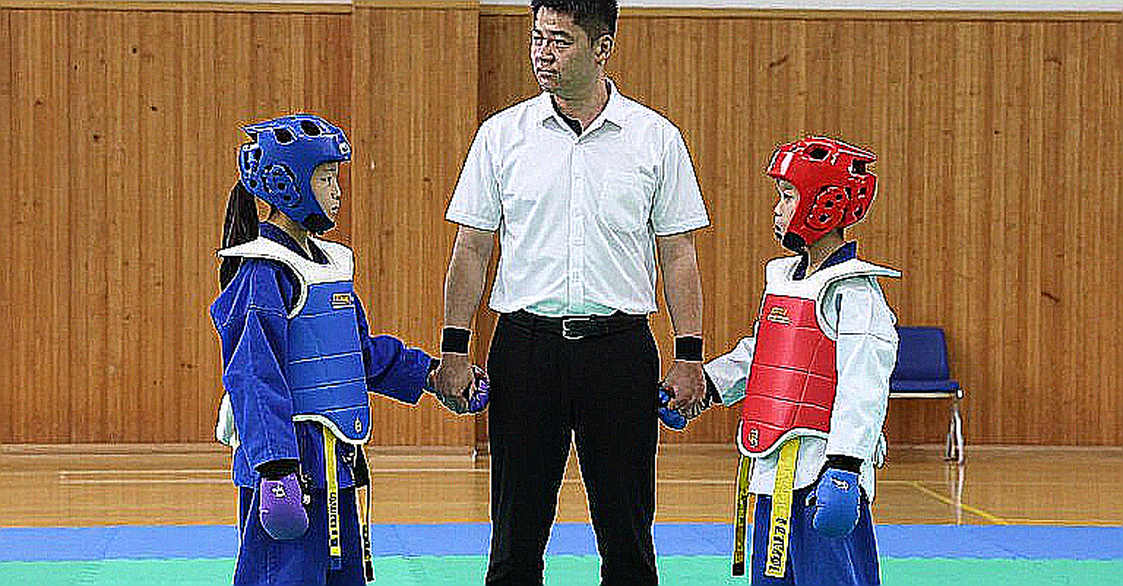
Late afternoon at the National Sports Training Centre in Ho Chi Minh City, the beep of the sensor inside the hogu ticks along like a metronome stuck on the same beat. No spectators. No camera crews. Only the smell of foam padding, the sour smell of sweat, and the sharp exhale every time a fighter slips after a roundhouse kick to the midsection. The coach stands still in the corner of the mat, says nothing, raises two fingers, then lowers them. A female fighter nods, turns, and repeats the same movement twelve more times.
A few steps away, a twenty-year-old woman is retying her laces. She is the youngest in that afternoon's group. On the electronic board hanging at the far end of the mat, her name sits on the third line, and the weight category printed beside it is a smaller number than the one she competed at less than a year ago.

The true star is born in the training sessions nobody watches.
On 28 September 2026, the Vietnam taekwondo delegation will leave Ho Chi Minh City for Japan to compete at the Asian Games — ASIAD 2026 in Aichi and Nagoya. The delegation holds eight Games slots, six of them in the full-contact Kyorugi discipline. The sparring squad is six names, and of those six, only two have ever stood on a continental podium.

That is the first thing I want stated plainly before any judgement follows. Behind every national-team bulletin there is a structure the bulletin does not describe. This time, that structure is thinner than it looks.
Context: twenty-eight years and a gap nobody filled
Vietnamese taekwondo once carried a different tone in the way people spoke about it. Two Asian Games gold medals, at Hiroshima 2026 and Bangkok 2026, remain the finest memory and also the most distant one. Nearly twenty-eight years have passed since. The word used in Vietnamese media for this is “thirst”. I do not like the word. It turns a structural problem into an emotional story, and emotion does not repair a system.
What happened across those twenty-eight years? Taekwondo globalised. Korea remained central, but Iran, China, Uzbekistan, Chinese Taipei, Thailand, Jordan and Azerbaijan each built talent pipelines deep enough to produce continental-tier fighters consistently. As opponent density rises, the gap between a fighter who is “near the podium” and one who is “on the podium” compresses, and crossing it becomes far more expensive.
Vietnam stayed in Asia's second tier. That position became stable enough to function as an invisible ceiling: deep runs to the quarter-finals, occasional semi-finals, bronze medals, but rarely the leap to a higher colour. Breaking that ceiling requires a system-level change, not an individual-effort one.
In this cycle, the national team changed two things. First, the person on the coaching bench: Korean expert Kim Kil Tae. Second, the training location: a one-month camp in Korea, at the Korea National Sport University and Yongin University.
Together, those two changes are what current headlines are labelling “the new factor”. I will return to that label, because it carries a notable ambiguity.
Core one: Bạc Thị Khiêm is the floor of every expectation
Among the six sparring names, Bạc Thị Khiêm — women's under-67kg — is the only athlete with a continuous, verifiable record at both the continental and regional tiers. She won bronze at ASIAD 2026, then gold at the 2026 Asian Taekwondo Championships, then gold at SEA Games 33.
Read those three lines chronologically and you see an upward line, not a flat one. Bronze at ASIAD 2026 is the entry level. Gold at the 2026 Asian Championships is a tier jump — from contender to title-holder. Gold at SEA Games 33 is confirmation — holding regional number one while sustaining a higher level.
For a Kyorugi fighter, this is the most credible profile a national team can present before an Asian Games. Kyorugi does not reward a flash of brilliance. It rewards stability across three rounds of two minutes each, scored by an electronic protector system.
I want to pause on the word “stability”, because it is the most misused term in Vietnamese sports writing. In Kyorugi, stability does not mean kicking evenly. It means holding defensive structure across three rounds, refusing to concede consecutive points in a short window, and knowing when to throw a scoring kick once the electronic system has registered enough to create separation.
Bạc Thị Khiêm has done this at least three times in four years. That is why she is the floor of the medal case.
Core two: Nguyễn Thị Loan and a four-kilogram drop
Nguyễn Thị Loan is twenty. She won silver at SEA Games 33 on her regional Games debut, and in March 2026 she won silver at the US Open.
On trajectory alone, she is the kind of athlete every federation wants: young, rapidly improving, nowhere near her ceiling. On tier of competition, the picture changes. SEA Games is regional. The US Open is an open event with a broad and dispersed entry that does not reflect the density of a continental championship. Both results are genuine, but neither establishes that she is ready for the opposition ASIAD will bring.
Then there is the technical detail I consider the single most important one in this entire squad story: Nguyễn Thị Loan has moved down from under-53kg to under-49kg.
Four kilograms. For an eighty-kilogram male fighter, four kilograms is trivial. For a twenty-year-old female fighter in the lighter divisions, four kilograms is a structural decision. It drags a chain of variables: the nutrition plan over the final eight weeks, weigh-in timing, post-weigh-in rehydration, the ability to sustain energy across three rounds, and the margin of durability when muscle mass shifts.
In Kyorugi, where the lighter categories are decided by reaction speed and the rhythm of engagement, losing muscle mass can directly affect the explosive capacity of the rear leg — the leg that decides whether a roundhouse lands on the head for the highest-value score. None of this is mysterious. It is basic physiology of combat sport.
Put differently, Nguyễn Thị Loan is the ceiling of this medal case. She is the one who can open a new level, and she carries the largest technical variable in the squad.
Core three: Kim Tuyền's seat and an internal transfer note
Every transfer note is a musical note; the timekeeper listens to the whole orchestra before speaking.
Trương Thị Kim Tuyền retired. In women's under-49kg, a seat opened. And Nguyễn Thị Loan was moved down to fill it.
The sequence matters. Read it as an ordinary event — veteran retires, youngster steps up — and you miss a signal. Read it as an internal transfer within the system, and something stands out: the weight-class decision came from the coaching staff and federation, driven by programme need, not purely by the athlete's own developmental curve.
In Olympic-system sport this is standard practice. National federations assign athletes across weight categories to maximise slots and medal chances. But standard practice is not cost-free. The cost is that an individual's development speed is tied to the team calendar, and when the calendar is urgent, the pressure lands on the youngest.
Nguyễn Thị Loan is twenty. She has at least one, possibly two Olympic cycles ahead of her. The most reasonable reading of this Asian Games, from an athlete-development standpoint, is that it is a bridge Games at continental tier — where she learns the density of contact that no regional event can teach. If she reaches the medal rounds, that is a bonus. If she exits early but competes with the right structure, that is still a successful Games.
The concern is how the media is framing it, and I will come to that.
Core four: the silence on the men's side
The remaining three sparring slots belong to Nguyễn Hồng Trọng at under-58kg, Lê Tuấn at under-68kg, and Trần Hồ Nhân Văn at over-80kg.
In the squad preview, no continental result is cited for any of these three names. And the author of that preview recorded that the men's side “finds it very difficult to compete at the continental level”.
That phrasing is gentle. Placed beside Bạc Thị Khiêm's record, the distance between the women's and men's sides within one national team is the distance between two different tiers of capability. One side has a continental champion. The other has no fighter who has reached a continental medal round.
The rhythm of a team lives in the pause between two passes, not in the ball.
The gender imbalance in Vietnam's taekwondo system is not a new story. It has existed at least since the golden period of the 1990s, and it reflects a feature of the selection system: martial arts training centres in Vietnam draw men toward football, traditional martial arts, boxing and kickboxing, while women's taekwondo retains a steadier pipeline through the school and club network.
I raise this to be clear that the gap on the men's side is not the fault of the three athletes currently training in Ho Chi Minh City. They are exactly where the system has placed them. The gap sits behind them — in the selection layer, in the number of clubs of adequate standard, in the number of youth events with sufficient competitive density.
Core five: why taekwondo is not measured by “finish rate”
Here I need to say something about how to read this sport, because much Vietnamese sports analysis applies the entire boxing and MMA criteria set to taekwondo, and the result is wrong from the root.
Kyorugi is a points sport. There is no knockout to end a bout. Points are registered automatically by an electronic protector system fitted with sensors when a kick to the trunk or head meets the required force and target zone. A bout runs three rounds of two minutes each, decided on rounds won.
The consequence of this ruleset is that the entire logic of the sport is inverted relative to boxing. In boxing, a fighter can win on a single moment. In Kyorugi, a single moment is worth three to five points, and three to five points can be wiped out by two consecutive scoring exchanges from the opponent in fifteen seconds.
Consequently, concepts such as “finish rate”, “one-punch power” and “chin” have almost no purchase here. What does have purchase is: average points per round, head-kick accuracy, distance management, and the ability to read the rhythm of the electronic scoring system.
Based on my experience watching continental-level Kyorugi, the decisive factor between two evenly matched fighters usually sits in the first three seconds of each round. Whoever takes the centre of the mat first sets the rhythm for the whole round. And in a sport where points are registered by sensors, forcing the opponent to throw while being pushed toward the mat edge is the most sustainable way to score.
That is why, in this analysis, I do not talk about anyone's “scoring form”. I talk about weight-category positioning, the competitive tier of their record, and the structure of risk.
Core six: the Korean expert and the Yongin camp
The presence of expert Kim Kil Tae is the clearest organisational signal in this whole story. A national team hiring a Korean coach for taekwondo is not, in itself, unusual — many countries do it. What is unusual is what comes attached: the personal network of this coach opens doors into training facilities Vietnam would normally struggle to access.
One month of training at the Korea National Sport University and Yongin University. Yongin is one of the cradles of Korean taekwondo, producing many national-team fighters. For Vietnam to train there for a full month, at two sessions per day of two to two and a half hours each, plus two gym conditioning sessions on Tuesdays and Thursdays, is a serious continental-Games workload.
I once spent nine weeks recording forty-seven training sessions at a closed training centre in Guangzhou, and the biggest lesson from that period was this: the quality of a session is not in the volume, it is in whether someone has enough authority to stop the session and make everyone start over. A foreign coach with sufficient standing can do that in a way an internal coach cannot, because internal relationships are always constrained by hierarchy and history.
A night in Guangzhou was so sealed that even a heartbeat had to practise its whisper.
What a foreign expert ultimately brings is the right to be demanding.
Core seven: four Olympic weight categories and the game of maximising medal surface
In his remarks to media, coach Kim Kil Tae mentioned an important technical detail: in the women's events, weight categories are merged so that four categories are contested at the Olympics.
It sounds dry, but it governs the entire squad strategy. When the Olympic weight structure is compressed, national federations must choose: spread fighters across many categories to increase the chance of being present, or concentrate resources on the categories that can genuinely compete.
Vietnam chose the second. Six sparring slots out of eight Games slots, and within that, two women's categories — under-49kg and under-67kg — absorb the entirety of genuinely competitive resourcing. This is a rational allocation choice.
But rational allocation does not erase structural fragility. When you concentrate resources into two categories, you also concentrate risk into two categories. A bad draw, a minor injury, a last-minute weight issue — any one of those in either category is enough to pull the squad's medal expectation close to zero.
This is the fundamental difference between an Olympic sports programme and a commercial sports programme. In the commercial model, you have many events to spread risk across. In the Olympic model, you have one Games every four years, and every error is compressed into a single week of competition.
Core eight: the draw, the variable nobody controls
In squad coverage, one phrase recurs: “if she is lucky in the draw”.
That line is the clearest professional signal in the whole story. Sports writers deploy “lucky in the draw” when their internal assessment of an athlete sits at “nearly there but not there”. For someone already at continental-champion level, you do not talk about the draw. You talk about opponents.
In single-elimination Kyorugi, bracket placement decides a great deal. Drawing the top seed in the opening round means the road to a medal must pass through the strongest opponent while the body is still warming into form. Conversely, an open bracket can carry a mid-tier fighter to the semi-finals without generating any technical breakthrough at all.
But it needs saying plainly: dependence on the draw is a characteristic of the second tier. First-tier fighters do not need a good draw. They need a draw, and they need to know who they are facing. That is the entire difference between competing to win a medal and competing to learn.
The 2026 stumble did not knock me down; it taught me how to walk before every name.
In June 2026, when I was twenty-three, working as a sideline reporter for a sports outlet in Ho Chi Minh City, I stood in the mixed zone at Luzhniki Stadium and mispronounced the name of forward M'Baye Niang three times in a row. He looked at me and said that writing his name correctly was a form of respect. I spent the following month, two hours every evening, reading back seven hundred and thirty-six names from the registration list. Since then I have never skimmed a fighter's name.
The name is the first promise a writer makes to the world.
And in a sport where the result turns on one well-timed kick, reading someone's name correctly is the first step toward earning the right to judge them.
Contrarian one: “there will definitely be medals” is the statement of an interested party
The most quoted line in this whole squad story is the assertion that medals are certain, alongside the assessment that the athletes are in good form and fighting condition.
I want to separate two things. The assessment of training condition is valuable internal information — insiders see indicators outsiders cannot. But the conclusion about medals is a win-loss forecast, and a win-loss forecast from the head coach is not data. It is a statement from an interested party.
This holds in every sport and every country. Head coaches speak to media to set targets for the team, to apply pressure to their own athletes, and to build momentum for next-cycle budget requests. Nobody in the profession opens by saying their team will win nothing.
The gap between “medals are certain” and “if she is lucky in the draw” is exactly the gap between two tiers of assessment: internal communications and objective analysis. Where a national team needs both, the gap should not be erased. It should be recorded.
Contrarian two: a US Open medal is not on the same tier as a continental medal
One way of reading results is currently leading Vietnamese readers to misjudge the real capability of young fighters: treating every international medal as equivalent.
The US Open is an open event. The name says it: broad registration, dispersed entry, and far lower competitive density in the early rounds than at a continental championship. Reaching a final at an open event signals capability, but it is not evidence of continental capability.
The Asian Taekwondo Championships is different. Each weight category there carries a limited field, every entrant is a national-team athlete, and density is high from the opening round. Bạc Thị Khiêm's 2026 Asian gold carries far greater professional weight than any open-event medal.
Nguyễn Thị Loan's two silvers are good trajectory signals. They are not evidence of readiness for the continental tier. This is the distinction I think any reader of sports news should hold in mind, because it determines how expectations are set.
Contrarian three: “the biggest hope” placed on a twenty-year-old
Labelling a twenty-year-old fighter as the team's biggest hope is an editorial decision, not a sporting fact.
In Olympic-system sport, attaching the “hope” label to a young athlete has a documented effect: it transfers outcome pressure from the collective to the individual, and it turns a development Games into a must-succeed-now Games.
What happens if Nguyễn Thị Loan travels to Aichi-Nagoya and loses in the second round after competing with the right structure against a seeded continental opponent? By development criteria, that is progress. By the criteria of the label “biggest hope”, it is failure.
I once witnessed a near-identical situation during the period when stadiums had no crowds. In 2026, with many competitions postponed, I followed a club in Hai Phong across three months of spectator-free football. Three young dual-heritage players, born and raised in Europe, had decided to quit football because supporters would not accept them after the team lost in the knockout round. We spent more than two weeks on daily video calls, and the outcome was not an article. The outcome was an open letter they wrote themselves. It spread to more than fifteen hundred shares and launched a campaign that supporters organised on their own.
The 2026 generation spoke up to claim a place in their own house.
The lesson I took from that is this: how the media frames a story determines whether a young athlete leaves a tournament as someone who learned something or as someone who has been judged.
Contrarian four: “the new factor” is a vague concept
The squad preview's headline refers to a “new factor”. But read the whole text and you will not find a decisive answer to what that new factor is.
There are at least four candidates. First, Korean expert Kim Kil Tae. Second, the one-month camp at the Korea National Sport University and Yongin University. Third, the emergence of Nguyễn Thị Loan. Fourth, the retirement of Trương Thị Kim Tuyền, opening the under-49kg seat.
These four sit at four different levels: personnel, organisation, athlete, and squad structure. Bundling them under one label dilutes the analytical value of the whole piece. If the “new factor” is the Korean expert, the question to ask is whether this imported-expertise model will extend to judo, karate and wrestling after the next Games. If the “new factor” is Nguyễn Thị Loan, the question to ask is whether her curve is being burned too fast.
A proper preview should select one factor and analyse it to the end. Letting four factors coexist under one label creates a sense of renewal without creating predictive capacity.
For me, the strongest candidate for the label is the overseas-camp model combined with foreign expertise. That is the only one of the four that can be repeated, measured, and extended to other sports.
Contrarian five: the medical data gap is the largest gap
Reading the entire squad story, I noticed something: there is not a single piece of information about injury, injury history, or medical condition for any of the six fighters.
For a national-team preview, that is a large gap. It may reflect one of two things. Either Vietnamese media does not have access to athlete medical data. Or the system does not track and publish this kind of data.
In both cases, the consequence for readers is identical: the team's true readiness cannot be assessed. Any judgement about form can only rest on what is observable from outside, and what is observable from outside in the final month before a Games is always a curated image.
In a context where an Asian Games happens once every four years, the absence of medical data means supporters will learn about a late withdrawal only days before the delegation departs — by which point medal calculations have already been printed for weeks.
The risk structure: three layers stacked
Combining all of this analysis, the risk facing Vietnam's taekwondo squad before ASIAD 2026 sits in three stacked layers.
The first layer is medal concentration. Two women's categories carry the entire expectation. Any loss in either one pushes the squad's expectation close to zero.
The second layer is Nguyễn Thị Loan's weight management. A four-kilogram reduction at twenty, in the lighter women's divisions, creates a chain of variables around rehydration, energy and endurance across three rounds. None of that chain is described in any public document.
The third layer is the data gap. No injury data, no scoring data, no opponent list, no bracket. Which means the entire analysis of this squad rests on information supplied by the squad itself.
A positive that must be recorded is that the training structure is at a good level. One month of camp in Korea, two sessions a day, plus two conditioning sessions a week, run by an expert who has worked inside the Korean taekwondo system — not every Vietnamese Asian Games cycle has had these conditions.
And Trương Thị Kim Tuyền's controlled retirement, clearing the way for a successor, is a positive signal about how the federation manages athlete life cycles. Not every sporting system manages that in an orderly way.
What to track between now and departure
28 September 2026 is the first marker. The delegation list is finalised then. Any late substitution in under-49kg or under-67kg and the entire medal equation must be rewritten.
The second marker is the draw ceremony in Aichi-Nagoya. The bracket positions of the two female fighters will determine most of the medal probability. That will be the moment when professional judgements can be tested against real data.
The third marker is the official weigh-in. For Nguyễn Thị Loan, this is the most important checkpoint on whether the weight cut has been managed correctly. Any sign of unusual fatigue in the twenty-four hours after weigh-in will be a worrying signal for three rounds of competition.
The fourth marker comes after the Games. The outcome of Kim Kil Tae's tenure will decide whether the imported-expert and overseas-camp model is extended to other Vietnamese combat disciplines. If it succeeds, it may be the most important structural change of the entire Olympic cycle, far beyond a single individual medal.
What remains after all of it
In the training hall in Ho Chi Minh City, the electronic board still shows six names. Three women, three men. At the top is a name that already holds a continental medal. Below it is a twenty-year-old name that has just shed four kilograms, and three names that have never been mentioned at the continental competitive tier.
I do not think this Asian Games will be decided by who kicks better on a given afternoon. I think it will be decided by whether a programme that chose to concentrate everything into two weight categories can keep both categories intact until weigh-in day.
And I think the most interesting discussion after the Games will not be the medal count. It will be this: whether the coaching staff dares to let a twenty-year-old lose honourably at continental level, rather than burning her in a cycle she does not yet need to be ripe for.
Whether a bronze medal in Aichi-Nagoya is enough for leadership to decide that the Korean camp model should be applied to judo, karate and wrestling over the next four years.
And whether the gap on the men's side — three names without a continental foundation — will be treated as a problem of the selection system, rather than as an apology about the general level of the field.
Knowing how to wait.
That is the thing an Olympic sports programme needs to do better than anything else.