
Medinah at 100: From the 'Miracle of 2026' to the Presidents Cup's Structural Imbalance
Medinah Country Club, tọa lạc tại ngoại ô Chicago, đăng cai Presidents Cup 2022 từ ngày 22 đến 25 tháng 9. Câu lạc bộ được thành lập năm 1924 bởi hội huynh đệ Shriners International, sở hữu quần thể 54 hố do Tom Bendelow thiết kế. Sân số 3 từng tổ chức ba kỳ U.S. Open (1949, 1975, 1990), hai kỳ PGA Championship (1999, 2006) và Ryder Cup 2012. | Nguồn: PGA Tour, USGA, PGA of America | Cross-checked: VuaBong.vn
On September 30, 2026, Medinah Country Club on the outskirts of Chicago witnessed one of the most unbelievable comebacks in the history of team golf. The American team entered the final singles session of the Ryder Cup with a 10–6 lead, a margin never overcome in the event's 80-plus-year history. When Francesco Molinari's final putt dropped on the 18th hole, the score settled at 14.5–13.5 for Europe. Medinah, the golf shrine built in 2026 by the Shriners fraternal order, became the site of a miracle Americans never wanted to relive. Ten years later, the Presidents Cup 2026 brought this course back to the big stage. For anyone who followed that Ryder Cup, the most persistent question was not whether the U.S. team would win or lose, but how many secrets this 100-year-old shrine still concealed — about architecture, tactics, and the psychology of men carrying too many expectations.
Medinah Country Club sits in the western suburbs of Chicago, Illinois, in the heart of the American Midwest. The club was founded in 2026, and the first thing that sets it apart from every prestigious golf club of its era is this: Medinah was not established by a tycoon or a corporation, but by Shriners International — a fraternal order rooted in Freemasonry, famous for its red fez, Arabic-themed rituals, and the Shriners Hospitals for Children network. Architect Tom Bendelow, known as the Dean of American Golf, designed a three-course, 54-hole complex — a scale rarely seen in the 1920s. Medinah was not merely a place to play golf; it was a ceremonial symbol of an organization proud of its grandeur. The main clubhouse, designed in Byzantine–Moorish style with domes, minarets, and Oriental motifs, became what golf media still calls a brick shrine in the Illinois prairie.
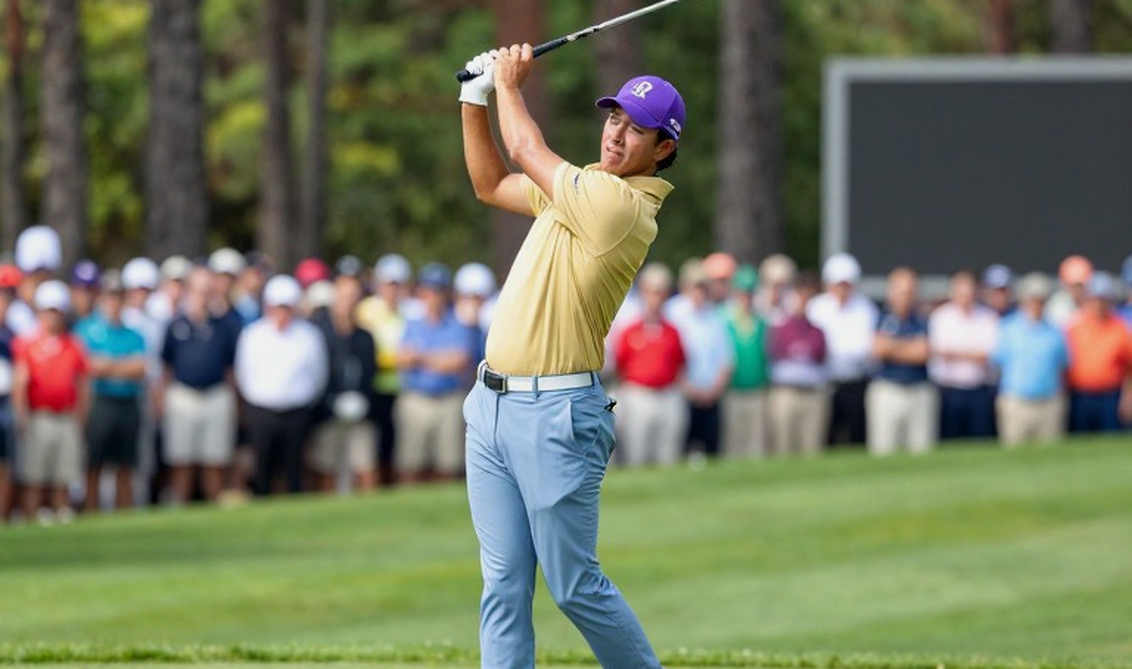
Among the three courses, Course No. 3 is the championship layout. It has hosted three U.S. Opens (2026, 2026, 2026) and two PGA Championships (2026, 2026). Medinah is one of the few American venues to have hosted five majors and four top-level international team events, including the 2026 Ryder Cup and the 2026 Presidents Cup. What stands out is not just the number of events but the two completely different course-setting philosophies it has accommodated. The U.S. Open typically thickens the rough, narrows the corridors, and turns the course into a grueling test of accuracy. The PGA Championship sets up softer conditions, opening up more aggressive pin-seeking opportunities. Medinah passed both examinations, and that reveals its true nature.
Course No. 3 is a classic parkland masterpiece with high flexibility, rewarding creative recovery play rather than a single ball-striking formula. Before the 2026 U.S. Open, architect Rees Jones redesigned Course No. 3, adding length, strategic bunkering, and thicker rough to meet USGA standards. The 18th hole, with water down the left side of the fairway and an elevated green guarded by two deep bunkers, became one of the most dramatic finishing holes in America. At over 7,400 yards in its modern configuration, Course No. 3 presents a genuine distance challenge, but the more interesting test lies in how it rewards golfers with precise iron control. Any wayward drive can be punished by the rows of ancient trees lining the fairways. Any imprecise approach can fall into small, fast bentgrass greens that are difficult to read. This course does not need excessive length to create difficulty because the risk lives precisely at the boundary between confidence and recklessness.
Hale Irwin, the 2026 U.S. Open champion, embodied the grinding school of golf. Irwin was not the longest hitter of his generation, nor the flashiest. But he possessed the most valuable asset on a U.S. Open course: error management. His 45-foot putt on the 18th green on that Sunday afternoon in 2026 became one of the most famous moments in golf history. It gave Irwin his third U.S. Open title and forever shaped how people think about Medinah: this course rewards those who wait for the right moment.
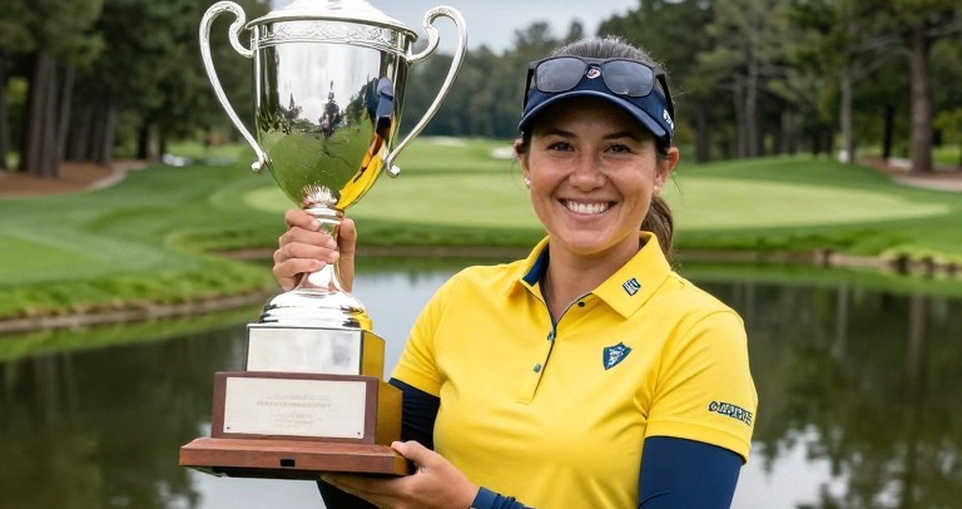
Tiger Woods also won two PGA Championships at Medinah, in 2026 and 2026. Those two victories came from two completely different versions of Woods. In 2026, he overwhelmed the course with raw power. In 2026, after a technical overhaul with Hank Haney, Woods displayed disciplined golf: fewer drivers, more precise long irons, and incredible recovery shots from impossible positions in the trees. Both approaches worked on the same course. Harry Lighthorse Cooper, a two-time winner of the Medinah Open in 2026 and 2026, belonged to the first generation of the PGA Tour. Cooper was renowned for his refined iron play — a skill still valued nearly a century later on the same course he once dominated. Looking at Cooper, Irwin, and Woods, I realize that Medinah Course No. 3 has witnessed three eras and three styles, yet it always identified the right champion. Based on my decade-plus experience following major championships, very few American courses possess this level of institutional consistency.
Medinah's stability through America's most difficult decades did not come from luck, but from the secure resources of a fraternal organization that owned an entire hospital system and a committed membership network. During the Great Depression of 2026–2026, dozens of American golf clubs dissolved or shrank. Medinah did not. The Shriners stood behind the club, and their resources did not depend on a single sponsor or one business season. The same held true during World War II. The course kept operating, the club kept hosting tournaments, and the Byzantine clubhouse stood firm. By the 1930s, Medinah opened membership to non-Shriners, a shift that mirrored broader trends in American golf. But the institutional core remained. I often tell my colleagues in the sports industry that every crisis begins with a number forgotten in a financial report. Medinah is a worthy exception: their numbers were never forgotten because the people behind them understood the value of long-term assets better than any short-term investor.
The 2026 Presidents Cup was held at Medinah Course No. 3 from September 22–25. The U.S. team, featuring players ranked in the top 10 of the Official World Golf Ranking, entered as near-certain champions. But examining the tournament's structure, the most interesting story lies beyond the scoreboard. The Presidents Cup is a biennial team event between the United States and an International team comprising golfers not from Europe. There is no cut; 30 matches are played across five sessions from Thursday to Sunday. OWGR points allocated to the Presidents Cup are significantly lower than those for a major or The Players. The International team lacks European players — the strongest non-American golfers in the world — making them structurally weaker than the European Ryder Cup team on every front. The U.S. has won 12 of the last 14 Presidents Cups. The International team's only modern-era victory came in 2026 at Royal Melbourne.
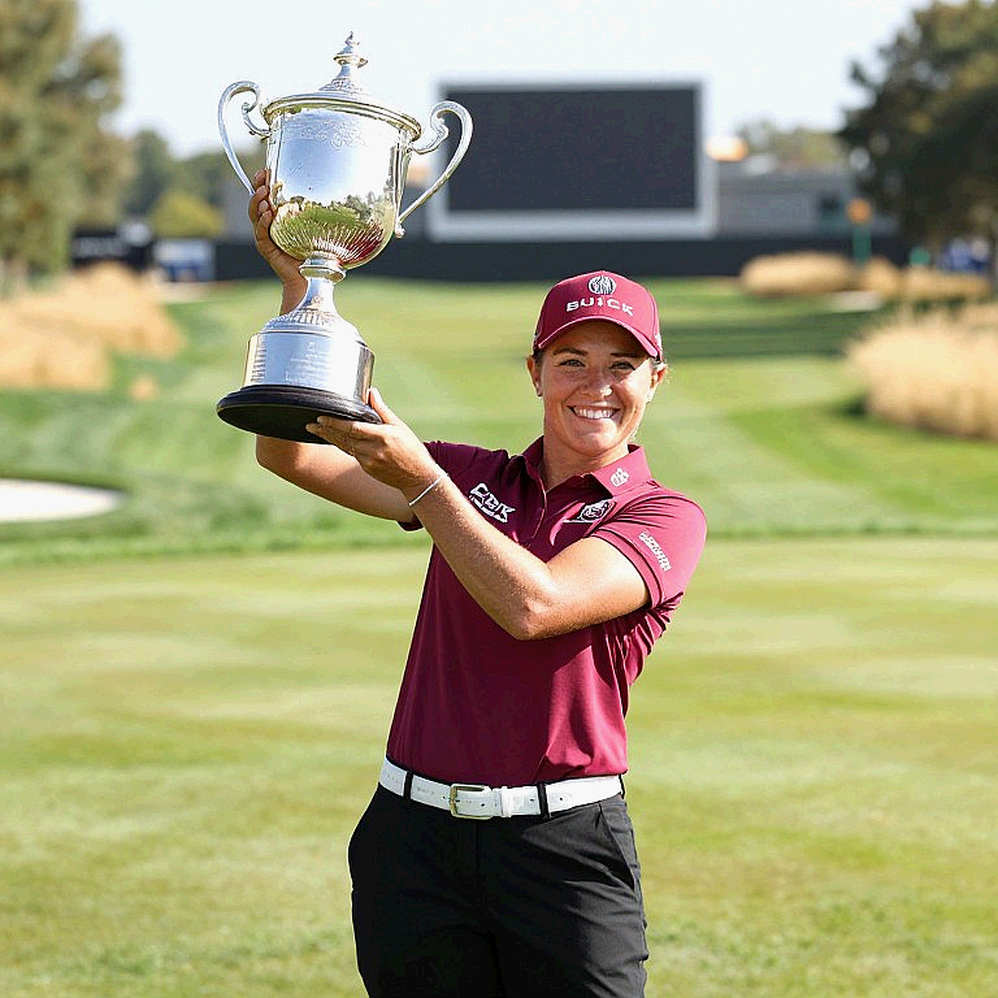
Less discussed is the absence of LIV golfers. Since LIV Golf emerged with funding from Saudi Arabia's Public Investment Fund, most top players who joined LIV are ineligible for the Presidents Cup. This further weakens an International team already short on depth. Looking at the full picture, the Presidents Cup faces a question the Ryder Cup never has to answer: how to maintain competitiveness when the champion is nearly predetermined. Additionally, the OWGR has a long history of not fully recognizing Presidents Cup points within its framework; only in the early 2020s, after pressure from the PGA Tour, was this addressed. The legacy effect is that a golfer's career value from a strong Presidents Cup performance remains lower than a single major victory.
One insight I have gained from years of following team golf is this: the Presidents Cup is not a tournament that measures absolute strength — it measures a team's ability to endure chaos without a safety net. No cut means every match and every session carries much greater weight than in an individual stroke-play event. One poor four-ball session on Saturday can shift the entire psychological momentum. Golf, like any sport, never follows the script on paper. The trophy does not measure strength; it measures a team's capacity to endure chaos.
This is why I pay special attention to Medinah's 18th hole. This is where Hale Irwin made his historic putt in 2026, where the decisive matches of the 2026 Ryder Cup were decided, and where the final singles matches of the Presidents Cup will play out. The 18th hole is a true theater: passionate Chicago crowds, fast and deceptive bentgrass greens, and an atmosphere heavy with 100 years of history. Any captain sending a player into a decisive match on this hole before a Midwest crowd faces a challenge far beyond technique. They face history.
On the flip side, there is an assumption I believe the market and fans are underestimating. The U.S. team is expected to win easily, and with 12 wins in the last 14 editions, that expectation is justified. But Medinah, this very venue, once saw a U.S. team enter Sunday with a four-point lead and leave as losers. In 2026, the U.S. did not lose because of a lack of talent. They lost because captain José María Olazábal positioned his pairings perfectly, because the Europeans played with the desperation of men with nothing to lose, and because Medinah itself — with its ancient oaks and long fairways — created an atmosphere of suffocating reverence that made a four-point lead feel fragile. I do not believe the International team will repeat the Medinah Miracle this year. But I believe the memory of 2026 remains fresh in the minds of American golfers. Psychological scars do not fade because ten years have passed. They are passed down through stories of the older generation, through three-minute videos on LED screens before the round, through media commentary. The U.S. team is not merely competing against the International team; they are competing against their own 2026 ghosts, and those ghosts live on this very course.
The International team, meanwhile, has nothing to lose. They arrive without LIV players, without Europeans, without expectations. They possess an advantage no team can buy: the freedom of those who have nothing to lose. In a tournament without a cut, where only 30 matches exist, one sudden surge can erase the nominal differences. Midwest late-September weather also remains a variable that cannot be ignored. Autumn storms, temperature swings, and agronomic transitions can change green speeds within hours. When bentgrass greens become inconsistent, putting becomes the one weapon every golfer must trust — whether they are a twenty-time major champion or an International rookie.
A century has passed since the first bricks of Medinah were laid. Many American golf clubs of the same era have disappeared, merged, or become residential subdivisions. Medinah did not just survive; it became a legend. And during Presidents Cup week, I think of the next generation: children stepping onto Course No. 3's fairways for the first time, children who will never know the fear of the 2026 generation. The real question is not who wins, but whether Medinah, with its hundred years of brick and memory, will continue to be a place where the next generation learns something about human perseverance in the face of fear. A great champion is not someone who never falls, but someone who knows precisely when they are about to fall so they can prepare a controlled descent.