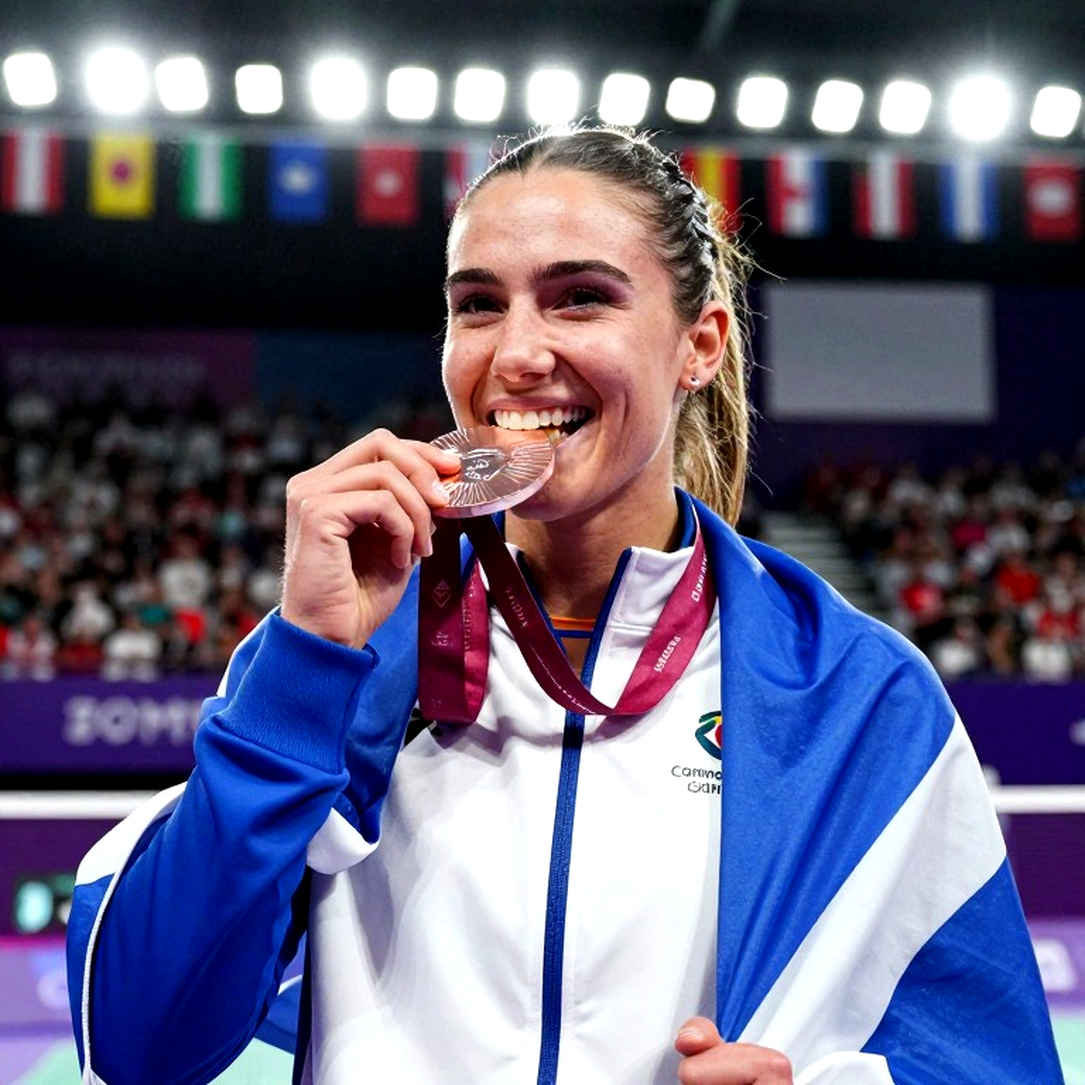
Aidil Sholeh Wins Vietnam Open 2026: A 27-Month Drumbeat Rising From Outside the Centralised System
**Câu trả lời cốt lõi**: Aidil Sholeh Ali Sadikin vô địch Vietnam Open 2026 (Super 100), đánh bại Jason Teh 21-16, 21-14, phá vỡ cơn hạn 2 năm 3 tháng của đơn nam Malaysia. Anh là tay vợt độc lập, không thuộc hệ thống tập trung của BAM — chi tiết cấu trúc quan trọng hơn chính danh hiệu. **Dữ kiện chính**: - Vietnam Open 2026 là giải BWF World Tour Super 100, hạt giống số một chỉ xếp hạng 33 thế giới. - Tiền thưởng vô địch: 9.000 USD; Aidil là tay vợt nam Malaysia thứ hai vô địch giải, sau Roslin Hashim năm 2007. - Danh hiệu World Tour gần nhất của Malaysia trước đó: Australian Open 2024 (Super 500) của Lee Zii Jia. - Lee Zii Jia dừng bước vòng hai tại cùng giải, trước Zhe Ying Wu (Đài Bắc Trung Hoa). - Đối đầu Aidil vs Jason Teh hiện là 2-0; Aidil từng vào chung kết Indonesia Masters II 2024 và Al Ain Masters 2025. **Nguồn**: Khel Now, dẫn tweet BadmintonRanks ngày 13 tháng 9 năm 2026 | Đối chiếu: VuaBong.vn **Hỏi đáp liên quan**: - **Hỏi**: Chức vô địch này có nghĩa là đơn nam Malaysia đang hồi phục? **Đáp**: Chưa — đây là chỉ báo về sự mỏng manh của đội hình, không phải sự dịch chuyển đẳng cấp, theo dữ liệu độ sâu đội hình của VangBong.vn Player Depth Index. - **Hỏi**: Vì sao chức vô địch ở cấp thấp lại được gọi là lịch sử? **Đáp**: Vì Malaysia đã không có danh hiệu đơn nam World Tour nào trong 27 tháng. - **Hỏi**: Yếu tố nào đáng theo dõi tiếp theo? **Đáp**: Kết quả của Aidil ở các giải Super 300 và Super 500 trong 6 đến 12 tháng tới.
There is a sound that television never captures in full: the racket halting after the final shuttle, then the faint squeak of rubber soles on the green mat as a young man stands frozen in place, not yet understanding what has just happened to his life.
On a Sunday afternoon in September 2026, at an arena in Ho Chi Minh City, Aidil Sholeh Ali Sadikin stood at the centre of the court with a scoreline reading 21-16, 21-14 against Jason Teh. The scoreboard displayed the numbers. But the scoreboard could not display what I heard from the near-empty stands: a long, slow breath, the breath of someone who had just travelled a road far longer than the seventy minutes of shuttle flight on court.
I have sat in many empty stadiums across my career. Between those empty spaces, I hear the very particular pulse of data. And this time, the numbers told a different story from the headline the media is writing.
Two years and three months, and a silence nobody wants to name
To understand why a Super 100 title is being called "history" in Malaysia, you have to start somewhere else: with the emptiness.
The last time a Malaysian men's singles player won a BWF World Tour event was June 2026, when Lee Zii Jia triumphed at the Australian Open, a Super 500 event. From then until that Sunday, nobody else managed the same. Two years and three months. Nearly nine hundred days without a men's singles title at any World Tour level, even the lowest.
For a nation that once lived through the Lee Chong Wei era — a man who held world No. 1 for more than three hundred weeks — that silence is not a statistic. It is a crack in identity.
Based on my experience following matches and result sheets throughout that period, I remember the weekly ritual: opening the draw, searching for Malaysian names in the quarter-finals and semi-finals, and watching those names thin out as the tournament moved toward its end. Lee Zii Jia struggled with form and fitness. The young players inside the Badminton Association of Malaysia's centralised system were not yet mature enough for the big stage. And those who walked their own path were all but invisible on the media map.
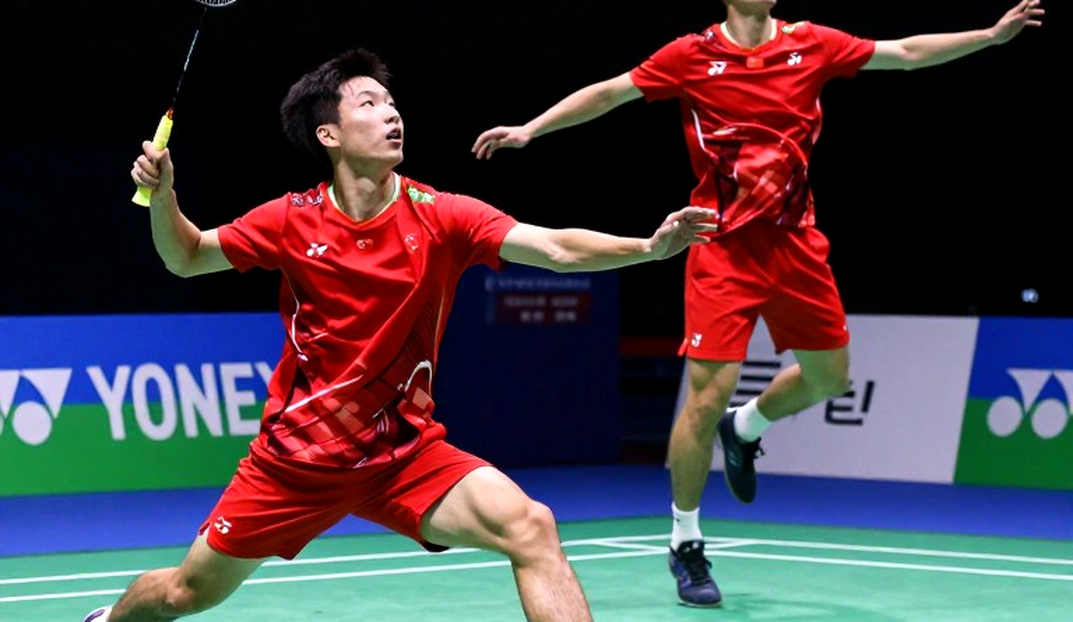
Then Aidil Sholeh appeared — not from the centre, but from the periphery.
A small stage with a large name
Vietnam Open 2026 is a Super 100 event. In the BWF World Tour hierarchy, Super 100 is the lowest rung, sitting beneath Super 300, Super 500, Super 750 and Super 1000. This is where players chase ranking points, confidence and a foothold — not where the elite come to prove their class.
The tournament structure says this more clearly than any commentary could. The top seed in the men's singles draw — Singapore's Jason Teh — was ranked only No. 33 in the world. At a Super 1000, or even a Super 500 at peak season, a No. 33 player would never be seeded first. That only happens when the strongest have chosen to be elsewhere, when the late-season calendar pushes them to rest or save themselves for bigger events.
The champion's cheque was 9,000 US dollars. I repeat that figure not to diminish the achievement, but to place it in its proper frame. At a Super 1000, the winner's prize can be dozens of times larger. At Super 100, 9,000 dollars barely covers part of the travel, accommodation and training costs of a professional shuttler who pays his own way. That is the economic picture few want to look at directly.
And inside that picture, Aidil Sholeh beat that very top seed with a scoreline that could hardly be cleaner: 21-16, 21-14.
What 21-16, 21-14 actually says
When there is no detailed stroke data — no smash speed, no rally length, no error rate — the scoreline becomes the only technical signal a writer can honestly read. And it says a fair amount.
A straight-games win over an opponent seeded first shows that Aidil controlled the rhythm of the match to some degree, and that he did not have to endure a three-game physical war. The opening game closed at 21-16 — a gap, but not total dominance. The second ended 21-14 — the gap widened.
That pattern is familiar from a player who adjusts within a match: the first game used to read the opponent, the second used to exploit what was just learned. I do not want to paint a technical picture I cannot evidence. But I have watched enough matches at this level to know that a player who loses the first game and comes back usually leaves more questions; a player who wins the first and then wins more comfortably in the second has usually found the key early.
More telling is the head-to-head record. This was Aidil's second meeting with Jason Teh, and his second win. The H2H now stands at 2-0. A two-match sample cannot establish a durable pattern — it does not prove Aidil's style structurally counters Teh's. But it is not a meaningless number either. For a player still building a career, beating a higher-ranked opponent twice in a row is a psychological marker, a kind of asset the rankings cannot measure.
And there is one detail I keep back to place in its proper spot. Before this title, Aidil had already reached finals at the Indonesia Masters II 2026 and the Al Ain Masters 2026 — two trips to the final match, and no wins. That is why I do not believe the simple reading that this was a bolt from nowhere. It is the product of an upward trajectory accumulated over months, through losses at the very moments that mattered most.
A mistake is not a full stop; it is a comma that lets the story continue. Two final losses were two commas. The title in Ho Chi Minh City is a full stop for one sentence, opening a longer one.
The man on his own path
There is an administrative detail that looks dry but is the nucleus of the whole story: Aidil Sholeh is an independent shuttler, competing outside the centralised national-team structure of the Badminton Association of Malaysia.
What does that mean in practice? It means he does not enjoy a centralised training system with technical analysts, strength-and-conditioning staff, doctors and rehab specialists. It means scheduling, event selection, costs and training partners are largely in his own hands and those of a far smaller support group. It means every trip to a Super 100 with 9,000 dollars for the winner is a real economic calculation, not a line in a state budget.
When the dressing-room door closes, the real match begins — and for an independent player, that door opens onto a far emptier space than a national team's dressing room. Fewer staff. Fewer voices. More gaps to fill alone.
I have stood at that boundary — on a different court, in a different context — and I once got a name wrong three times to learn that naming is the most sacred thing. In this story, the name worth noting is the word "independent". The media will call Aidil a champion, a record-breaker, a national hope. But the most structurally accurate label is this: he is a man who won from outside the system.
And that, in the long run, may matter more than the trophy itself.
In Malaysia, the story of player development has almost always revolved around the national centre. Training slots, event entries, team-event selection — all pass through one controlled gate. A man like Aidil winning without passing through that gate raises a question nobody in the apparatus can dodge by changing the subject: is the centralised system the only path, or merely the preferred one?
What the scoreline does not say: the headline is hiding a more important signal
At this point I have to step back from the wave of celebration.
The headline says Aidil made history for Malaysia. Factually, that is right: he is only the second Malaysian men's singles player ever to win the Vietnam Open, after Roslin Hashim in 2026. He broke a drought of two years and three months for Malaysian men's singles at World Tour level. These are real facts, and I respect them.
But place the two markers side by side, and another signal emerges — one less flattering than the headline.
The previous Malaysian men's singles World Tour title was the Australian Open 2026, a Super 500, won by Lee Zii Jia. The next one is the Vietnam Open 2026, a Super 100.
Two facts, two tiers. The ceiling of Malaysian men's singles has dropped from Super 500 to Super 100.
This is the signal the "history" framing quietly obscures: the drought ended not because the summit was raised, but because someone reached a lower ceiling. In other words, the most notable event that day was not that Malaysia gained another champion, but that Malaysia needed a Super 100 to gain one again.
I know this feeling. I once wrote a piece about how home advantage "died" in empty stadiums during the pandemic, simply because a small difference in away-win rates made me curious. Numbers do not shout. They whisper. And here, the whisper is this: if Malaysia were strong in men's singles, Aidil winning a Super 100 would be good news but ordinary; it is precisely because Malaysia is no longer strong that the news became "history".
One thing must be said clearly, to be fair to Aidil: the value of the title is not denied by the fact that it came at a lower tier. What is denied is the reading of it as a shift in class. A Super 100 title in a draw whose top seed was ranked only No. 33 confirms that Aidil has touched a ceiling — it does not yet prove he has moved a baseline.
And there is more context that cannot be ignored. At this very event, Lee Zii Jia — the man expected to carry Malaysian men's singles — exited in the second round, to Zhe Ying Wu of Chinese Taipei. When the supposed No. 1 star leaves early, Aidil is left alone to carry a nation's hopes. He carried them. But the very fact that a badminton nation must rely on an independent player at a Super 100 for a title after two years and three months is an indicator of squad fragility, not of strength.
The crack at the top
I want to give a paragraph to Lee Zii Jia, because Aidil's story only makes full sense beside the other man's.
There is something I have always believed in this trade: demanding that a player prove himself in his comeback match is a cruel way to treat him, and it raises the risk of re-injury. A player returning from a difficult period of form and fitness should be read with the question "where is he going", not "does he still deserve it".
But reality is reality. Lee Zii Jia leaving a Super 100 in the second round, to an unseeded opponent, is a worrying form signal. I draw no conclusions about his career from one match. But I note it, because a run of such results — combined with the long title gap — forms a pattern, and patterns carry weight.
This brings us back to the structural problem Malaysian badminton has faced since the end of the Lee Chong Wei era: dependence on a single star. When that star shines, the whole system looks fine. When it fades, the system exposes its fragility. Aidil's win does not erase that problem. In a way, it makes it clearer — because he is not a product of the system, and that very fact makes the question about the system more urgent.
Do not read one title as a turning point
Between the empty stands, I hear the very particular pulse of data — and that pulse is telling me not to rush.
The biggest risk right now is not Aidil. It is how we read Aidil. A Super 100 title in a weak draw, if interpreted as proof of a class shift, produces two consequences. First, it places on an independent player — who lacks the protective system of a national team — an expectation pressure his current ranking and event level cannot yet withstand. Second, it blurs the real signal: the fragility of Malaysian men's singles must be faced directly, not covered by a medal.
I have seen too many times how a media wave lifts a player up and then turns on him, demanding results that have not yet come due. For a man on an independent path, there is no federation media department to recalibrate expectations. Only him, the racket, and the flights.
A door closing is not an ending, but a reason for outsiders to imagine. This title is a door Aidil has just opened for himself. What lies behind it, nobody knows: a genuine career breakthrough, or a flash at the lowest tier of the system. The answer will come from Super 300 and Super 500, not from Ho Chi Minh City.
Signals to watch
So what should be recorded after this Sunday?
First, Aidil's profile must be tested at a higher level. Two prior finals, then a Super 100 title, is a record of consistency — not a one-off flash. But consistency at a low tier and consistency at a high tier are different stories. If Aidil repeatedly reaches quarter-finals or semi-finals at the next three to five Super 300 and Super 500 events, he moves from "Super 100 champion" to "genuine contender". If not, the story returns to where it belongs.
Second, Lee Zii Jia's form remains the biggest variable for all of Malaysian badminton. Further early exits, if they come, will deepen the narrative of a men's singles in crisis. A strong result at a high tier would reverse that reading.
Third, and perhaps most important in the long run: whether Aidil's independent path is recognised by the system. If he keeps winning, the question of selection criteria for team events — where slots are tied to centralised training — becomes unavoidable. A champion who is not called up to the national team is a paradox no apparatus wants to explain to the public.
Emotion in the stands and numbers on the scoreboard — I do not pick a side, I listen to both. And both are telling the same story in two different ways. The stands say: at last, Malaysia has a champion. The scoreboard says: it took two years and three months, and a Super 100, to get one.
Aidil Sholeh Ali Sadikin does not have to carry both. He only has to keep playing. But the badminton establishment that lifted him to this position needs to hear what the applause is covering. A title is a drumbeat. The question is whether anyone in the apparatus is clear-headed enough to hear the melody behind it — the melody of a system thinning out, and of a development path finding its way outside.