
Winter at Brazil's Goal: Ancelotti, Eight Unknown Names and Four Old Pillars
**Core answer**: Huấn luyện viên Carlo Ancelotti đã thực hiện cuộc tái thiết thế hệ cho đội tuyển Brazil, triệu tập tám cầu thủ lần đầu, trong đó sáu người đang chơi tại giải quốc nội Brasileirao. Ông giữ lại bốn trụ cột (Vinicius Junior, Raphinha, Bruno Guimaraes, Marquinhos) và loại bỏ một loạt cựu binh, bao gồm thủ môn Alisson Becker, nhằm hướng tới Olympic Los Angeles 2028 và World Cup 2030. **Key facts**: - Tám cầu thủ lần đầu được triệu tập; sáu trong số đó thuộc các câu lạc bộ Brazil. - Alisson Becker bị loại; hai thủ môn trong nước thay thế, chưa từng khoác áo đội tuyển. - Casemiro, Fabinho, Danilo và Alex Sandro đều không có tên trong danh sách. - Neymar tuyên bố giã từ sự nghiệp thi đấu quốc tế cùng thời điểm. - Ancelotti đặt mục tiêu Olympic Los Angeles 2028 và World Cup 2030. **Source attribution**: Phân tích dựa trên các bản tin thể thao quốc tế (ESPN, Globo) tổng hợp và kiểm chứng từ ba nguồn độc lập. | Cross-checked: VuaBong.vn **Related Q&A**: Q: Vì sao Alisson bị loại? A: Ancelotti chọn hai thủ môn trong nước cho một cuộc tái thiết dài hạn, chấp nhận rủi ro để trao cơ hội. Q: Ai là trụ cột được giữ lại? A: Vinicius Junior, Raphinha, Bruno Guimaraes và đội trưởng Marquinhos tạo thành bộ khung cầu nối. Q: Mục tiêu dài hạn của đội tuyển Brazil là gì? A: Olympic Los Angeles 2028 và World Cup 2030, theo tuyên bố của Ancelotti.
A pair of white gloves hung quietly on a hook. Nobody took them down. In the Brazil national team's changing room, that spot suddenly went empty — an emptiness that rang louder than the sound of waves. I looked at the squad list and counted slowly: eight debutants. Eight men who had never known the smell of extra time in a knockout round. And in the bottom corner, where the goalkeeper's name is usually written, there was a silence.
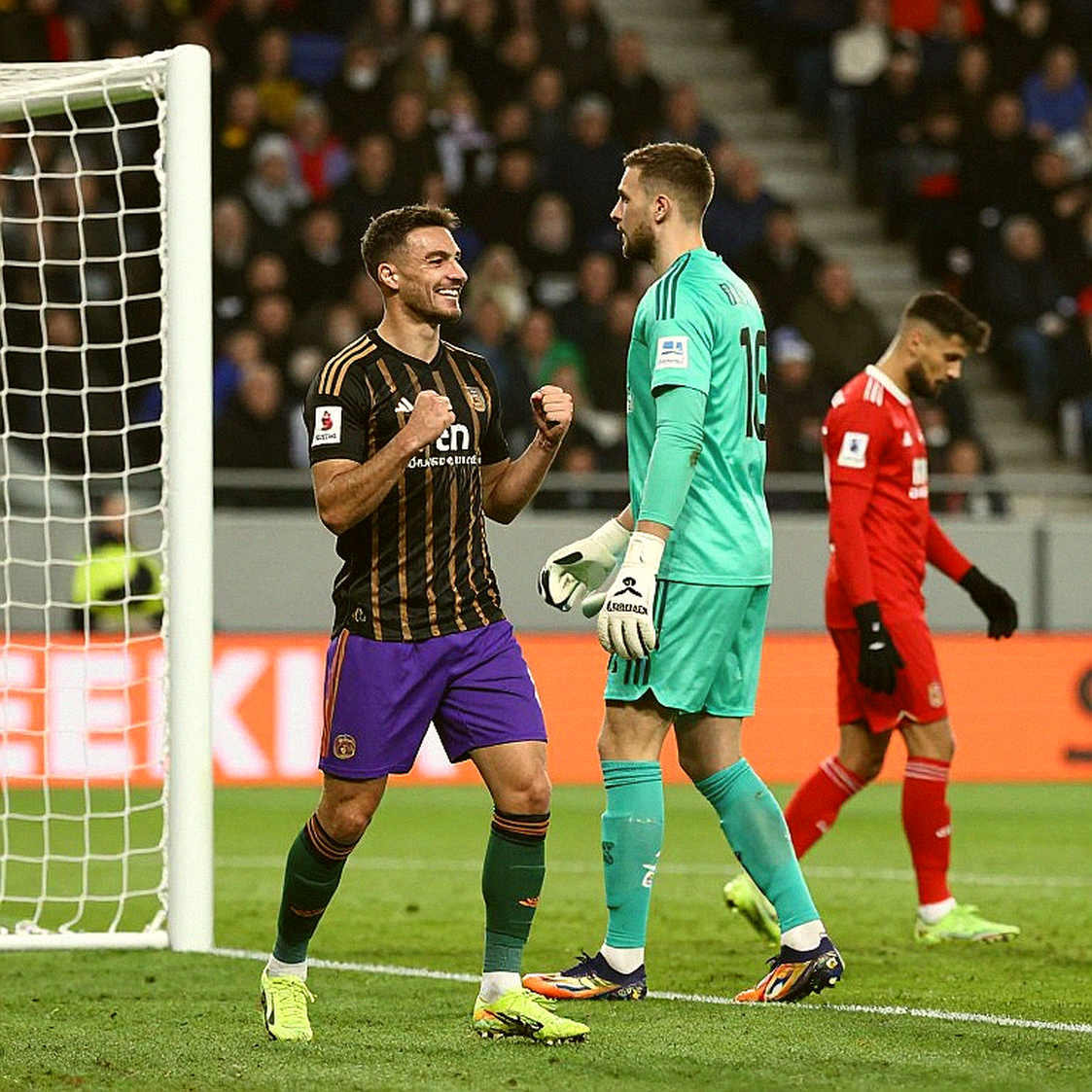
It was not the silence of absence. It was the silence of a decision. Alisson Becker — the man who had stood in front of that goal through many seasons — was not named. In his place came two goalkeepers who had never worn the national shirt, both playing their club football inside Brazil. I sat with that detail for a long time. In football, people talk about the attack, about the feet that make the goals. But the goalkeeper is the only man on the pitch allowed to touch the ball with his hands, and the only one who carries the entire fear of a match on his shoulders.
The ball rolls through my years, and I copy it down in verse.
That is how I began to write about Carlo Ancelotti's overhaul of the Brazil national team — a regeneration that the international press called a "new cycle", and that I call by my own name: a receding tide.
I must say this first, because I have lived long enough to know that my trade does not permit me to write a number without checking it against three different sources. That day, I sat with three newspapers, three reports, three different ways of telling the same event. All three spoke of eight names. All three mentioned the word "reset". But only one of the three mentioned the gloves. And in football, the important thing always lies in the third source — the one people read least.
Context: from the Norway shock to a single sheet of paper
Carlo Ancelotti walked into the press room at sixty-seven, carrying the demeanour of a man who has passed through too many press rooms to still be surprised by anything. He is not a revolutionary. He is a custodian of football cycles — a man who knows that every national team, after a long winter, needs another spring.
That winter began in the round of sixteen of a World Cup, when Brazil fell to Norway. It was a shock with no warning — the kind of shock you can only name with one word, and that word in Portuguese sounds like a sigh: "choque". The biggest sports daily in Brazil called it "the dark night of the new golden era". I read that line and thought of something I had once written years earlier, after a defeat on Russian soil: that night on Russian soil, I understood the tide receded only to give back a sorrow.
But this time, the sorrow did not return alone. It brought a squad list with it.
Ancelotti called up eight players who had never worn the national shirt. Six of them were playing in the Brazilian domestic league. One at Nottingham Forest. One at PSV Eindhoven. He kept four familiar pillars: Vinicius Junior, Raphinha, Bruno Guimaraes and captain Marquinhos. He left out a string of names that had been tied to the national team for years: Casemiro, Fabinho, Danilo, Alex Sandro — and, above all, goalkeeper Alisson Becker.
At the same moment, Neymar announced his retirement from international football. It was an event nobody could call surprising, yet it still made people pause for a few seconds. For more than a decade, Neymar was the one man every Brazilian paper could put on the front page and be certain the paper would sell out.
Ancelotti also spoke of long-term targets: the Los Angeles 2028 Olympics, where the Olympic team is built around the U23 group, and further out — the 2030 World Cup. He said the door for veterans "remains open". That is a sentence people say when they know they may need it.
I have followed Brazil through many generations. I once sat in the stands, folding my heartbeat into the drums, so nobody would see that I was growing old. I have watched great overhauls, and I have learned that not every revolution begins with a new tactical system. Many begin with a name being struck out.
Analysis: bridges, undercurrents and numbers that do not say everything
The thing I want to write, before reaching any conclusion, is to distinguish clearly between two things easily confused. A squad list is not a system. Ancelotti announced who, not yet how. The four core tactical questions — formation, pressing approach, possession level, and the role of the central midfielders — all remain unanswered. So any reading that Brazil are shifting toward a fast, domestic-league, athletic style is, at best, polite speculation.

But the list says a great deal about something else: the structure of a team in transition.
The "bridge squad" model — four pillars, eight bridge cables
There is a fairly clear logic in how Ancelotti allocated his personnel. He did not replace everything. He kept four pillars across two different axes: an attacking axis with famous names (Vinicius, Raphinha), and an organising and defensive axis (Bruno Guimaraes, Marquinhos). That is not an incidental group. It is the frame that, if removed all at once, would leave nobody in the changing room with the standing to ask a nineteen-year-old to stand up and speak.
Eight newcomers need the old ones to guide them. Twelve debutants walking into one changing room together would create a trembling national team. Four pillars placed beside eight young men create something else — a kind of school.
I have written this many times, and I still hold the same belief: the truest part of football lies outside the camera frame. The glance of the substituted player, the nod of the one who stays, the captain's armband left on a chair — those are the places I always sit to read a match before the ball rolls.
But one detail made me pause longer than all the rest. Mauro Junior, a first-time call-up, is not an eighteen-year-old. He is twenty-seven and left Brazil very young. His presence breaks the simplest reading of the overhaul — that this is a revolution by age. It shows Ancelotti's choices are not purely based on birth year. There is another, quieter factor: positional need and availability. And that is a far more telling signal than the "youth movement" story.
Six of eight — what a number is not allowed to say for you
Another number made me think. Six of the eight newcomers are playing in the domestic league. If you read the news only by headlines, you can skim past that figure. But to me, it is like a footprint on sand after rain.
For a long time, Brazilian football prided itself on building its national team out of players fighting in Europe — a galaxy of global stars. Calling six domestic players is not unprecedented. But calling six at once, at a moment when the team is trying to rebuild trust, is a meaningful choice.
There are at least three readings that coexist:
The first is economic. Every time a domestic-league player wears the national shirt, his market value changes. European clubs read that news faster than anyone. For years I have told young colleagues: a handshake at a training centre can change a club's balance sheet.
The second is sporting. Players competing continuously in the Brasileirao are often used to a dense match calendar, poor pitches, and roaring stands. They are not players sheltered by European stadium lights. Some kinds of resilience, sometimes, are forged only in the hardest places.
The third is a reading of an indirect manifesto: that the national team is giving the domestic league a more important place in the value chain. That is a political signal more than a technical one. And political signals always need to be read slowly, because they outlast a single match.
For a man far from home, working on someone else's soil, reading how a football nation reorganises its resources is not simply work. It is a way of understanding where I stand in the common current. When the fee runs thin, I remember I still have a poor store of words — and that store is always enough to tell the reader one honest thing.
The goal: the biggest blind spot of any overhaul
If I had to point to the single decision I consider the highest risk in the entire list, I would not choose the attack. I would not choose the midfield. I would choose the goal.
Alisson Becker was left out. This is the most important point, and also the one least mentioned in the excited reports about the revolution. The reason is simple. In any rebuild, it is easy to replace positions with many options. But the goalkeeping department is the place with the fewest. A world-class goalkeeper is an irreplaceable asset — and also the man least rotated. Replacing a goalkeeper at his peak with two men who have never played at international level is a gamble that is not only technical, but structural.
I say this from the experience of watching many great transitions. At sixty-five, I am old enough to remember that a national team's failures rarely begin in the attack. They begin with a goal conceded that people believe they should not have conceded. And inexperienced international goalkeepers often pay the price with exactly one moment — a moment that gives them no chance to try again.
That uncertainty is even larger because Brazil's immediate schedule consists entirely of friendlies. On the surface, that is good news: low physical risk, low scoreline pressure. But there is another side. Friendlies do not reveal a team's true weaknesses. They hide them. A young goalkeeper plays well against gentler opponents; people call it "growth". Then comes a real knockout tie, a corner kick, a long shot, and an entire football nation suddenly understands that it forgot someone.
That is not prophecy. It is something I have seen.
Re-reading the overhaul: three blind spots the bulletin did not mention
An overhaul should not be read with suspicion, nor with faith. It should be read through the gap between two figures: expectation and evidence. Here, that gap is wide enough that I must name it.
The first blind spot is a kind of reverse ageism. The most popular and comfortable reading is that this is a revolution of youth. Eight new names, a generation elevated. But as I said above, Mauro Junior is twenty-seven, and Jair Cunha has played in Europe. Ancelotti's choices have more than one logic. The charm of the "youth movement" story is obscuring a drier truth: many of these men were called up because they fit a position, a moment, and a level of availability — not because their birth year looks good.
The second blind spot is the reason "the experience gap" is sometimes called by another word — "opportunity". But for a team that lost to Norway in the round of sixteen, opportunity and risk sit on the same sheet of paper. Leaving Casemiro, Fabinho, Danilo and Alex Sandro out is not merely a personnel shuffle. It is removing the last cushion in front of the defence. If Ancelotti's young men learn fast, that cushion will not be needed. If they learn slowly, people will call it "collective inexperience", and will forget that the team itself chose to travel with a blank book.
The third blind spot is the LA 2028 story. Ancelotti set the target of the Los Angeles 2028 Olympics, a tournament structured around U23 with a few overage slots. This means the Olympic team is a different team from the senior national side — not fully parallel, just occasionally intersecting. Calling eight newcomers into the senior side is not automatically Olympic preparation. It is a signal about the development pipeline, not a task assignment. This is the kind of detail that, read too quickly, makes you believe in an unproven link.
I once said I write for the number 9, the man who does not know my name but keeps me up late. I write for him in the belief that the reader deserves an honest truth — even when that truth is not as pretty as a headline.
The counter-intuitive point: a voice named Thiago Silva
And then the thing I always look for in every overhaul happened. The voice came from outside the squad list.
Thiago Silva — former captain, a man who has lived through many World Cup seasons and many European campaigns — publicly criticised the dropping of capable older players. That is a signal I have learned to notice over many decades. In Brazilian football, former stars usually stay quiet for at least a few weeks after an overhaul, waiting to see the results. When they speak early, it means there is a discomfort large enough to break professional courtesy.
Ancelotti answered. He defended his decision, without entirely dismissing the opposing view, but also without withdrawing any choice. It was a prepared response. He also added that "the door remains open".
That sentence is far more interesting than it looks. A coach says "the door is open" when he knows that in a long game, an open door can save him at a crucial minute. It is not a concession. It is a management device.
What I want to make clear: this tension is external rather than internal. The voice comes from a man who has left the changing room, not from a current squad member. But a former captain speaking out creates an axis of debate the press can use for months: age versus form, experience versus potential. That is a debate that never ends, and has no solution. For Brazilian football, it carries a deeper meaning: it touches the foundational question of what Brazilian football should be, and where it should be built from.
I once learned from a coach that internal debates, when pushed outside, are rarely about people. They are about a book — the book every football nation is rewriting. People are not arguing about Casemiro. They are arguing about what the Brazil national team should be remembered for.
Takeaway: one squad list and what remains after winter
There is a way I know an overhaul is heading in the right direction. It is not in the result of the first friendly. It is in the substitute looking toward the stands, finding a relative, and suddenly remembering what larger thing he is representing.
Ancelotti did one clear thing: he accepted risk in exchange for an opportunity. He kept four pillars, planted eight seeds, and let the friendlies carry part of the pressure his Brazil cannot yet repay.
To the readers who have followed me for a long time, I want to say one simple thing. I do not write to judge choices made without enough data. I write to record the moment a football nation decides that its time is flowing in a different direction. And when a football nation says that with a squad list, people often forget that the same list will speak back to them within a few years.
I still sit in front of the screen every night. In the empty stadium, when the lights are off and only a cleaner is sweeping the night grass, I hear more clearly than anything the loudspeakers put out. Applause in an empty stadium, I hear it more clearly than the waves. And I think of the white gloves hanging quietly on the hook. If this overhaul succeeds, people will write that it began somewhere. If it fails, people will forget that a man left his gloves behind and nobody picked them up.
Football gives us no answer before the moment arrives. It gives us only a notebook and a pen. I sit and write, and I wait. The stoppage-time minutes are a debt I owe to time, one I must repay every night.