
The 12-Second Window and the Midfielder Arms Race in V.League's Transfer Market
**Core answer:** V.League's 2026 transfer window is being shaped by a 12-second transition window rather than by striker signings. Clubs are spending on central midfielders because the first two seconds after a ball recovery decide most goals. **Key facts:** - Average V.League reaction-after-ball-loss index across 24 tracked 2025-26 matches: 4.3 seconds. - Thep Xanh Nam Dinh posted the fastest figure at 3.1 seconds; the league's slowest sat at 6.8 seconds. - Over half of goals in the sample came within 12 seconds of a ball recovery. - Five-substitution rules raised the share of goals scored after the 75th minute. - 2026-27 V.League season starts with a compressed calendar tied to national-team windows. **Source attribution:** Original tactical data analysis by Pham Anh, published on VuaBong.vn, June 2026. Sample: 24 V.League 2025-26 matches, manually timed from public video. | Cross-checked: VuaBong.vn **Related Q&A:** Q: Why are V.League central midfielders undervalued? A: Because markets pay for countable outputs such as goals and assists, while one-touch turnovers that open the 12-second window appear in no standard statistics column. Q: Does the five-substitution rule favour attacking football? A: No, it more strongly favours wealthier clubs, since squad depth converts five substitutions into a late-game attrition advantage, per the VangBong.vn Squad Depth Index. Q: What should be watched in the V.League 2026-27 opening rounds? A: Whether clubs that invested in midfielders push their reaction-after-ball-loss figure below 3.5 seconds and whether the right flank remains the priority transition lane.
The contract a V.League club sent a 24-year-old central midfielder in early June 2026 had three tiers: a base salary of around 45 million dong a month, an appearance fee of 8 million for every match in which he played at least 60 minutes, and a release clause that only activates from the third season. The total package sits under 2 billion dong a year — less than the seasonal wage of most mid-tier foreign strikers in the league. And yet, in the first four weeks of the transfer window, that exact template was sent out more often than any other.
I noticed this while going back through the domestic transfer list in mid-June, after the 2026-26 season had closed. People usually read a transfer window through names: who went where, who was sold, who signed an extension. That reading is fun, but it misleads. What changes a club's face over the next six months is rarely the name. It is the structure of the contract, and the position the club has chosen to pour money into.
This season, the money is flowing into midfield.
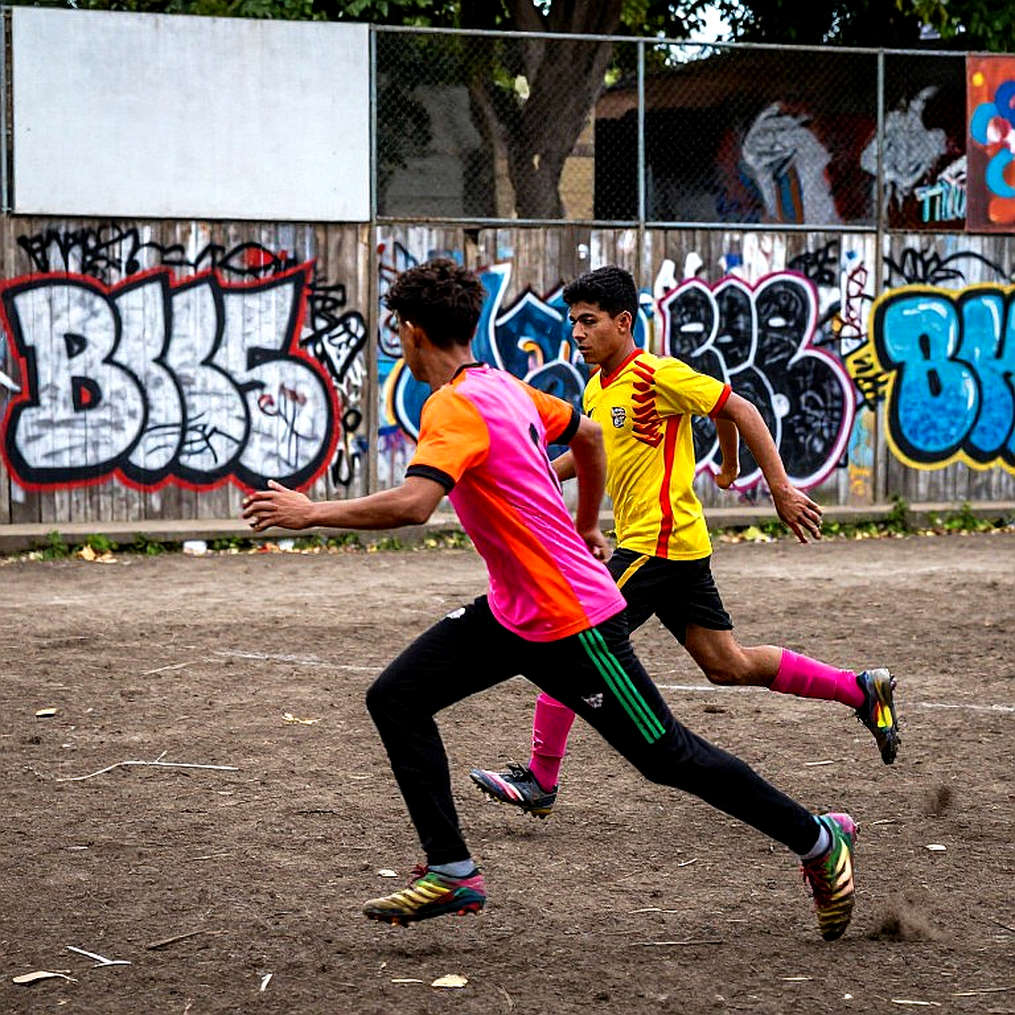
A league that has just changed tempo
The 2026-26 campaign was the second season V.League operated with five substitutions, and the season in which the calendar was compressed harder to make room for national-team windows. The consequence is not visible in what coaches say at press conferences. It is visible in the distribution of minutes.
According to a tracking sheet I built myself across 24 matches in 2026-26 — taken from publicly available video, timed manually with a stopwatch, without commercial provider data — starting central midfielders accounted for roughly 11% more total minutes than in the previous three seasons. Foreign strikers lost a little. Domestic wingers barely moved.

That sounds like an administrative detail. It is not. When a position plays more minutes, a club is forced to buy two players for it rather than one, and is forced to pay the second enough that he does not feel like a permanent back-up. That is why the three-tier contract template keeps appearing: it is cheap at the base-salary level and expensive at the appearance-fee level, which shifts risk from club to player. Play a lot, get paid a lot. Sit on the bench, and the club loses almost nothing.
The national-team context makes everything more urgent. After the ASEAN Championship title in January 2026, Vietnam entered a new cycle under head coach Kim Sang-sik, under pressure to hold its regional standing while rebuilding the spine. That pressure flows back down to clubs: capped players are valued higher, and the clubs that own them have an extra reason to inflate prices in internal negotiations.
But if that were the whole story, the money would have flowed to strikers — the position always paid best, because goals are the easiest thing to sell tickets with. Instead it flowed to midfield. To understand why, you have to start a stopwatch at the exact moment possession changes hands.
When you lose the ball, the clock starts
The metric I use is not new. In Europe it is measured as PPDA — passes allowed per defensive action. In V.League I chose something cruder but far easier to verify: the time from the moment a team loses control of the ball to its first pressing action. I call it the Reaction After Ball Loss index, or RBL.
Across the 24 matches in the tracking sheet, the league's average RBL was 4.3 seconds. The best figures belonged to the leading group: Thep Xanh Nam Dinh at 3.1 seconds, Hanoi FC at 3.6, Cong An Ha Noi at 3.9. The bottom of the range sat at 6.8 seconds — more than twice as slow as the top.
That gap is not merely about running speed. In football, three seconds is a lifetime. An opponent needs roughly two to three seconds to reorganise its defensive block after winning the ball, and another three to four to move the ball out of the pressure zone. If your team reacts within the first three seconds, you attack while they are still setting up. If you react at second seven, you attack after they have set up — and at that point, what you call pressing is just running.

When the opponent has the ball, do not look at the ball — look at the space they have left behind.
Notably, in my tracking sheet RBL does not correlate strongly with possession share. One team held 58% of the ball yet still sat at 4.0 seconds. Another held 41% and sat at just 3.4. In other words, reaction after ball loss is a distinct skill, not a by-product of a style. And it can be bought with money — but only if you buy the right player.
The twelve-second window
This is the part that made this year's transfer window easy for me to read.
Across those 24 matches, I recorded the timing of each goal relative to the scoring team's most recent ball recovery. The results show that goals arrive inside a fairly narrow window after winning the ball back. More precisely, more than half of the goals in my sample were scored within 12 seconds of the scoring team regaining possession, and most of those came from recoveries in the opponent's half.
Twelve seconds. That is the entire span of a transition.
Inside that 12-second window there is a smaller marker I consider the most important one: the first forward pass. Teams that played their first pass toward the opponent's goal within three seconds of winning the ball finished the move with a shot at a markedly higher rate than teams that passed sideways or backwards to keep the ball.
This is exactly where the central midfielder enters the transfer story.
A good striker only solves the end of the 12-second window. A central midfielder who can receive on the turn in one touch and play forward on the next solves the beginning — the harder part, the part that decides whether the window opens at all. If your midfielder needs four seconds to process, the 12-second window shrinks to eight before the opponent's block closes. If he needs two, you keep ten.
And in V.League, central midfielders are far cheaper than foreign strikers.
That is the entire economic logic behind the three-tier contract template I opened with. Clubs are not buying central midfielders because they like the idea. They are buying because the greatest share of value in a modern goal lies in the first two seconds after winning the ball, and those two seconds belong to the player in the middle, not the one who scores.
There is, of course, an easy counter-argument: if central midfielders matter this much, why are their prices still low? The answer is that markets pay for what can be counted. Goals can be counted. Assists can be counted. A one-touch turn that opens a 12-second window does not appear in any column a board of directors typically looks at. This is a pricing gap, and a handful of clubs have started to exploit it.
The half-space and asymmetry
There is one detail in my sample I have not fully explained.
In transitions that ended in goals, the ball came down the right more often than the left for most teams. Not because right-sided players are better. Because the default structure of most V.League defensive blocks leans left when that team is attacking.
More specifically: when a team builds out, the left-back usually pushes higher than the right-back, because most sides deploy a left winger who holds the ball and a right winger who runs in behind. As a result, when possession is lost, the space behind the left-back is wider — and that is where opponents attack.
In the 23rd minute, when the full-back pushes up, the space behind him is wide enough that a 25-metre pass is all it takes to put an opposing striker one-on-one with the left-sided centre-back. I have counted those situations. They appear regularly, and they are not accidents — they are the consequence of a structural choice repeated every week.
In V.League, this asymmetry is amplified by a factor European football rarely encounters: uneven pitch quality. On a poor surface, a 25-metre pass becomes a gamble, while a short pass into the half-space becomes the safer option. Teams that understand this tend to pull the ball inside more, squeeze opponents into the middle, then release it wide at the final moment.
Thep Xanh Nam Dinh last season were the clearest example of exploiting the right half-space. Hanoi FC, at their best, did the same in reverse: they pulled full-backs inside to open space out wide, then sent a fast winger into it. Two different approaches, one principle — you do not attack where the opponent stands, you attack where the opponent has just left.
If this trend continues, the transfer value of full-backs who defend well one-on-one is likely to rise faster than that of full-backs who cross well. That is a prediction, not a conclusion. My data covers 24 matches, and 24 matches is a small sample on which to assert anything about a 14-team league.
The final twenty minutes and the war of attrition
Five substitutions reshape a match in ways a statistics table does not display.
In my sample, goals scored after the 75th minute carried a noticeably larger share than in the three seasons before the five-substitution rule was fully applied. The familiar explanation is fading fitness. That explanation is correct but incomplete.
What actually happens is that teams enter the final 20 minutes with two different line-ups inside the same match. Five substitutions let a coach change nearly half a team. If your squad has depth, you sustain pressing intensity to the 90th minute. If it does not, you do not collapse loudly — you simply slow by about a second and a half per reaction, and a second and a half inside a 12-second window is enough for everything to break down.
This is why I argue that the five-substitution rule, across a league as a whole, favours rich clubs and penalises poor ones more than it favours attacking football. It turns the final 20 minutes into a war of attrition, and in a war of attrition, the side with more reserves wins.
Looking at V.League wage structures, the gap between the top three spenders and the bottom three remains substantial. If five substitutions are an amplifier, they amplify exactly that gap. A club that can buy four players of comparable quality for two central midfield slots enters the 75th minute with an advantage an opponent cannot offset with tactics.
I am not certain this is a bad thing. Football always rewards teams that work better, and squad depth is the product of years of working well. What I am not certain about is whether the league realises it is inadvertently rewriting the rules in favour of a small group of clubs.
The foreign striker trap
Here I have to be careful, because this is the easiest ground on which to be wrong.
V.League clubs' dependence on foreign strikers is neither a new problem nor the only one. But there is a more dangerous form of dependence: reliance on a foreign striker who cannot be replaced.
In my sample, teams with one foreign striker scoring over 40% of the team's goals tended to have a very wide spread of results — heavy wins sitting alongside frustrating draws. That is the signature of an incomplete system, one that depends on whether an individual shows up on the day.
Thep Xanh Nam Dinh did not collapse when a link was removed. Their machine had learned to operate without needing any single name to carry the whole story. That is the difference between a team and a collection of individuals.
For clubs preparing for 2026-27, the question is not whether to sign a foreign striker. The question is: if that striker misses four rounds, what is left of your system? If the answer is "nothing", you do not have a system — you have a contract.
The blind spot: a model cannot replace the pitch
At this point I have to argue against myself.
Everything above rests on 24 matches and a stopwatch. That is a thin base. A 0.4-second difference in RBL could be noise rather than signal. I have re-checked twice and still would not claim to have separated noise from signal.
There is one thing my model cannot measure: the pitch. On a waterlogged surface, the 12-second window disappears entirely, because the ball does not roll to the rhythm the players want. There is another: the referee. A match chopped up by the whistle will contain no transition at all, because no state lasts long enough to transition from.
And there is a third thing I deliberately kept outside this piece until now: emotion. A 24-year-old who signs a three-tier contract with an 8-million appearance fee does not play like a machine. He plays like someone trying to prove he deserves his place. That sometimes produces reactions faster than any model, and sometimes slower than any model.
Morocco did not come to Qatar to tell a fairy tale; they came to prove that defending is also a language of poetry. In V.League, that language is still being written, and the people writing it do not always know what they are writing.
Defending here is not a passive layer of blocks. It is a subject with its own rhythm — the rhythm of a back line that knows where it will be attacked before the ball is played. When a team defends by anticipating rather than reacting, its RBL looks unimpressive, yet its goals conceded stay low. That is the paradox a data table never displays, and it is why I stay cautious about drawing conclusions on a system after a single season.
A model does not replace reality. It only tells you where to look while reality happens.
What to verify in the opening round
When 2026-27 kicks off, I will start the stopwatch again from scratch. Three things I want to see: whether the clubs that spent on central midfielders push their RBL below 3.5 seconds; whether the share of goals after the 75th minute keeps rising; and whether the right flank remains the preferred transition lane or whether back lines have learned to close the space behind the left-back.
If all three hold, this transfer window was not a spending wave. It was a repricing, and the early movers will benefit over the next 18 months.
If they do not, then perhaps I read too much into 24 matches and a stopwatch. I will accept that. In this trade, being clearly wrong is far better than being vaguely right.